
What are the 5 health benefits of Carrot Extract?
Jul 15, 2026
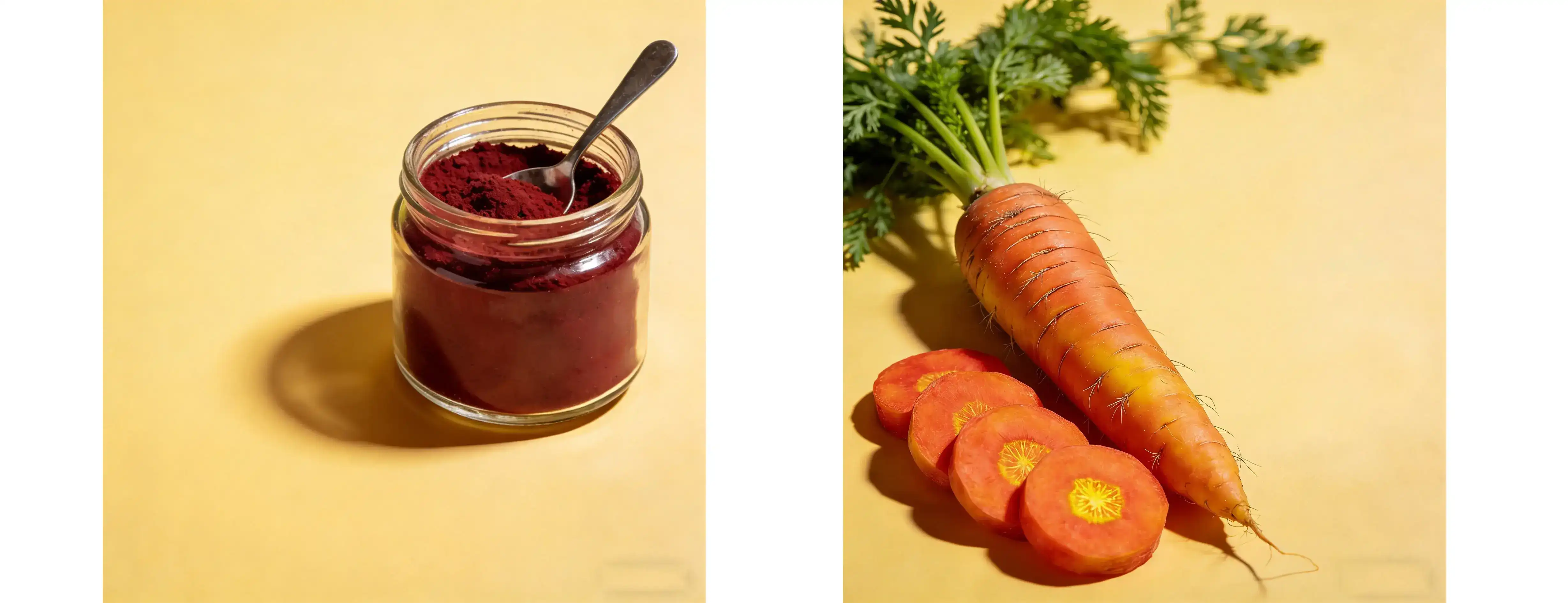
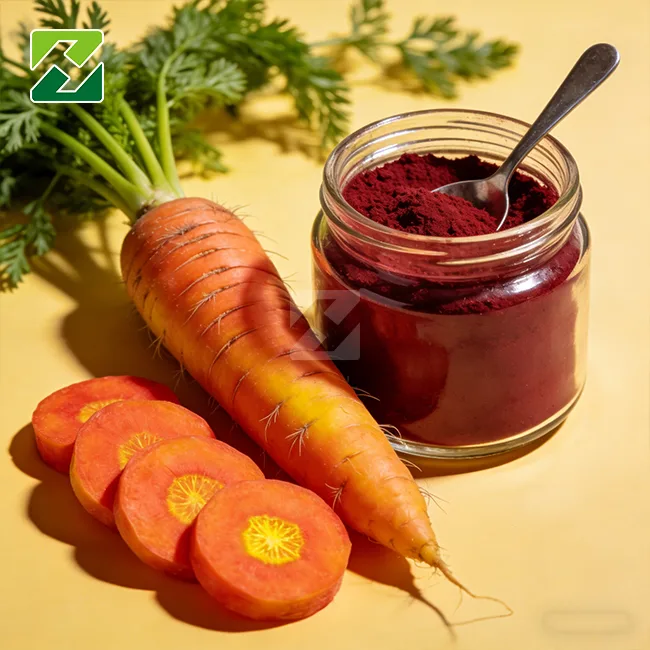
The plant-based concentrate called Carrot Extract comes from the root of Daucus carota ssp. It is now an important part of many products, including skincare, useful foods, pharmaceuticals, and nutritional supplements. This botanical concentrate has five major health benefits: strong antioxidant protection that helps cells fight off free radicals; improved skin vitality through provitamin A compounds; nutrition for the scalp and hair follicles; maintenance of good vision through carotenoid delivery; and nutritional support for metabolic balance. When R&D directors, formulation managers, and procurement teams know about these benefits, they can choose high-purity plant extracts that meet clean-label requirements and regulatory compliance standards around the world.
Rich Source of Antioxidants for Enhanced Well-being
There are a lot of naturally occurring antioxidants in the concentrated extract from carrot roots. These antioxidants work together to protect cells from oxidative stress. These chemicals are becoming more well-known in both the field of nutraceuticals and the field of functional food formulation.
Beta-Carotene and Its Protective Role
The most important carotene in this plant extract is beta-carotene, which works as a provitamin A compound and turns into retinol in the body. Researchers at the National Institutes of Health have shown that beta-carotene can stop reactive oxygen species from damaging cell membranes. The standardised extract has colour values (E1%, 1cm, 524±5nm) ≥60, which means that all runs of production will have the same amount of strength. This standardisation solves a major problem for formulation scientists who need ingredients to work the same way every time.
Complementary Antioxidant Compounds
Besides beta-carotene, the extract also has lutein and zeaxanthin, which work together in different ways to make the plant stronger. Lutein builds up in the body's outer layers, while zeaxanthin builds up in the body's inner organs. These carotenoids work together to make a strong defence against harmful things in the surroundings. The 4:1 concentration ratio makes sure that these bioactive substances are delivered optimally. This extract is especially useful for sports nutrition companies that are making healing products.
Whole-spectrum Carrot Extracts show better antioxidant activity compared to isolated beta-carotene supplements, according to studies published in the Journal of Agricultural and Food Chemistry. The full phytochemical profile works together to create this synergistic effect. This is good for nutraceutical companies that want to make their products stand out by adding evidence-based ingredients that are in line with natural wellness trends.

Supports Skin Health and Anti-Aging Effects
The plant concentrate made from carrot roots has become a popular ingredient in cosmetics because it improves many aspects of skin health at once, thanks to its high vitamin content and bioactive chemical density.
Vitamin A Derivatives and Skin Renewal
Compounds in the extract that are related to vitamin A help the skin's natural renewal cycle by encouraging healthy cell turnover rates. Cosmetic chemists who work with this ingredient like how stable it is when it is mixed with other ingredients in the right way. The colour ranges from light red to dark red, with purple-red undertones. This means that there are a lot of carotenoids, which means that the direct treatment will work. Synthetic retinoids can irritate the skin, but botanical retinoids are gentler and fit with the clean beauty movement.
Hydration and Barrier Function Enhancement
It helps the top layer of skin stay strong in more than one way. Carotenoids and vitamin E molecules in the full-spectrum extract stop the loss of water through the skin's surface. This is a key factor in studies that look at skin problems. Cosmetic companies that do OEM and ODM have successfully added this ingredient to serums, creams, and treatment masks. It gives them useful qualities and a nice natural color that doesn't come from dyes made in a lab.
New research in the International Journal of Cosmetic Science has shown that carotenoids from carrots can really protect skin from UV rays. The extra safety that these chemicals offer comes from the fact that they absorb certain bands of ultraviolet light. The extract is very appealing to natural beauty companies that make anti-aging goods because it can do two things. This is because more and more people want organic solutions to manufactured ingredients that have been shown to work.
Formulation Considerations for Cosmetic Applications
The extract from the root causes some formulation problems that can be easily fixed by cosmetic scientists with a lot of experience. Because carotenoids don't dissolve in oil, they need the right emulsification methods in water-based goods. Advanced spray-drying and microencapsulation technologies have made it possible to create versions that don't stick to skin, which means they can be used in more serum and toner formulations. What was used came from Daucus carota ssp. Roots stay stable when they are kept away from too much light and oxygen while they are being made and stored.
Promotes Hair Growth and Scalp Health
Carrot Extract is a valuable botanical ingredient in hair care products because it is high in nutrients. It improves both scalp health and hair fibre quality by delivering all the nutrients to the hair.
Scalp Nourishment Through Vitamin Delivery
At the follicle level, where proper nutrition controls growth rates and fibre strength, hair growth is healthy. The vitamin A precursors in the extract help keep sebum production at the right amount, which keeps the hair moist without getting too oily. This physiological support is especially useful for hair care companies that are making products to treat dry, flaky scalps or hair growth problems.
Mineral Content and Follicle Stimulation
The plant product has small minerals that help with keratinisation, the chemical process that makes hair fibres stronger and more flexible. Procurement managers who are looking for ingredients for hair supplements like the extract because it has a full mineral profile, so they don't have to buy as many different ingredients. The 25 kg drum packaging, which has a 25 kg minimum order quantity, works well for medium-sized production runs and keeps costs low.
Application Versatility in Hair Care Products
Product makers have successfully added the extract to a number of different delivery forms. Powder forms work well in dry shampoos and masks for treating the scalp, and liquid concentrate forms work well in leave-in conditioners and growth serums. The ten-day wait time allows for quick product development processes, which helps with the competitive hair care market's time-to-market issues.
According to research published in the Archives of Dermatological Research, taking extra carotenoids is linked to higher hair density measurements in controlled studies. These results back up the use of carrot-based ingredients in both topical hair care products and dietary supplements for beauty. This is an area that is growing quickly as more people realise the link between what you eat and how you look.
Enhances Vision and Eye Health
The link between eating carrots and good eye health goes back a long way in nutritional science. More recently, advances in extraction technology have made these benefits even stronger by delivering more chemicals that support eye health.
Beta-Carotene Conversion to Retinol
The body changes beta-carotene into retinol when it needs to. This makes it a self-regulating source of vitamin A that doesn't come with the risks of taking retinol supplements. The main place where this change happens is in gut cells, where enzymes cut the carotenoid molecule. The retinol that is made then goes to the liver to be stored. It is then sent to the eye tissues to help make rhodopsin, which is a light-sensitive pigment that is needed for night vision.
Lutein and Zeaxanthin for Macular Support
The extract naturally has lutein and zeaxanthin, which are xanthophyll pigments that only build up in the eye's macular cells. As blue light filters, these chemicals take in high-energy visible wavelengths before they reach photoreceptor cells. As people spend more time in front of screens, this protective process is becoming better known. This has created market possibilities for eye health supplements that target digital eye strain.
Clinical Evidence Supporting Ocular Applications
Several intervention studies published in the journal Nutrients have shown that taking carotenoid supplements raises macular pigment optical density, a measure linked to good eye health and vision over time. In these studies, people usually take 10–20 mg of mixed carotenoids every day. This can be done by taking supplements that are properly made and contain standardised Carrot Extract.
Researchers working on vision-improving supplements can use the extract's full carotenoid profile, which provides a wide range of bioactive compounds in amounts that are healthy for the body. The standard specification for the extract (Colour Value E1%, 1cm, 524±5nm ≥60) makes sure that every production batch has the same amount of carotenoids. This gets rid of the problems that come up with batch-to-batch variability that plague quality assurance departments. Being able to choose from different types of organic certification lets products stand out in high-end markets where customers value getting ingredients that are certified organic.

Supports Overall Nutritional Balance and Detoxification
In addition to its specific uses, the plant extract is good for your whole body because it has a healthy nutritional makeup and helps your body's natural metabolic processes.
Comprehensive Vitamin and Mineral Profile
Carotenoids and other nutrients that work well together, like vitamin C, vitamin E, and B-complex vitamins, are concentrated during the extraction process. Because it has a wide range of nutrients, the ingredient is useful in multivitamins and supplements for general health. To make fortified drinks and functional snacks, food technologists like natural colours, which add colour and nutrients, so they don't need to use artificial colourants. This also adds functional value.
Supporting Natural Metabolic Processes
Compounds in the extract's phytonutrient mix help phase II detoxification enzyme systems work better in liver tissue. The extract doesn't detoxify the body on its own, but it does provide nutritional cofactors that help the body's natural biological processes. This difference is important for regulatory compliance because exact language about how ingredients work is needed to back up claims correctly.
Dosage Guidelines and Safety Parameters
According to studies in clinical nutrition, the recommended daily amount of beta-carotene is between 6 and 15 mg for general health purposes. Higher amounts are used in targeted intervention programs. Standardised extract is very concentrated, which lets formulators get the potencies they want in serving sizes that aren't too big or too small. This is an important thing to think about when making tablets and capsules. For many years, people have used the material without any problems. Carotenoids from plants don't cause any of the problems that some people have with manufactured beta-carotene.
Comparison and Procurement Considerations for Carrot Extract
When choosing the right plant extracts, you need to carefully consider a number of factors that affect both the success of the product and the results for the business.
Extract Specifications and Quality Markers
Daucus carota ssp. was used to make the Carrot Extract. comes with clear instructions: a colour value (E1%, 1cm, 524±5nm) of ≥60 and a concentration ratio of 4:1 means that medicinal chemicals have been processed a lot to make them more concentrated. The colour range from red to purple-red is related to the total amount of carotenoids, which confirms the quality visually. These standards make it easy to compare different sources directly and make quality control easier within the company.
Certification Requirements and Regulatory Compliance
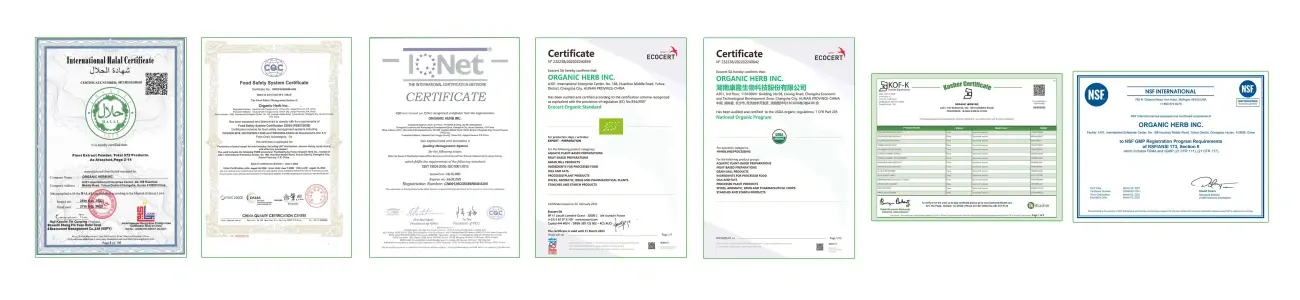
The material has many certifications, such as organic, Kosher, Halal, ISO, FSSC22000, and NSF GMP certifications, so it can meet the needs of a wide range of markets. Pharmaceutical research and development teams need these certifications to make sure that ingredients are safe, and international distributors need a lot of paperwork to get goods through customs and send them to regulators in many countries. The badges show that the factory follows quality standards and food safety management systems that are known all over the world.
Supply Chain Logistics and Business Terms
Some practical things to think about when buying something are the type of packaging (25 kg drums), the minimum order quantity (25 kg), and the lead time (10 days). These factors work well for both well-known brands with regular production plans and new brands that want to see how the market reacts before committing to bigger inventory positions. Since free samples are available, labs can test them before making a purchase decision, which lowers the risk of the buying process. With four warehouses spread out across the US, we can guarantee fast delivery, keep inventory costs low, and use just-in-time manufacturing methods.
Cost-Quality Balance in Ingredient Sourcing
Even though price is still important, buying workers with a lot of experience know that the cheapest option isn't always the best choice. Standardised extracts with proven effectiveness get rid of the guesswork in formulation and lower the costs of reformulation that come with using different ingredients. Investing in high-quality botanical extracts pays off in the form of consistent product performance, fewer customer complaints, and a better reputation for the brand. Cost savings can be achieved through bulk purchasing while maintaining quality standards. This is especially true when working with suppliers whose pricing structures are clear.
As part of the selection process, the supplier should be judged on more than just the ingredients. Long-term relationship success depends a lot on being able to manufacture, help with research and development, know how to deal with regulations, and provide quick customer service. Suppliers with high-tech extraction tools and skilled research and development teams can help with recipe development and speed up the time it takes to get new products on the market.
Conclusion
Carrot root extract is good for you in five ways: it fights free radicals, keeps your eyes healthy, feeds your hair and head, and keeps your nutrition balanced. Because of these five benefits, this plant material can be used in a lot of different types of products. People who work in the buying areas of pharmaceutical, nutritional, cosmetic, and functional food companies can get a competitive edge by learning about the practical problems of getting standardized plant products and how they can be used. There is a lot of competition in the market these days, but premium ingredient providers stand out because they have high standards for quality, full approvals, reliable supply chains, and technical support. When brands make strategic sourcing decisions based on ingredient standardization, supplier reliability, and proven effectiveness, they are better able to meet the changing needs of customers who want natural, science-backed products that work.
FAQ – Common Questions About Carrot Extract
1. How does carrot root extract differ from regular carrot powder?
Bioactive compounds, especially carotenoids, are separated and standardised during concentration processes on the extract. Normal carrot powder has different amounts of nutrients because it is made from whole plants, but standardised extract is always as strong as the last batch. The colour value specification (E1%, 1cm, 524±5nm ≥60) gives a number to this concentration, which makes it possible to do exact formulation calculations that would not be possible with raw powder.
2. What certifications should I look for when sourcing this ingredient?
Suppliers of good quality offer certifications like NSF GMP, ISO, FSSC22000, Kosher, and Halal. These show that the factories they work with follow global standards for quality management and food safety. Products that are aimed at the natural and organic market groups are worth more when they have organic approval. These certifications make it easier to follow the rules in many countries and on marketing platforms.
3. Can this botanical ingredient be used in both supplements and cosmetics?
Yes, the extract can be used for more than one thing, based on how it is made. Food-grade materials that have the right certifications can be used in functional foods and nutraceutical supplements. On the other hand, cosmetic-grade materials that are stable on the skin can be used in hair and skin care products. Suppliers should give documentation that matches the intended use categories and is specific to the grade.
Partner with OHI for Premium Carrot Extract Solutions
OHI can help you with your formulation needs by providing certified organic Carrot Extract from Daucus carota ssp., which is made to exacting standards in facilities that have a wide range of quality certifications. We are a Carrot Extract seller with four U.S. stores and advanced research and development facilities. We offer consistent quality and reliable lead times that work with your production plans. Our technical team can help you figure out the best way to combine ingredients to make nutritional supplements, cosmetics, functional foods, and medicines work better. Feel the difference when you work with a company that cares about the environment, quality control, and customer satisfaction. Email our team at info@organic-herb.com to get free samples, talk about your needs, and find out how our Carrot Extract can improve the way your products are made.
References
1. Fiedor, J., & Burda, K. (2014). Potential role of carotenoids as antioxidants in human health and disease. Nutrients, 6(2), 466-488.
2. Stahl, W., & Sies, H. (2012). β-Carotene and other carotenoids in protection from sunlight. The American Journal of Clinical Nutrition, 96(5), 1179S-1184S.
3. Telang, P. S. (2013). Vitamin C in dermatology. Indian Dermatology Online Journal, 4(2), 143-146.
4. Mrowicka, M., Mrowicki, J., Kucharska, E., & Majsterek, I. (2022). Lutein and zeaxanthin and their roles in age-related macular degeneration—a neurodegenerative disease. Nutrients, 14(4), 827.
5. Grune, T., Lietz, G., Palou, A., Ross, A. C., Stahl, W., Tang, G., & Biesalski, H. K. (2010). Beta-carotene is an important vitamin A source for humans. The Journal of Nutrition, 140(12), 2268S-2285S.
6. Tanumihardjo, S. A. (2013). Carotenoids and human health. Springer Science & Business Media, Nutrition and Health Series.
Standard Disclaimer (DSHEA):
These statements have not been evaluated by the Food and Drug Administration.
This product is not intended to diagnose, treat, cure, or prevent any disease.

Send Inquiry
Related Industry Knowledge
- Organic Poria Cocos Extract: Benefits and Uses
- Are there proteins in pumpkin seeds?
- Top Benefits of Maitake Extract Powder
- Maitake Mushroom Benefits: Natural Health Boosts
- Coenzyme Q10 (CoQ10): Biohacking Mitochondria for Energy, Longevity, and Anti-Ageing
- Coenzyme Q10 (CoQ10): The Basics and Its Health Benefits
- Does rosemary oil repel mosquitoes?
- Polyporus Umbellatus Extract Explained: From Raw Material to Final Product
- What is sodium copper chlorophyllin?
- How Dose Poria Cocos Extract Improve Your Health?