
How to Choose High-Quality Goji Extract Powder for Your Needs
Jun 26, 2026
To choose a good Goji Extract Powder, you need to carefully look at the supplier's qualifications, the level of regulation, and the extraction methods used. Choose powders that come from Lycium barbarum fruit that have been extracted with water, standardized to a clear polysaccharide content (10:1 ratio or 50% polysaccharides), and backed by certificates such as GMP, ISO, and organic proof. Our team has seen that making sure that batches are consistent, looking over third-party testing records, and checking how open a supplier is about source tracking are all important parts of successful procurement. This piece talks about the technical requirements and supplier review factors that are most important for developing functional foods, cosmetics, and nutraceuticals.
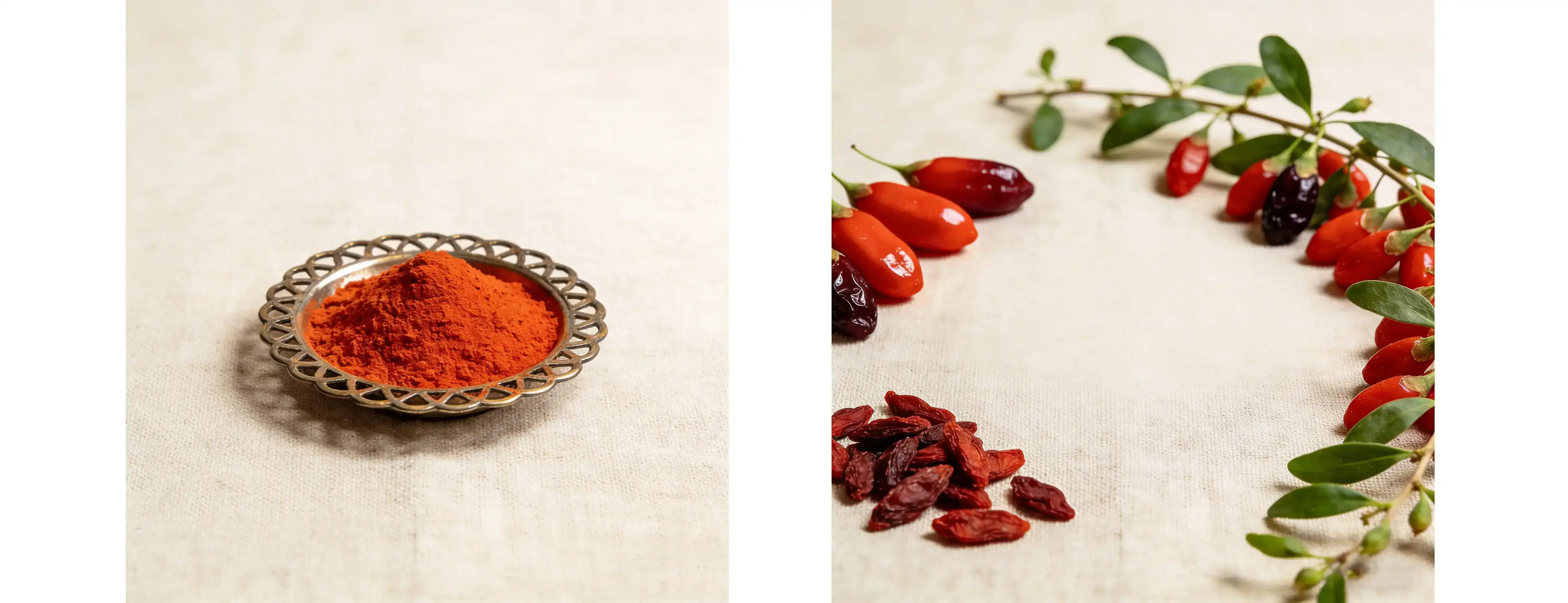
Understanding Goji Extract Powder and Its Benefits
Because it has a lot of bioactive compounds, goji berry juice has become an important nutrient in many fields. The extract comes from the fruit of the Lycium barbarum plant, which is a very healthy plant that is mostly grown in controlled farming settings. Standardized extracts offer constant amounts of Lycium Barbarum Polysaccharides (LBPs), the marker molecule responsible for the ingredient's functional properties. Whole berry powders, on the other hand, vary in fiber and moisture.
Scientific Basis of Bioactive Compounds
The extraction process focuses on polysaccharides, pigments like zeaxanthin, and betaine while getting rid of extra sugars that make raw berry powders difficult to keep dry. Through ORAC (Oxygen Radical Absorbance Capacity) tests, researchers have found that LBP content between 10% and 50% offers measurable antioxidant capacity. Formulation experts can now figure out exact doses for immune support matrices and eye health vitamins thanks to this standardization.
Heat-sensitive carotenoids are better preserved by modern extraction methods that use low-temperature water processes than by older methods that use alcohol. Spray-dried juice concentrates tend to settle to the bottom of liquids, but this powder dissolves better than spray-dried juice concentrates. Manufacturers like that standardized extracts let them make smaller capsules. For example, 400 mg of 50% polysaccharide extract has the same bioactivity as 4000 mg of fresh berries.
Industrial Application Parameters
The extract's heat safety during pasteurization (up to 85°C for 15 seconds) keeps its bioactive integrity without precipitation when it is used to make functional drinks. This feature fixes a common problem with raw fruit powders that make ready-to-drink drinks have the wrong taste. Because it dissolves in water, it can be easily added to protein shakes, greens mixes, and quick health shots without the need for emulsifiers.
Cosmetic scientists like the density of the powder because it makes anti-aging serums and repair creams more consistent from batch to batch. The small particle size (usually 80–100 mesh) makes sure that topical formulas have a smooth feel, and the standard amount of zeaxanthin backs up certain product claims. Instead of whole berry extracts that have a varying sugar content, the refined powder doesn't allow microbes to grow when the moisture level is kept below 5%. This makes the mixture last a lot longer.
Key Factors to Consider When Choosing Goji Extract Powder
When making purchasing choices in Goji Extract Powder, it's important to look at a lot of different quality factors that have an impact on how well the final product works and how well it meets regulations.
Standardization and Potency Verification
The concentration ratio is the most important way to tell how good something is. A 10:1 extract means that 10 kg of raw berries make 1 kg of finished powder, which means that the bioactives are concentrated in the same way. More important is standardizing the polysaccharides, which can be checked using UV-Vis spectrophotometry at a wavelength of 490 nm. Specifications that say "50% polysaccharides" help formulators figure out how much to use, while hazy claims of "high potency" don't have any scientific support.
Ask for Certificates of Analysis (COA) that show the LBP content by batch, moisture levels below 5%, and ash levels below 5%. These factors are related to controlling production and keeping things stable during storage. Testing for heavy metals should show that the product meets the toughest international standards for lead (<3 ppm), arsenic (< 1 ppm), and cadmium (< 1 ppm). Microbial limits (overall plate count <1000 cfu/g) make sure that all uses are safe for food.
Extraction Methodology and Solvent Considerations
Using dynamic low-temperature methods to remove water keeps the full range of polysaccharides without leaving behind solvent residues that make regulatory paperwork harder. This method fits with the trend toward clean labels and makes INCI (International Nomenclature of Cosmetic Ingredients) statements for cosmetic uses easier to understand. Compared to this, ethanol extraction may concentrate some alkaloids but leaves behind leftover solvent problems that need a lot of testing.
It's important to know the order of the extraction steps. Multistage water extraction followed by nano-membrane filtering gets rid of the proteins and tannins that change color when stored. Freeze-drying or low-temperature spray drying stops the leftover sugars from turning into caramel, which keeps the powder's orange-red to brown color. When suppliers use high-heat drum drying, the powders they make are darker and less bioactive, which can be seen in their lower ORAC values.
Certification and Proof of Compliance
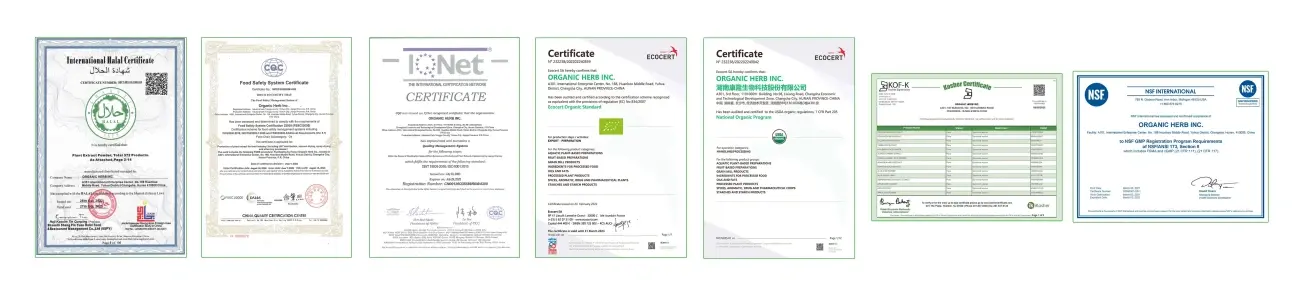
NSF GMP approval shows that a factory follows current good manufacturing practices, which include keeping equipment calibrated, teaching workers, and keeping contamination under control. Food safety management systems must be checked by ISO 22000 (or FSSC 22000) in order for ingredients to cross foreign countries. Organic approval from the USDA or the EU makes sure that crops are grown without using pesticides, which appeals to people who like natural products.
Kosher and Halal approvals make it easier for dietary products that are aimed at certain groups of people to reach more customers. These certifications need third-party checks of the processing tools and where the ingredients come from, which adds to the trustworthiness. We suggest checking the validity of certifications on the websites of the organizations that issue them, since fake or outdated certificates are common in trade markets.
Source Traceability and Agricultural Practices
Bioactive profiles are affected by where the berries come from. Berries from Ningxia and Qinghai areas have higher carbohydrate densities because they grow in mineral-rich soil and get more sunlight at high elevations. Suppliers who work with GAP (Good Agricultural Practices)-approved farms show that they have control over the inputs used in farming, the time of harvesting, and the handling of crops after they have been picked. When buyers ask for farm-to-formula evidence for marketing stories, this traceability becomes very important.
Find out how to check for pesticides during farming in Goji Extract Powder. Brands are protected from recall situations and regulatory violations by thorough residue testing that includes more than 200 substances. Suppliers who are ahead of the curve keep harvest batch records that link extract lots to specific field areas. This way, if quality problems happen, they can be quickly looked into.
Comparing Leading Goji Extract Powder Brands and Supplier Options
There are different levels of suppliers on the market, and each one offers a different set of benefits for different types of purchases.
Evaluating Manufacturer Credentials
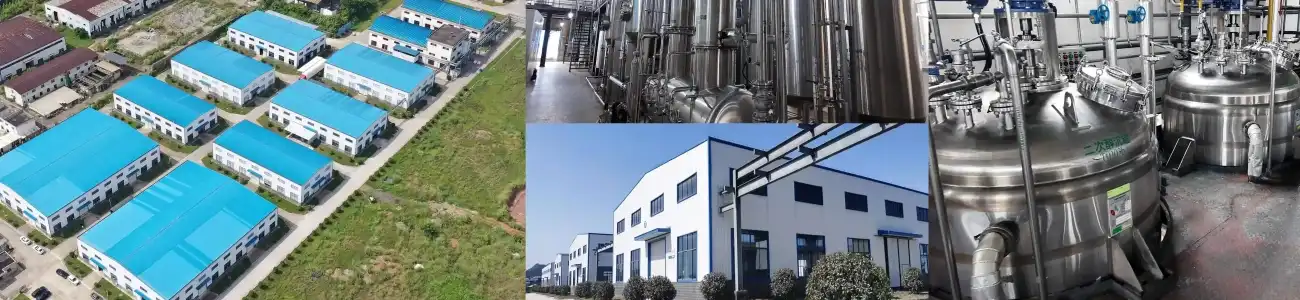
Top producers have supply lines that are vertically linked, which means they control everything from growing the plants to packing them up. This interface lets you respond quickly to changes in specifications and the creation of custom extracts. Look for providers that put out yearly quality reports, environmental audits, and third-party lab validation studies. These are signs of openness that commodity traders don't usually give out.
When making more of a product, the manufacturing ability is important. Facilities that make more than 50 metric tons of goods every month show that their equipment is advanced and that they can reliably get their raw materials. During site checks, whether they are virtual or real, look for clean room classifications, HEPA filtration systems, and specialized production lines that keep allergen and non-allergen ingredients from getting mixed up.
OEM and Private Label Capabilities
Suppliers that offer OEM services make it easier to build a brand because they take care of testing the composition, stability, and legal paperwork. This is helpful when moving into new product areas without having your own R&D department. Private labeling includes custom package shapes, such as 25 kg fiber drums in bulk or consumer-ready pouches, that fit certain routes of distribution.
Minimum order numbers (MOQ) show how flexible a seller is. Trial batches for formulating can be made with a 25 kg MOQ, but known names can get better prices when they order 500 kg or more. Talk about sample policies right away. Reliable sellers offer free samples (usually 100–500g) with full COA paperwork, which shows that they are sure their products are consistent.
Logistics and Supply Chain Reliability
Keeping goods in storage in target markets close to home cuts down on shipping times and costs. When suppliers keep product hubs in key areas, like Los Angeles for US distribution, they can fill orders in 7 days instead of the 30 to 45 days that it usually takes for direct imports. This responsiveness is very important when handling product turns and dealing with sudden increases in demand.
Use transit testing procedures to check the integrity of the packing. Suppliers of good quality use moisture-barrier PE inner bags with heat-sealed seals to keep dampness out during ocean freight. The outer fiber drum should meet UN approval standards for sending dangerous materials, even though the ingredient itself is not dangerous. This shows that you are aware of good transportation practices.
How to Match Goji Extract Powder Products to Your Specific Procurement Needs
Different industries require tailored specifications that balance bioactivity, processing compatibility, and cost structures.
Application-Specific Selection Criteria
Dietary supplement makers focus on standardizing high amounts of polysaccharides (40–50%) so they can make claims about their effectiveness in smaller dose sizes. The extract should have a low moisture content (<3%) so that it can still flow through packaging equipment and keep tablets from getting hard when they are compressed. The consistency of capsule fill weight is affected by the size distribution of the particles. To keep automatic dosing systems from bridging, mention a minimum of 80 mesh.
Formulators of drinks need better quick dispersibility, which can be achieved by using agglomeration or spray-drying settings that make particles with pores. To see how well it dissolves, mix 5 grams in 100 milliliters of room-temperature water and stir gently. Premium extracts dissolve in 60 seconds without foaming up. Color stability in cold storage (tested at 4°C for 90 days) suggests how RTD goods will look on the shelf.
For cosmetic uses, microbe purity must be higher than food-grade standards. This usually means checking the preservative's ability to work according to USP <51>. To make sure the extract doesn't mess up emulsion stability or pH buffering systems, it should be tested to see if it works with popular cosmetic bases like glycerin, propylene glycol, and water. Particle sharpness is very important—ask for 100 mesh or smaller to keep skin serums from feeling gritty.
Sample Evaluation Protocols
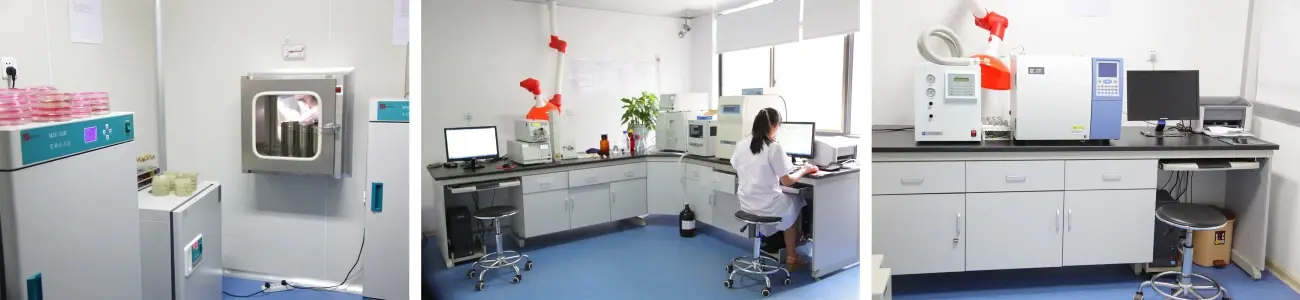
Before placing a large order, try a sample thoroughly across a number of different factors. Besides looking over the COA, you should use the Karl Fischer titration to check the moisture content in-house and an independent lab to confirm the polysaccharide levels. This double check finds differences between what the seller says and what the final product is made of.
Use sample batches for formulation studies to see how well they work with current ingredient systems. Watch out for changes in color, separation, or viscosity during rapid aging (40°C/75% RH for 3 months mimics a 2-year shelf life). Write down the smell, taste, and color of the product because these affect how well people like it when it's finished.
Contract Terms and Quality Agreements
Make sure that supply deals are clear and include accepted values for key parameters like polysaccharides (±2%), moisture (<5%), and heavy metals as needed. Set up rules for testing and ways to settle disagreements when batch testing shows results that don't match what was expected. Quality agreements should require that any changes to the manufacturing process that might affect the qualities of the product be reported in advance.
Payment terms in Goji Extract Powder are usually based on how many orders you have. For established relationships, try to negotiate 30 to 60-day terms instead of reserve requirements. Include "force majeure" terms that cover shortages of raw materials caused by farming issues, but make sure that sellers keep strategic inventory buffers. Exclusivity deals may get you better prices, but they also make it harder to change where you get your supplies if quality problems arise.
Final Decision-Making Criteria for B2B Buyers
Strategic buying uses weighted decision matrices that are tailored to business goals to balance a number of factors.
Quality-Cost Optimization Framework
Even though quality extracts cost more ($25–45/kg FOB), they save money because they need less of them in the end product. When figuring out the cost-per-serving, use the bioactive content instead of the price of the raw materials. For example, a 50% polysaccharide extract at $40/kg is more cost-effective than a 20% extract at $20/kg when the bioactivity levels are the same.
Think about the total arrival costs, which include freight, customs fees, and storage. Just-in-time delivery lets suppliers with domestic inventory get rid of 10-15% of the taxes that come with importing goods, based on the HS code classification. This also lowers the costs of keeping inventory on hand. Think about the costs of quality control—ingredients that need a lot of tests before they can be used add to the costs of doing business compared to certified suppliers with good quality paperwork.
Risk Mitigation Through Supplier Diversification
Businesses that depend on a single-source seller run the risk of having their supplies interrupted by problems in production or shortages in agriculture. Find at least two providers who meet the basic requirements and test them against each other on a regular basis to keep prices and performance standards competitive. Dual sourcing makes things more complicated, but it guards against "force majeure" situations and gives you more bargaining power.
Check the creditworthiness and image of suppliers by looking at their credit records and industry reputations. Trading companies that are new may have good prices, but they may not have the right infrastructure to handle technical help or settle quality issues. Established makers who have been in business for 10 years or more have shown that they can weather changes in the prices of farm commodities.
Procurement Checklist for Confident Decision-Making
Before choosing a seller, make sure you've checked all of the following points:
- COA documentation showing batch-specific testing for polysaccharides, heavy metals, pesticides, and microbiology
- Facility certifications (GMP, ISO, organic) with current validity confirmed through issuing authorities
- Sample performance matching claimed specifications through independent laboratory verification
- Clear terms for minimum order quantities, lead times, and shipping terms documented in quotations
- Technical support that is responsive by answering design questions quickly
- Reference customers willing to discuss their experience with product consistency and service quality
- Traceability records linking extract batches to raw material harvest records
- Pricing structure showing volume discount tiers and surcharge policies
This methodical strategy lowers the risks of buying while building relationships with suppliers based on performance data rather than just marketing claims.
Conclusion
To pick a good goji extract powder, you need to carefully check the accuracy of the standards, the extraction method, and the supplier's infrastructure. We've talked about how design choices are based on polysaccharide content, water-based extraction, and full certifications. When making immune support pills, functional drinks, or cosmetic active systems, good sourcing teams find a balance between bioactive potency and application-specific needs. Using sample testing methods, traceability paperwork, and two different sources of supply can help reduce quality differences and improve cost structures. Vertically integrated suppliers, from GAP-certified farms to GMP manufacturing sites, give brands the trust they need for their products to be successful in the long run. When purchasing managers have clear expectations for suppliers and technical evaluation criteria, they can easily explore the market and find ingredients that meet both formulation performance standards and regulatory compliance demands.
FAQ
1. What certifications should quality Goji Extract Powder include?
The best plant extracts have NSF GMP certification, which verifies the production process, and either ISO 22000 or FSSC 22000 certification, which verifies the food safety management system. Organic certification (USDA or EU guidelines) proves that the crops were grown without using pesticides, and Kosher and Halal certifications make the products easier to find in stores. These validations by a third party leave audit trails that quality claims made by the company itself can't match.
2. How can I verify authenticity of polysaccharide content claims?
Ask for Certificates of Analysis that are unique to each batch and show the UV-VIS spectrophotometry data at a wavelength of 490 nm. This is the usual way to measure Lycium barbarum polysaccharides. The correctness of the supplier is confirmed by an independent test check done by ISO 17025-approved labs. Reputable makers are happy for third parties to test their products and will send you samples to keep for proof reasons.
3. What minimum order quantity should I expect for trial purchases?
Well-known makers usually accept 25 kg trial orders, which are enough for formulating new products and trying their stability. Some providers offer smaller samples (100–500g) with full paperwork for the first test of compatibility. Volume price models usually start at orders of 500 kg or more, but there is room for discussion if there is a chance of a long-term relationship.
Partner with OHI for Pharmaceutical-Grade Goji Extract Powder Supply
The company OHI (Organic Herb Inc.) sells standardized Goji Extract Powder that comes from GAP-certified farms and is made in CGMP-compliant factories. Our water-extracted powder still has 50% carbohydrates, and the uniformity of each batch has been checked by outside testing methods. We have four strategically located stores across the United States that allow us to complete orders within seven days. We also hold NSF, GMP, FSSC 22000, Kosher, Halal, and Organic certifications that make your regulatory paperwork easier.
As a company that makes plant extracts and is sold on the stock market (Stock Number: 872213), we've spent over $1.2 million on testing equipment like HPLC-ELSD and GS-MS systems to make sure that every 25 kg drum meets the standards for polysaccharide content, heavy metal limits, and microbial purity. Our 42-person research and development team works with formulation scientists to find the best extract factors for each application, like making eye health supplements, immune-boosting drinks, or anti-aging makeup.
We provide free samples with full COA paperwork so that your team can check our quality claims before committing to buy. Email our technical team at info@organic-herb.com to talk about your formulation needs and get unique specs. As a dependable source of Goji Extract Powder, OHI blends knowledge of farming with precision manufacturing to help you reach your product development goals by providing you with reliable, traceable ingredient solutions.
References
1. Chang, S.K., & Alasalvar, C. (2016). Goji Berry Bioactive Compounds and Health Benefits. Journal of Agricultural and Food Chemistry, 64(9), 1987-1996.
2. Potterat, O. (2010). Goji (Lycium barbarum and L. chinense): Phytochemistry, Pharmacology and Safety in the Perspective of Traditional Uses and Recent Popularity. Planta Medica, 76(1), 7-19.
3. Amagase, H., & Farnsworth, N.R. (2011). A Review of Botanical Characteristics, Phytochemistry, Clinical Relevance in Efficacy and Safety of Lycium barbarum Fruit. Food Research International, 44(7), 1702-1717.
4. Jin, M., Huang, Q., Zhao, K., & Shang, P. (2013). Biological Activities and Potential Health Benefit Effects of Polysaccharides Isolated from Lycium barbarum L. International Journal of Biological Macromolecules, 54, 16-23.
5. Yao, X., Peng, Y., Xu, L.J., Li, L., Wu, Q.L., & Xiao, P.G. (2011). Phytochemical and Biological Studies of Lycium Medicinal Plants. Chemistry & Biodiversity, 8(6), 976-1010.
6. Tang, W.M., Chan, E., Kwok, C.Y., Lee, Y.K., Wu, J.H., Wan, C.W., & Chan, S.W. (2012). A Review of the Anticancer and Immunomodulatory Effects of Lycium barbarum Fruit. Inflammopharmacology, 20(6), 307-314.
Standard Disclaimer (DSHEA):
These statements have not been evaluated by the Food and Drug Administration.
This product is not intended to diagnose, treat, cure, or prevent any disease.

Send Inquiry
Related Industry Knowledge
- Market Insights: The Rising Demand for Rosehip Fruit Extract
- Exploring the Wonders of Rhodiola Rosea
- Reishi Mushroom Skin Benefits: The Ultimate Guide
- Are kidney beans good for weight loss?
- How to use rosemary oil for skin
- Best Rhodiola Rosea Supplement: Smart Choice Guide
- What is the best reishi mushroom extract?
- What is sodium copper chlorophyllin?
- Natural Rhodiola Rosea Extract: Origin, Composition, and Key Features
- USA Import Standards and Poria Cocos Extract: A Supplier’s Perspective