
The Science Behind Rosehip Extract
Jun 12, 2026
Rosehip Fruit Extract comes from the dried pseudo-fruits of Rosa canina. It is a botanically rich ingredient that is becoming more popular in the cosmetics and functional food industries. This water-extracted concentrate keeps the natural L-ascorbic acid (Vitamin C) along with flavonoids, triterpenic acids, and galactolipids. These bioactives help solve modern manufacturing problems by making products more stable, better bioavailable, and appealing to people who want to use clean labels. Procurement experts can tell the difference between high-quality, constant supply, and low-quality material by understanding the phytochemical complexity and standardization processes behind rosehip extracts.
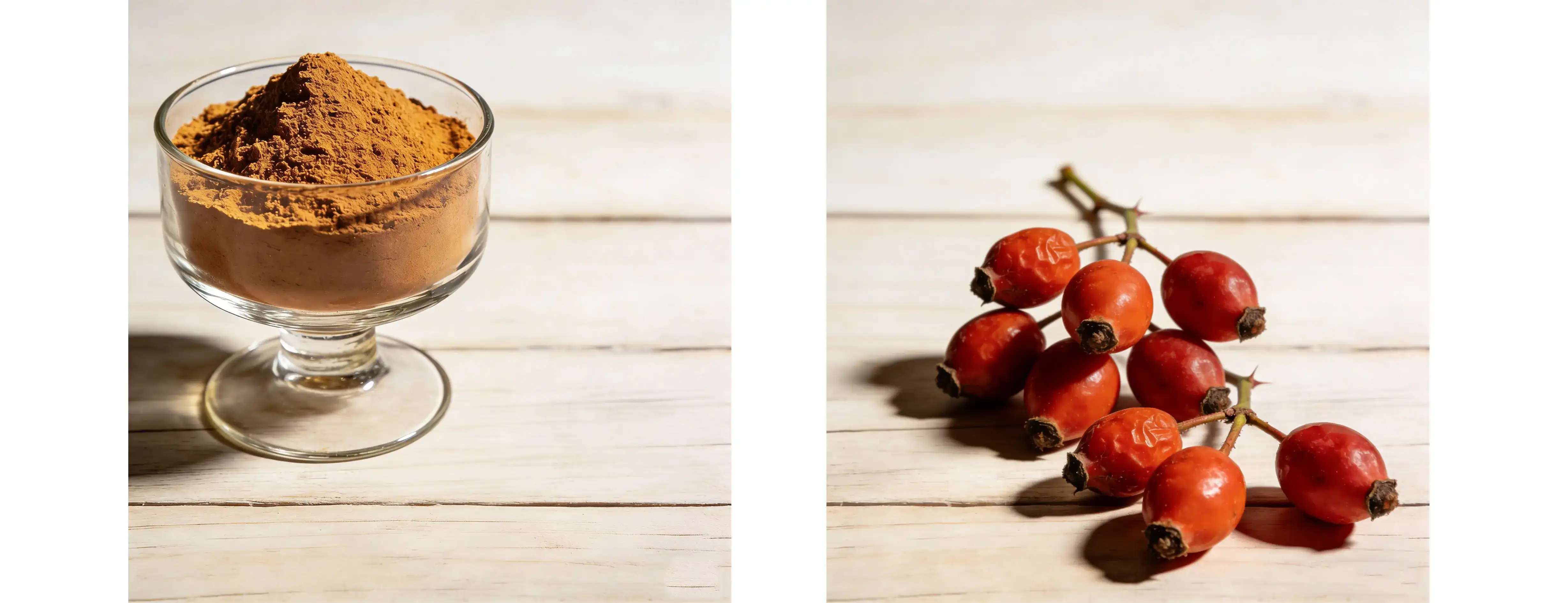
Understanding Rosehip Fruit Extract: Composition and Nutritional Value
Botanical Origin and Extraction Methodology
Rosa canina, the "dog rose," thrives in chilly climates and has beautiful crimson hips. The plant's identity ensures high nutritional content when collected at optimal maturity. We exclusively buy from regulated agricultural zones that pick after the first frost to boost polyphenols and minimize acidity.
Water extraction preserves water-loving bioactives without synthetic residue, meeting clean label standards. Controlled temperature soaking (below 60°C) prevents Vitamin C degradation. Second, nano-membrane filtration concentrates actives and eliminates tannins and insoluble fiber. The 10:1 extract ratio implies 10 kilograms of raw fruit yields 1 kg of homogeneous powder. This concentration factor ensures powder consistency.
High-Performance Liquid Chromatography (HPLC) reveals that Rosa canina has at least 5% natural Vitamin C. This naturally occurring form is stabilized by bioflavonoids, including rutin and quercetin, which boost antioxidant activity in formulations. The brownish-yellow tint indicates intact polyphenols, not overprocessed white powders with oxidative loss.
Nutritional Profile and Bioactive Components
A bioactive matrix with diverse applications makes Rosehip Fruit Extract economically valuable. Natural Vitamin C helps build collagen with other chemicals, making it excellent for pills and skin stretchiness. Flavonoid glycosides protect blood vessels, while galactolipids, notably GOPO (glycoside of mono- and diglycerol), reduce inflammation and improve mobility.
Anti-inflammatory triterpenic acids like ursolic and oleanolic acids provide rosehip its edge over single-nutrient compounds. This compositional complexity allows formulators to offer products with health claims like immune system support and skin health without synthetic mixtures. Our quality control includes HPLC for Vitamin C, UV-Vis spectrophotometry for total polyphenols, and FSSC22000 microbial testing. These parameters are included on the COA of each 25-kilogram drum. Purchasing teams obtain explicit quality assurance.
Organic vs. Conventional Processing
USDA and EU Organic certification alter farming and food processing inputs. Synthetic pesticides and fertilizers are banned in organic rosehip production. This implies rosehips have less environmental impact and leave cleaner residues, which is significant when targeting health-conscious European and North American consumers. Our organic-certified extract employs the identical water extraction technology but exclusively uses fruit from GAP-certified organic farms in our 8,000-acre planting bases in Jiangxi and Hubei provinces.
Conventional handling maintains phytochemical profiles under tight quality monitoring. When choosing between organic and normal, consider market fit and price. Organic products cost 20–30% more, but market research suggests that they make luxury skin care and nutraceuticals stand out. Conventional materials are cost-effective and bioactive for high-volume usage like sports nutrition mixtures and functional beverage bases.
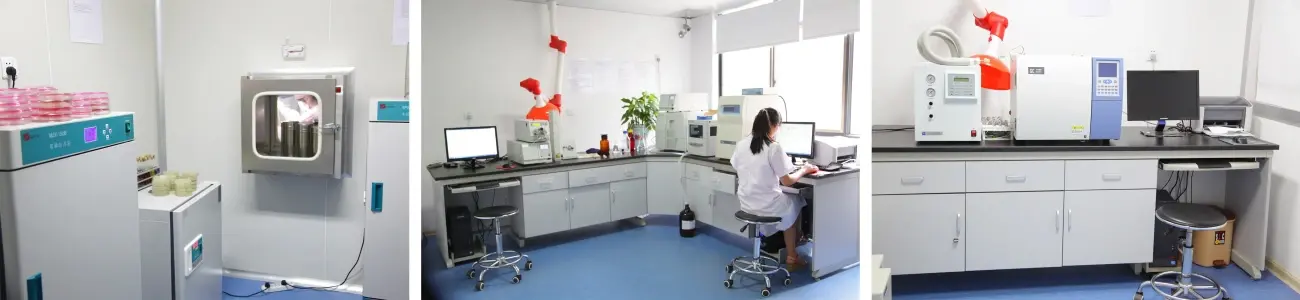
Scientific Benefits and Applications of Rosehip Fruit Extract
Anti-Aging and Antioxidant Mechanisms
Rosehip Fruit Extract is one of the finest plant-based antioxidants according to ORAC testing. Antioxidants like Vitamin C and flavonoids protect cells from ROS, which accelerate aging. This includes cosmetics that battle photoaging, uneven skin tone, and strength loss.
Blocking matrix metalloproteinase-1 is crucial. Skin collagen fibers are broken down by MMP-1. Natural aging and UV radiation accelerate this. Rosehip polyphenols reduce MMP-1 synthesis while Vitamin C makes procollagen, according to lab research. This makes this substance essential to anti-aging programs. Formulators can leverage these methods to develop oral collagen-free cosmetic treatments and serums that penetrate the stratum corneum.
Joint Mobility and Flexibility Support
Rosehip fruit galactolipids impact white blood cell pathways, offering a new joint pain treatment. Rosehip's process targets inflammatory signals, unlike glucosamine or chondroitin, which act on cartilage formation. It works well with other joint nutrients. Sports nutrition firms seeking clean-label anti-inflammatory compounds will benefit.
Standardized extract is recommended for nutraceutical usage at 2.5–5 grams per day. Vegetable pills or tablets containing MSM or curcumin are typical. Our rosehip extract works well in solid beverages, which are becoming increasingly popular as functional wellness drinks for busy people, since it doesn't mix with water. Product makers should consider the extract's faint flavor. This can be corrected with natural sweeteners or fruit flavors.
Immune Support and Wellness Applications
Immune-boosting products include rosehip, a natural source of Vitamin C. Instead of ascorbic acid alone, bioflavonoids help the body absorb and retain vitamins in plasma. This bioavailability advantage lets marketers develop lower-dose products that function, saving money.
Functional food firms add rosehip juice to immunization shots, effervescent pills, and drink bases to make them healthier. When the pH is between 3.5 and 4.5, the extract stays stable during processing, making it suitable for longer-lasting ready-to-drink products. Technical teams should conduct swift, stable testing under their unique formulation since minerals, notably iron and copper, accelerate Vitamin C oxidation. Complex compounds are commonly chelated with citric acid or sodium citrate to maintain bioactivity.
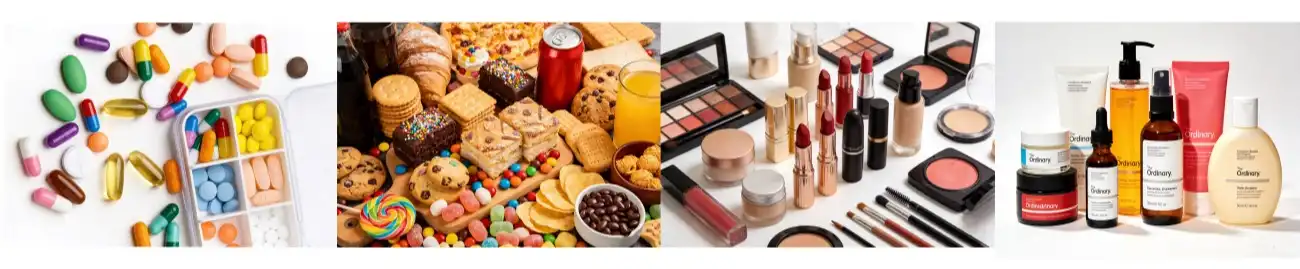
Rosehip Fruit Extract vs. Related Products: Making the Right Choice
Distinguishing Extract from Rosehip Seed Oil
People often get Rosehip Fruit Extract and rosehip seed oil mixed up. These are two different substances that are used for different things. Rosehip seed oil is made by cold pressing the seeds inside the hips. It mostly has lipophilic chemicals like tocopherols, carotenoids, and important fatty acids (linoleic and linolenic). When it comes to face oils and rich creams, this oil is used in cosmetics that need to moisturize and repair the skin barrier.
On the other hand, Rosehip Fruit Extract has water-soluble actives that can be used in serums, toners, oral vitamins, and drinks. The oil moisturizes and restores lipids, while the extract offers antioxidant power and useful nutrition. When buying materials, they should match the structure of the formula: hydrophilic systems (like gels, water solutions, and capsules) need the extract, and lipophilic systems (like balms and oil phases) need the seed oil. Some advanced formulas use both to fight multiple signs of age in the face at the same time.
Powder vs. Liquid Extract Considerations
The shape of a material has a big effect on its stability, transportation, and formulation freedom. Our powdered extract (10:1 ratio, 5% Vitamin C) has the longest shelf life—24 months—when kept below 25°C in drums that are covered and have moisture barriers. Powder forms make foreign shipping easier, lower freight costs because they are lighter, and get rid of the need for a cold chain. Powder is great for compressing tablets, filling capsules, and making dry drink mixes because it's easy to reconstitute in water-based systems.
Liquid extracts are useful for producers who use inline dosing devices, but they can be unstable. Preservative systems (potassium sorbate, sodium benzoate) are needed for water-based drinks to stop microbes from growing, and Vitamin C breaks down faster in solution. Custom liquid extracts can be made for clients who buy a lot of products and need them quickly, but powder is still the best B2B format for keeping quality high and allowing for inventory freedom. When stored, putting things in 25 kg fiber drums with PE covers keeps them from getting wet or rusty.
Organic Certification and Quality Benchmarks
Organic approval makes sure that both the growing methods and the handling methods are honest. Our organic rosehip extract is certified by the USDA, the EU, Kosher, and Halal. These are important certifications that let us sell our product in markets in North America, Europe, and the Middle East. These certificates are checked every year by reputable third-party organizations, which makes sure that the food can be tracked from the farm to the final package.
Quality standards are more than just badges. ICP-MS tests for heavy metals like lead, cadmium, arsenic, and mercury make sure that California Prop 65 and EU rules are followed. GC-MS/MS and LC-MS/MS are used for pesticide residue screening, which looks at more than 400 chemicals. USP guidelines say that the total plate count must be less than 10,000 CFU/g, yeast and mold must be less than 1,000 CFU/g, and diseases like E. coli, Salmonella, and Staphylococcus aureus must not be present. These strict rules separate pharmaceutical-grade suppliers from commodity dealers, which has a direct effect on the image of the brand and its standing with regulators.
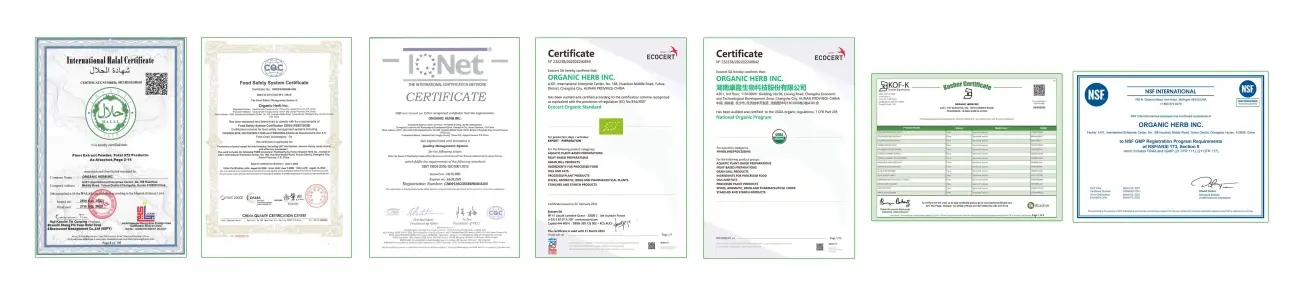
Procurement Insights for Global B2B Clients: Sourcing and Supplier Selection
Evaluating Supplier Credentials and Certifications
Verification of approval is the first step in qualifying a supplier. Organic Herb Inc. is a publicly traded company (Stock Number: 872213), and its quality control systems are regularly checked to make sure they are clear. Our NSF GMP approval covers everything that goes into making dietary supplements, including building the facility, making sure the processes work, and training staff—all of which have a direct effect on how consistent the products are. FSSC22000 approval combines HACCP concepts with food safety management, which is very important for functional food producers.
Getting ISO 9001:2015 approval shows that you handle quality in a planned way during all stages of production, distribution, and purchasing. Ask for more than just certificates. You should also ask for records of batch analyses, data on stability under fast conditions (40°C/75% RH for three months), and microbial challenge tests. Reliable sellers give you these technical dossiers ahead of time, which lets your R&D teams speed up formula creation without having to do extra tests. 42 professionals are working at our R&D center in Changsha, including scientists with Ph.D.s. This makes sure that technical help goes beyond just supply ties.
MOQ, Pricing Structure, and Lead Time Optimization
Minimum order amounts hit a good mix between how efficiently suppliers make things and how much inventory buyers have. Our 25kg MOQ, which is the same as one drum, allows for small-scale tests and prototype development, which is different from most companies in this field, who require 100kg minimums. This gives startups and well-known brands the freedom to try out new product lines without having to worry about their capital getting stuck on extra inventory.
The way prices are set depends on the supply of raw materials, the yield of extraction, and the cost of approval. Seasonal crop cycles (September through November in the Northern Hemisphere) affect spot prices, but annual deals keep prices stable. Volume levels usually start at 500 kg, and savings get bigger as you commit to more than one ton. For stock items stored at our four U.S. delivery centers (East Coast, West Coast, Midwest, and South), the time between order approval and shipment is ten days. This is shorter than the 45–60 day freight time from Asia. When local inventory protects against supply delays, just-in-time buying is possible. This is a huge benefit during times of port congestion or logistics instability.
Private Label and OEM Collaboration Opportunities
Custom preparation services go beyond just supplying standard materials. Our OEM services include formula creation, stability optimization, and package design. These are all-in-one options for brands that don't have their own R&D departments. Through our private label programs, entrepreneurs can put out their own brands on goods while taking advantage of our production scale and legal knowledge. We take care of export paperwork, customs clearing, and Certificate of Free Sale paperwork, making it easier for brands outside of the U.S. to buy things from other countries.
Collaboration includes coming up with custom requirements. A makeup customer recently asked for a 20:1 Rosehip Fruit Extract with a high GOPO content (>1%) for a high-end face serum. This was possible by selective membrane fractionation. This kind of customization shows technical flexibility, which turns sellers into development partners. Check to see if possible sellers are ready to invest in your product idea through pilot batches and stability studies. These are signs of a long-term relationship, not just a one-time sale of goods.

Conclusion
Rosehip Fruit Extract is a plant ingredient that has been proven to work by science and meets important needs in the skincare, and functional food industries. Its bioactive profile, which is water-extracted and standardized to give uniform Vitamin C, flavonoids, and galactolipids, solves formulation problems related to stability, bioavailability, and clean label. The success of a procurement depends on how well the seller meets three criteria: the level of licensing, the professional support, and the stability of the supply chain.
As the market for anti-aging skin care, joint health supplements, and drinks that boost the immune system grows, smart sourcing partnerships with vertically integrated makers become valuable competitive assets. We are a trusted partner for brands that need both quality assurance and operational flexibility in their rosehip extract supply chain because we grow our rosehips in a way that is GAP-certified, use modern extraction technology, store them in the U.S., and have all the necessary certifications.
FAQ
Q1: What differentiates rosehip extract quality between suppliers?
Quality differences are caused by three things: where the raw materials come from, how they are extracted, and how strict the standardization is. Top providers get their crops from controlled growing areas with clear records of when they were harvested, which makes sure that the phytochemical profiles are at their best. Heat-sensitive chemicals are better preserved by water extraction at tested temperatures than by strong solvent methods. To standardize to certain Vitamin C percentages (5% is what we need), HPLC proof is needed. This is an expensive quality control step that many common sellers skip. Instead of general specification sheets, ask for Certificates of Analysis that are specific to the batch and show the factors that were tested.
Q2: How should rosehip extract be stored to maintain stability?
Keep sealed packages below 25°C in places with low humidity (below 60% RH). Once the drums are open, use desiccant packs and reseal them tightly to keep air out as much as possible. Vitamin C stays stable for longer when it doesn't get as much air. Refrigeration (2–8°C) makes the shelf life even longer, but it's not necessary if the moisture shields are still in place. Avoid storing things near heat sources or in direct sunlight, as these will speed up the breakdown of polyphenols.
Q3: Can rosehip extract be combined with other actives in formulations?
Compatibility is based on pH and how chemicals react with each other. In vitamins, rosehip extract works well with collagen peptides, hyaluronic acid, and turmeric extract. It works well with niacinamide and peptides in makeup. Copper and iron can speed up the breakdown of vitamin C, so don't mix them with other things without chelating agents. When making complex matrices, you should try their stability to make sure they keep their power over the shelf life you want them to last.
Partner with a Trusted Rosehip Fruit Extract Manufacturer
OHI (Organic Herb Inc.) delivers pharmaceutical-grade Rosehip Fruit Extract backed by comprehensive certifications—NSF GMP, FSSC22000, USDA Organic, Kosher, and Halal—ensuring your formulations meet the strictest global standards. Our 10:1 water-extracted powder, standardized to 5% natural Vitamin C, ships from four U.S. warehouses with lead times as short as ten days, eliminating overseas freight delays. We provide complimentary samples and technical consultation to accelerate your product development cycle.
Whether you're formulating clean-beauty skincare, or functional beverages, our vertically integrated supply chain—from 8,000-acre GAP-certified farms through ISO-certified manufacturing—guarantees batch consistency and regulatory compliance. Our R&D team collaborates on custom specifications and stability optimization, transforming us from ingredient suppliers into development partners. Contact us at info@organic-herb.com to discuss your Rosehip Fruit Extract requirements and discover how our quality-first approach strengthens your brand's competitive position.
References
1. Chrubasik, C., et al. "A Systematic Review on the Rosa canina Effect and Efficacy Profiles." Phytotherapy Research, vol. 22, no. 6, 2008, pp. 725-733.
2. Winther, K., et al. "The Anti-Inflammatory Properties of Rose-Hip." Inflammopharmacology, vol. 24, no. 2-3, 2016, pp. 89-97.
3. Lattanzio, V., et al. "Bioactive Polyphenols: Their Role in Quality and Storability of Fruit and Vegetables." Journal of Applied Botany and Food Quality, vol. 76, no. 3-4, 2003, pp. 128-146.
4. Daels-Rakotoarison, D.A., et al. "Effects of Rosa canina Fruit Extract on Neutrophil Respiratory Burst." Phytotherapy Research, vol. 16, no. 2, 2002, pp. 157-161.
5. Andersson, S.C., et al. "Effects of Rose Hip Intake on Risk Markers of Type 2 Diabetes and Cardiovascular Health." European Journal of Clinical Nutrition, vol. 66, no. 5, 2012, pp. 585-590.
6. Ilyasov, I.R., et al. "Bioactive Compounds and Antioxidant Activity of Rose Hips of Different Species." Plants, vol. 10, no. 11, 2021, article 2363.
Standard Disclaimer (DSHEA):
These statements have not been evaluated by the Food and Drug Administration.
This product is not intended to diagnose, treat, cure, or prevent any disease.

Send Inquiry
Related Industry Knowledge
- What is red yeast rice good for?
- Coenzyme Q10 (CoQ10): Biohacking Mitochondria for Energy, Longevity, and Anti-Ageing
- How to use grape seed extract powder for skin
- How to use rosemary oil for skin
- Where to buy strawberry extract?
- When to take saw palmetto morning or night?
- Natural Rhodiola Rosea Extract: Origin, Composition, and Key Features
- Poria Cocos Mushroom Extract as Functional Foods in Industry
- Roseroot extract (Rhodiola rosea) for stress & exhaustion
- USA Market Insights on Sourcing High-Quality Polyporus Umbellatus Extract