
Coenzyme Q10 (CoQ10) & Ubiquinol: What's the Difference?
Jul 3, 2026
When formulating dietary supplements or functional ingredients, understanding the distinction between Coenzyme Q10 Powder and Ubiquinol becomes crucial for product developers and procurement teams. Essentially, CoQ10 exists in two primary forms: ubiquinone (the oxidized state) and ubiquinol (the reduced, active state). While both forms convert within the body, ubiquinol represents the bioactive form that cells directly utilize for energy production and antioxidant protection. Coenzyme Q10 Powder, typically supplied as ubiquinone at 98% purity, serves as the stable, cost-effective raw material that manufacturers worldwide rely on for supplement and cosmetic formulations. This fundamental difference impacts formulation strategies, bioavailability profiles, and ultimately, your product's market positioning.
Understanding Coenzyme Q10 and Ubiquinol: Key Basics
The cellular energy environment depends a lot on these two connected molecules, but their different properties affect how we choose ingredients for industrial uses.
The Chemical Nature of CoQ10
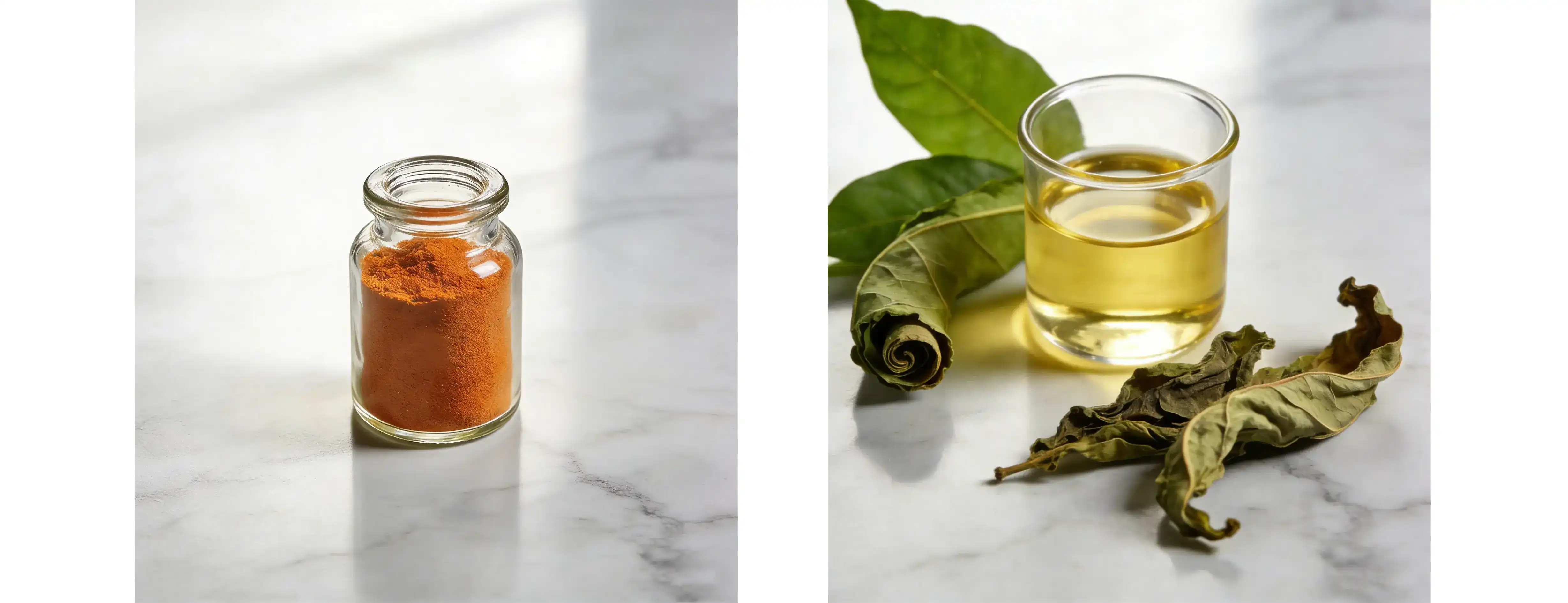
Coenzyme Q10 Powder, also known as ubiquinone-10, is a lipid-soluble benzoquinone chemical that is organically made by microbes through the fermentation process. This way of making sure that the all-trans isomer configuration is chemically active, which is very important for the effectiveness of the product. The combination looks like an orange solid powder and is very stable at high temperatures if it is handled correctly. It is part of the electron transport chain events inside mitochondria that are needed for ATP production, which is what metabolic processes run on. Its chemical structure has a quinone head group connected to a ten-unit isoprenoid tail. This gives it special solubility properties that product developers need to think about when making new products.
What Makes Ubiquinol Different
CoQ10 is reduced to ubiquinol, which has two extra hydrogen atoms that change its ability to do important things. This change in its biochemistry makes it a better lipid-phase antioxidant that fights free radicals before they damage cell walls. In healthy people, about 90 to 95% of the CoQ10 in their bodies is in the form of ubiquinol. But this number goes down with age and in some metabolic states, which is why the market wants straight ubiquinol supplements. An enzyme-mediated reduction process naturally changes ubiquinone to ubiquinol, but this process gets less effective over time. When it comes to buying things, ubiquinol costs more than regular Coenzyme Q10 Powder because it needs more work to keep it stable and has a shorter shelf life.
Bioavailability Considerations in Product Development
The rates of absorption are very different between these forms, which affects how we build transport systems. Before it can get into the bloodstream, standard Coenzyme Q10 Powder has to be changed into ubiquinol in the intestines and liver. The rate at which this happens depends on the person's age and metabolic efficiency. In older people, clinical studies show that ubiquinol supplements have a 2.6 times higher plasma concentration than similar amounts of ubiquinone. However, this absorption gap gets a lot smaller when the right lipid carriers or solubilization methods are used to make ubiquinone. Nano-emulsification or cyclodextrin complexation are advanced manufacturing methods that can make ubiquinone more easily absorbed to levels that are close to ubiquinol. When B2B companies are trying to reach price-conscious customers, it's often more cost-effective to improve ubiquinone transport methods than to switch to more expensive ubiquinol raw materials.
Comparison Between CoQ10 Powder and Ubiquinol: Which Should You Choose?
When choosing the right form, you have to weigh technical performance against business needs. This is an important choice that affects how competitive your product is.
Stability and Shelf Life Analysis
Coenzyme Q10 Powder in its ubiquinone form is very stable under normal storage conditions. It will stay active for 24 to 36 months if kept below 25°C in dark, sealed cases. This strong stability profile makes operations easier, cuts down on waste, and works with global delivery networks. On the other hand, ubiquinol needs to be carefully stabilized with antioxidants and encapsulated in a certain way to stop it from quickly turning back into ubiquinone. When manufacturers use ubiquinol, they have to follow tighter cold-chain rules and keep their goods for shorter periods of time. These changes have a direct effect on the costs of the supply chain. We've seen that high-purity Coenzyme Q10 Powder always has the same orange crystalline look across runs. However, ubiquinol formulas may have color changes that show how oxidized they are. Because ubiquinone is forgiving, it makes production easier and quality control easier for contract makers who handle various product lines.
Cost-Effectiveness for Different Applications
The prices of raw materials show big differences that buying teams can't ignore. Premium ubiquinol ingredients usually cost three to five times more than Coenzyme Q10 Powder of the same quality. This difference affects the overall cost of the end product. Because of this difference in price, ubiquinone is the obvious choice for popular supplements aimed at price-conscious customers or high-dose formulas where the cost of ingredients is the main factor affecting production budgets. A lot of athletic nutrition brands like ubiquinone at doses of 100 to 200 mg because ubiquinol is too expensive for that amount. On the other hand, premium anti-aging formulas or heart-healthy vitamins may be able to back marketing claims about ubiquinol's higher bioavailability. Smart formulators sometimes use both types together, with ubiquinone as the main ingredient and smaller amounts of ubiquinol added to keep costs down and efficiency high.
Manufacturing and Formulation Flexibility
Coenzyme Q10 Powder works well in a variety of delivery systems, such as oil-based softgels, dry-blended pill structures, and functional beverages. Its solid structure lets it be directly compressed into tablets when mixed with the right excipients. This gives formulators options that aren't available with ubiquinol. Coenzyme Q10 Powder that meets the 98% standard dissolves easily in medium-chain triglyceride oil or soybean oil matrices, which are popular in softgel encapsulation, which is the format that people ask us to make supplements in the most. Because of temperature sensitivity during processing, temperatures must stay below 50°C to keep the strength, and this rule applies to both forms equally. Ubiquinol needs extra stabilization systems and usually comes in unique delivery matrices, which limit recipe flexibility and make it more dependent on specialized sources.
Sourcing and Procurement Insights for CoQ10 Powder and Ubiquinol
To find your way around the global supply scene, you need to know the quality indicators, certification standards, and seller skills that can help you tell the difference between trustworthy partners and problematic vendors.
Quality Specifications That Matter
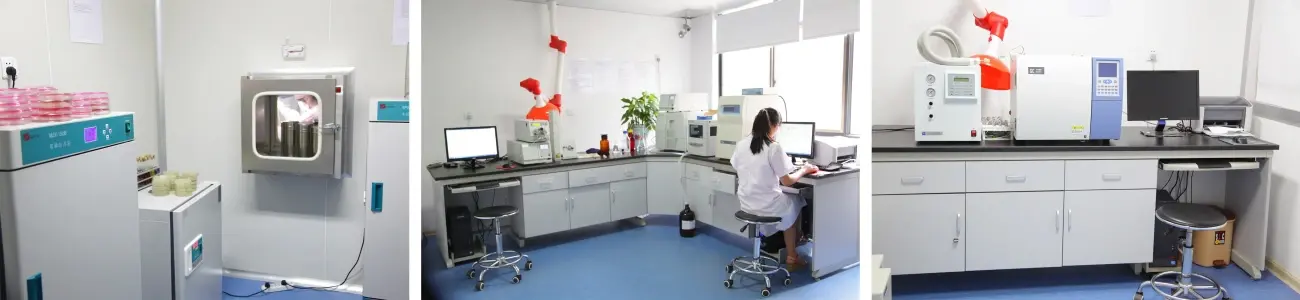
Our Coenzyme Q10 Powder at Organic Herb Inc. is 98% pure, as shown by HPLC analysis. It meets USP, EP, and JP pharmacopeia standards that are known by B2B buyers around the world. The all-trans isomer ratio is higher than 99%, which is important for biological activity but is often missed in lower-quality goods that have cis-isomers that are less active. There is no lead or arsenic above 0.5ppm or any heavy metals above 1ppm, which are both well below the limits set by the FDA. These standards protect your brand's name in controlled markets. Total plate counts must be less than 1,000 CFU/g, yeast and mold must be less than 100 CFU/g, and diseases like Salmonella and E. coli must not be present at all. The tests for residual solvents include both Class 2 and Class 3 solvents that might be present from the extraction process, and the levels tested meet the ICH Q3C standards. We ship our products in 25 kg fiber drums with double plastic bags that keep them dry while they're being stored and shipped internationally.
Certification Ecosystem and Compliance
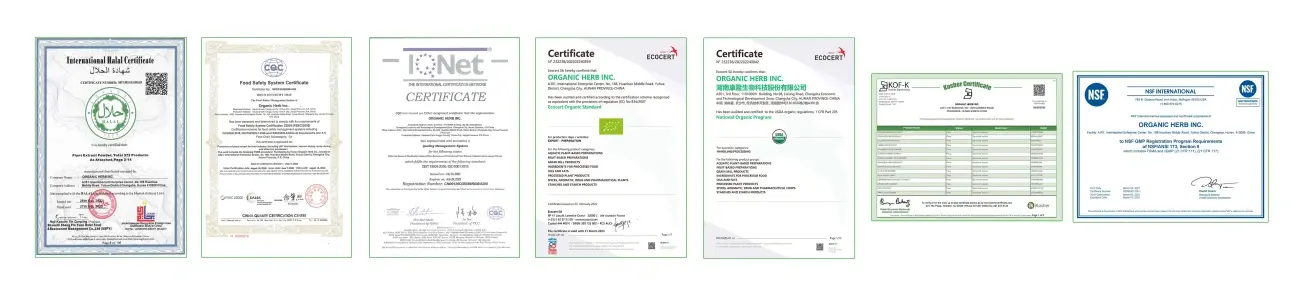
Our factory has a lot of different certificates, such as NSF GMP, Kosher, Halal, ISO 9001, and FSSC 22000. These qualifications make it easier for you to submit your products to different markets' regulatory bodies. These certificates are more than just pieces of paper; they protect your downstream operations by showing that your quality systems have been checked, your production processes have been proven to work, and your batches are always the same. Products going to the U.S. market follow the FDA's Current Good Manufacturing Practices (cGMPs), which are rules for making dietary supplements. Our organic certification lets natural product stores that want to sell products with confirmed clean sources buy our products. Each batch of products comes with all the paperwork you need, like a Certificate of Analysis, ingredient statements, BSE/TSE releases, and a GMO-free certification. This documentation package makes it easier for you to follow the rules when you file NDI alerts or answer store quality surveys. If you know about these licensing standards ahead of time, you can avoid expensive re-formulations or delays in entering the market later on.
Strategic Supplier Evaluation Criteria
Reliable Coenzyme Q10 Powder sellers set themselves apart by having technical skills that go beyond basic making. The R&D center for Organic Herb Inc. is in Changsha. It has 42 technical staff members, including Ph.D. researchers and analytical chemists who use HPLC-ELSD, GC-MS, and atomic absorption spectroscopy systems. With this in-house knowledge, we can reduce the size of the particles, improve the way the oil disperses, and test the stability of your mixture in a way that is unique to your needs. Our GAP-certified planting sites cover 8,000 acres in several provinces and make sure that raw materials can be tracked and come from sustainable sources, which is something that regulators and store buyers are becoming more interested in. With four strategically located warehouses across the United States, we keep our inventory stable, which lets us offer 7-day wait times for domestic orders. This gives you a competitive edge when your production plan is interrupted by sudden increases in demand or shortages of supplies.
Practical Applications and Market Trends: CoQ10 Powder & Ubiquinol in B2B
Real-life examples show how choosing the right ingredients affects how well a product works in different types of markets, each with its own technology needs and customer standards.
Sports Nutrition and Performance Formulations
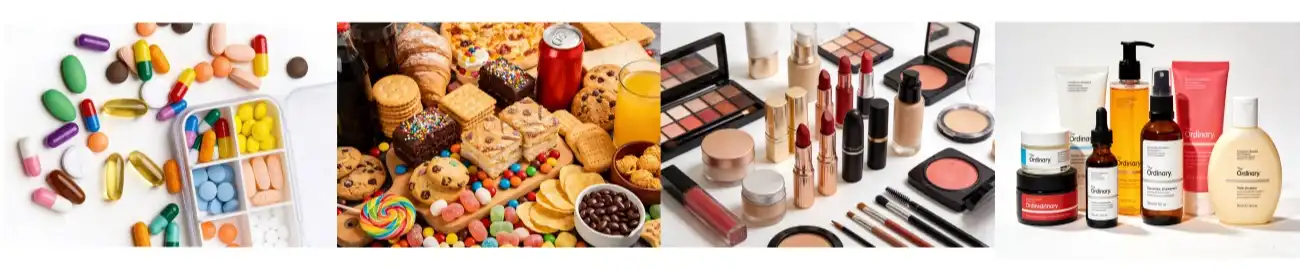
Manufacturers of athletic supplements like to use high doses of Coenzyme Q10 Powder, between 100 mg and 400 mg per day, because these amounts help mitochondria work well during hard training rounds. More and more pre-workout mixes include Coenzyme Q10 Powder along with well-known ingredients like caffeine and beta-alanine. These mixes are aimed at serious athletes who are ready to spend money on complete supplements. The powder form makes it easy to make more of these medicinal doses without raising the price too much for consumers to accept. In a niche market, ubiquinol is used in high-end healing formulas aimed at older athletes or people who care more about solubility than cost. Manufacturers of protein powder sometimes add Coenzyme Q10 Powder as an extra ingredient that makes their goods stand out in a crowded market. For these uses, the ingredients need to be able to mask tastes well and dissolve easily. Our technical team solves these problems by using special processing methods created just for functional food matrices.
Anti-Aging and Cosmeceutical Applications
Coenzyme Q10 Powder is used in skin care products because it is an antioxidant that helps fight obvious signs of aging. However, it can be hard to keep this ingredient stable in emulsion systems. To keep the high-purity Coenzyme Q10 Powder from breaking down during production, it needs to be soaked in oil at temperatures below 50°C. The orange color affects how the end product looks, which is something that formulators can either use to their advantage or hide with other colors. Liposomal encapsulation and nanostructured lipid carriers improve dermal penetration, turning Coenzyme Q10 Powder from an antioxidant that works on the top of the skin into a chemical that claims to work deeper in the skin. Fermentation-derived ubiquinone is good for cosmetic companies that want to place their products as natural. This is in line with the clean beauty trends that are popular in specialty retail outlets. Our pharmaceutical-grade material meets the high standards for cleanliness that high-end skin care brands need while also keeping the batch uniformity needed for mass production.
Functional Foods and Beverage Innovation
Adding fat-soluble Coenzyme Q10 Powder to water-based systems without changing the brightness, taste, or stability of drinks is very difficult from a scientific point of view. Even though natural Coenzyme Q10 Powder doesn't mix with water, newer types that use cyclodextrin inclusion complexes or nano-emulsion technologies get around these problems. These specialist forms cost a lot, but they open up high-growth markets like ready-to-drink energy drinks and enriched water. Instead of being a problem, the orange color works well in fruit-flavored drinks because it confirms taste expectations. Stability testing at pH levels between 3.0 and 7.0 makes sure that ingredients don't break down or lose their potency in acidic drinking settings or when they are heated. Protein bars and energy bites contain Coenzyme Q10 Powder, which is used in these products because the powder's solid structure doesn't affect the processing and allows for clean labeling.
Key Considerations for B2B Buyers: Making the Right Choice
The choice of strategic ingredients goes beyond just technical details. It also takes into account things like the quality of the relationship, the stability of the supply chain, and how well the regulations match up with the business.
Matching Ingredient Form to Target Demographics
The ages of your customers have a big impact on whether ubiquinone or ubiquinol is better for your product line. People between the ages of 18 and 45 are better at turning ubiquinone into ubiquinol, which makes expensive ubiquinol formulations harder to explain from a value argument point of view. On the other hand, goods aimed at older people (60+) may benefit from ubiquinol's lower conversion requirement, which could support marketing stories about supplements that are right for that age group. Athletes and exercise fans often care more about dose and cost-per-serving than bioavailability details, which leads these formulas toward high-potency Coenzyme Q10 Powder. Premium health brands that market their goods as scientifically-backed and cutting-edge often choose ubiquinol to set themselves apart from common rivals, even if it means paying more for brand recognition. By knowing these groups' tastes, you can make sure that the ingredients you choose support your positioning strategy and don't go against how the market sees you.
Scaling Production and Managing Inventory
Minimum order amounts and lead times have a direct effect on how much operating capital is needed and how flexible output can be. Our 25kg MOQ lets new brands test how well the market responds without having to commit to too much inventory, while established brands can take advantage of volume prices on pallet and container amounts. Our U.S. stores have a 7-day lead time, which keeps production from being held up when demand forecasting isn't perfect or when marketing efforts cause sales to spike for no reason. Inventory change tactics are affected by how long an item's shelf life is. Ubiquinone can be stored for 24 to 36 months without going bad, while ubiquinol has stricter storage needs. Your R&D team can test for suitability and stability with free samples before making large purchases. This lowers the risk of formulation errors and keeps you from having to spend a lot of money on costly reformulation rounds. Our delivery network is set up to meet the needs of both new companies that want to experiment with small batches and well-known companies that need a steady supply of large quantities.
Building Supplier Partnerships That Last
Transactional ties make it harder to get expert help and information about the market, which are benefits of better provider partnerships. Our applications team at OHI works with your formulators to improve solubility, set up methods for stability testing, and create regulatory paperwork. These are all value-added services that shorten the time it takes for you to get your product to market. Sharing information about the availability of raw materials, changes in prices, and new rules on a regular basis with your buying team helps them plan for problems instead of just responding to supply disruptions. Our dedication to eco-friendly and sustainable business practices is in line with the growing scrutiny of corporate social responsibility programs by retailers and customers who care about the world. Our GAP-certified planting bases give you more than just proof of where your plants came from. They also protect you from supply chain scams that can destroy your brand's reputation fast. Building ties with providers who see your success as linked to theirs gives you a competitive edge that you can't get with a procurement strategy that only looks at price.

Conclusion
Rather than a simple "better or worse" choice, the choice between Coenzyme Q10 Powder and ubiquinol comes down to how you want to place your product, who you want to buy it from, and what formulation goals you have. The safety, manufacturing freedom, and cost-effectiveness of ubiquinone make it a great choice for many supplement uses. Ubiquinol is considered a special ingredient because it is more bioavailable, which is important for older people and high-end formulas. Smart procurement teams look at these forms not just in terms of the technical specs, but also in terms of their product strategy, supply chain skills, and market positioning. Knowing these differences helps you choose ingredients with confidence, which improves both the performance of the product and its ability to make money.
FAQ
1. Which form provides better value for cardiovascular supplement formulations?
Coenzyme Q10 Powder is the most cost-effective way to make cardiovascular formulas that need 100–200 mg daily doses. At these medicinal amounts, the difference in the cost of ubiquinone and ubiquinol as raw materials gets big, which has a direct effect on your product's profit margins. For cardiovascular uses, clinical studies mostly used ubiquinone instead of ubiquinol, which gives a good scientific reason for choosing the ingredient. Better ways to give ubiquinone, like oil-based softgels or nano-emulsified forms, make it much more bioavailable. This makes it more effective than ubiquinol at a much lower cost. Bioavailability details aren't very important to people who buy heart health products; this is why ubiquinone is the best choice for this market group from a business point of view.
2. How should we store CoQ10 ingredients to maintain maximum potency?
To keep the effectiveness of Coenzyme Q10 Powder for as long as possible, keep it in sealed packages out of direct sunlight and at temperatures below 25°C in places with low humidity. Because the substance is fat-soluble, it can oxidize when it comes in contact with air, water, or high temperatures. This is why it needs to be properly packaged with oxygen shields. Once containers are opened, quickly reseal them to keep air out, and think about moving leftover parts to smaller containers with less headspace. Refrigeration makes Coenzyme Q10 Powder more stable, but it's not usually needed for properly packaged powder. On the other hand, ubiquinol formulas do better when stored cold. Following the first-in, first-out rule for inventory movement makes sure that the freshest ingredients get to your production lines. Keep track of the conditions of storage and test ingredients on a regular basis to make sure their specs haven't changed while they've been stored.
Partner with OHI for Premium Coenzyme Q10 Powder Supply
Organic Herb Inc. is a trusted company that makes Coenzyme Q10 Powder. They offer pharmaceutical-grade quality with the business freedom that B2B buyers need. Our requirement for 98% purity, a wide range of certifications (NSF GMP, Kosher, Halal, ISO 9001, FSSC 22000), and a well-planned U.S. warehouse network give you the stability your production plans need. Our expert team can help you with application support that speeds up your development timeline, whether you're making functional drinks, anti-aging skin care, or sports nutrition products. We offer free samples to test for compatibility, as well as flexible 25kg minimum orders that can support growing names and established capacity that serves producers around the world. Contact our buying experts at info@organic-herb.com to talk about your particular needs and find out how our advanced extraction technology, environmentally friendly sourcing methods, and focus on the customer set OHI apart in the ingredients market.
References
1. Crane, F.L. (2001). Biochemical functions of coenzyme Q10. Journal of the American College of Nutrition, 20(6), 591-598.
2. Bhagavan, H.N., & Chopra, R.K. (2006). Coenzyme Q10: absorption, tissue uptake, metabolism, and pharmacokinetics. Free Radical Research, 40(5), 445-453.
3. López-Lluch, G., Del Pozo-Cruz, J., Sánchez-Cuervo, C., Mobasher, M.A., Fernández-Ayala, D.J., & Navas, P. (2010). Bioavailability of coenzyme Q10 supplements depends on carrier lipids and solubilization. Nutrition, 26(11-12), 1131-1136.
4. Pravst, I., Zmitek, K., & Zmitek, J. (2010). Coenzyme Q10 contents in foods and fortification strategies. Critical Reviews in Food Science and Nutrition, 50(4), 269-280.
5. Hosoe, K., Kitano, M., Kishida, H., Kubo, H., Fujii, K., & Kitahara, M. (2007). Study on safety and bioavailability of ubiquinol after single and 4-week multiple oral administration to healthy volunteers. Regulatory Toxicology and Pharmacology, 47(1), 19-28.
6. Díaz-Castro, J., Guisado, R., Kajarabille, N., García, C., Guisado, I.M., de Teresa, C., & Ochoa, J.J. (2012). Coenzyme Q10 supplementation ameliorates inflammatory signaling and oxidative stress associated with strenuous exercise. European Journal of Nutrition, 51(7), 791-799.
Standard Disclaimer (DSHEA):
These statements have not been evaluated by the Food and Drug Administration.
This product is not intended to diagnose, treat, cure, or prevent any disease.

Send Inquiry
Related Industry Knowledge
- Grape Extract: Nature's Power for Skin Health
- Coenzyme Q10 (CoQ10): The Basics and Its Health Benefits
- How to use rosemary oil for skin
- Polyporus Umbellatus Extract Explained: From Raw Material to Final Product
- What is the best reishi mushroom extract?
- How Dose Poria Cocos Extract Improve Your Health?
- The Health Benefits and Uses of Polyporus Umbellatus Fries
- Roseroot extract (Rhodiola rosea) for stress & exhaustion
- USA Market Insights on Sourcing High-Quality Polyporus Umbellatus Extract
- USA Import Standards and Poria Cocos Extract: A Supplier’s Perspective