
St. John's Wort Extract: A Natural Way to Support Mood
Aug 7, 2026
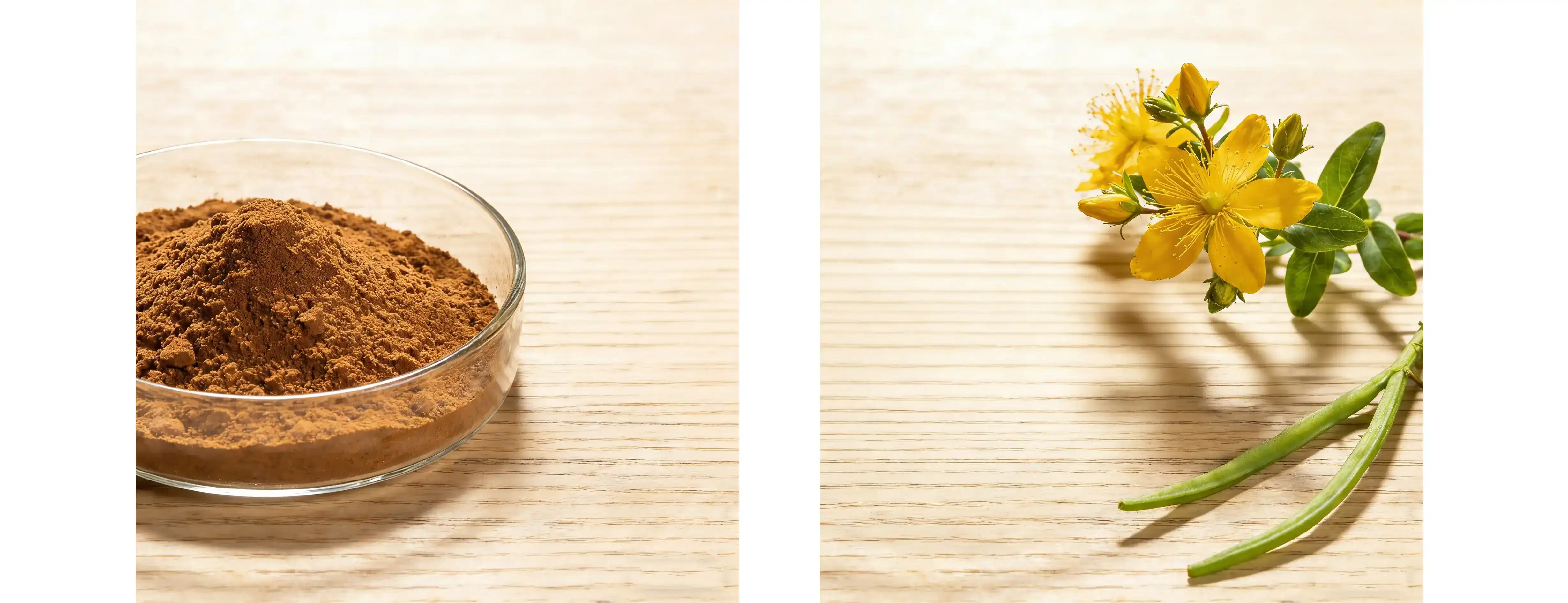
St. John's Wort extract has become known as a plant-based ingredient that can help with mental and emotional health. The top parts of the Hypericum perforatum plant are used to produce high-quality ST John's Wort Extract Powder, which is then extracted using sophisticated water and ethanol extraction methods. This fine brown powder is standardised to contain 0.3% hypericin and is used by many businesses that want natural options for mood-boosting products. More and more, brands in the nutraceutical, skincare, and functional food industries choose this plant active for their "clean label" goods. Manufacturers who want to make authentic, plant-based products that appeal to today's health-conscious consumers need to use this ingredient. It has been used for a long time and has been proven to work by modern science.
Understanding St. John's Wort Extract Powder and Its Benefits
Botanical Origins and Extraction Excellence
Hypericum perforatum, which is commonly known as St. John's Wort, grows well in temperate areas and has been used for hundreds of years in traditional medicine. The flowering parts (stems, leaves, and flowers) have a lot of phytochemicals, like hypericins and hyperforin. Water and ethanol are used as two different solvents in modern extraction methods to get the most useful ingredients while keeping the chemicals stable. This method results in a 10:1 concentration ratio, which means that every gram of ST John's Wort Extract Powder is equivalent to 10 grams of raw plant material.
Temperatures are carefully controlled during the extraction process to protect delicate chemicals. First, the raw plant material is cleaned, and then it is macerated in a liquid while being watched. Impurities are taken out during the filtration and concentration steps, leaving behind a brown powder with particles bigger than 80 mesh. This fine consistency makes it easy to incorporate into a wide range of formulation matrices. Quality manufacturers keep the moisture content below 5% to keep the product from going bad and to make sure it stays stable on the shelf for a long time.
Key Phytochemical Profile
The active ingredients in standardised ST John's Wort Extract Powder make up most of its chemical makeup. Hypericin and pseudohypericin are the main markers, and HPLC analysis is used to set the overall amount of hypericin to 0.3%. Another important substance, hyperforin, adds to the cellular activity profile of the extract. Flavonoids, such as rutin, quercetin, and hyperoside, work with the main actives to provide extra protective benefits.
This intricate web of phytochemicals is what makes whole-plant extracts often better than isolated compounds. Multiple ingredients work together to make a plant profile that meets the needs of formulators for stability and effectiveness. Tough chemical testing makes sure that batches can be repeated, which addresses the quality consistency issues that purchasing managers look for in plant extract providers.
Application Across Multiple Industries
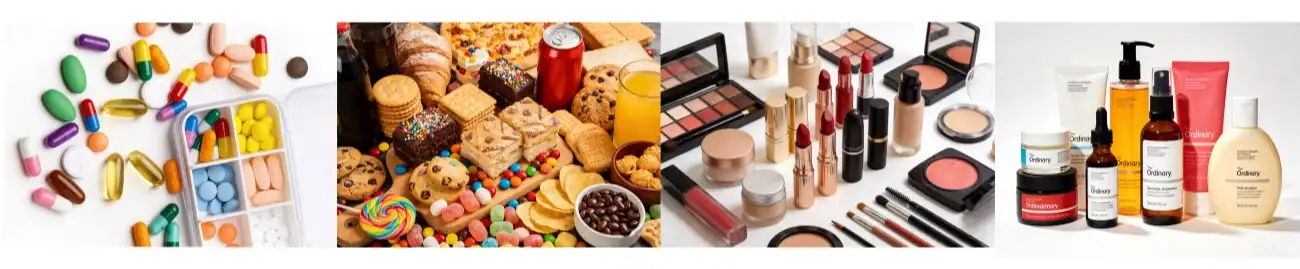
The main use for ST John's Wort Extract Powder is in formulas that help with mood. Nutraceutical companies use this plant material to make capsules, tablets, and softgels that are meant to help with emotional health. The powder form gives formulators more options, letting them make precise dosing changes and work with a wide range of excipients. Sports nutrition companies are looking into how it might help athletes' minds stay strong during times of high stress during training.
In addition to using ST John's Wort Extract Powder in pills, cosmetic makers are also looking into using it on the skin. The high level of antioxidants helps skin-soothing formulas, and the natural origin of the plant fits with clean beauty trends. Functional beverage makers are trying out different microencapsulation methods to add the extract to plant teas and health shots that are ready to drink. This flexibility opens up more market opportunities for companies that distribute ingredients for a wide range of products.
How to Use and Dosage Guidelines for St. John's Wort Extract Powder
Standardized Dosing Parameters for Formulation Development
In order to set the right dose amounts, you need to know how raw herb equivalency and extract percentage are related. Formulators figure that 300 mg of ST John's Wort Extract Powder is equal to 3,000 mg of dried plant if the extraction ratio is 10:1. For mood-supporting products, international guidelines usually say that you should take between 300 mg and 900 mg of standardised extract every day. R&D teams change these parameters based on the target audience, how often the product is supposed to be used, and the ingredients that were used to make it.
Standardisation to 0.3% hypericin gives a solid measure for checking quality and making sure that doses are always the same. Formulation scientists can use this marker concentration to guess how well an extract will work in different production batches. When companies make new goods, they test their stability under fast conditions to make sure that the hypericin will stay in the product for as long as the company thinks it will last. Temperature and light exposure have a big effect on how stable a compound is, so it's important to choose the right packaging.
Integration Into Diverse Product Formats
Encapsulation is still the easiest way to get plant powders to where they need to go. The fine particle size of ST John's Wort Extract Powder provides good flow properties through automated capsule-filling machinery. Manufacturers usually mix the extract with the right fillers to get the capsule weights they want while keeping the active concentrations they want. Two-piece veggie or gelatin capsules can hold formulas that are sensitive to moisture.
Compressing tablets adds to the problems that come up when making medicines, so it's important to choose the right ingredients. When making direct compression blends, you have to think about how the powder can absorb water and cause problems with compaction. Binding agents, disintegrants, and lubricants work together to make tablets harder or more easily broken down. Some makers like wet granulation methods because they make the powder more uniform and the tablets stronger. Quality control procedures make sure that the finished tablets dissolve properly, which makes sure that the bioactive compounds work properly.
Beverage applications demand formulations that dissolve in water. Microencapsulation technology keeps hypericin from breaking down in light and makes it easier to dissolve. Spray-drying methods group particles together so they move around quickly in water without sticking together. Functional tea blends combine ST John's Wort Extract Powder with botanicals that work well together, making health products that are more effective when used together. Flavouring systems hide the naturally bitter taste of the extract, which makes it easier for people to accept.

Choosing the Right St. John's Wort Extract Powder for Your Business
Critical Quality Certifications and Compliance Standards
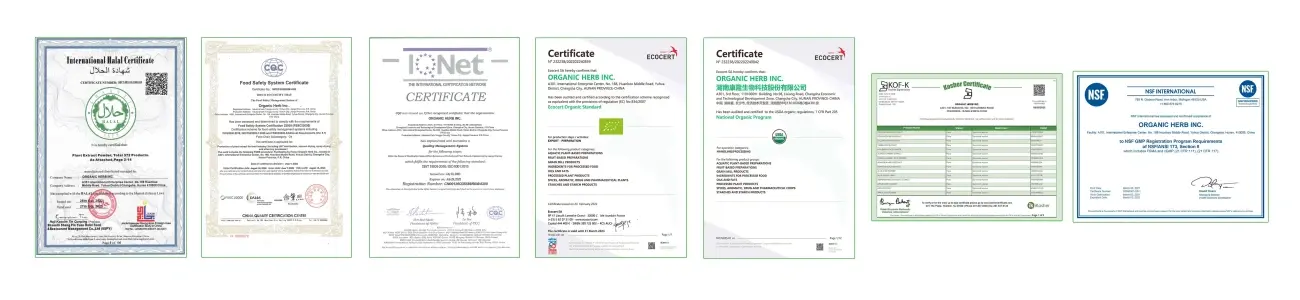
Checking thorough certification portfolios is the first thing that you should do when looking for a qualified dealer. The NSF GMP certification shows that the company follows current Good Manufacturing Practices for making dietary supplements. This validation by a third party makes sure that facilities keep up with sanitation, training, and process controls. The ISO 9001 certification shows that a quality management system has been put in place, while the ISO 22000 and FSSC 22000 certifications deal with food safety management, which is especially important for functional food applications.
Kosher and Halal certifications make it easier for businesses to reach customers who follow religious dietary rules. More and more people want pesticide-free, sustainably grown plants, and organic approval speaks to them. Managers in charge of buying things should ask for all the paperwork, like Certificates of Analysis (COA), safety data sheets, and allergy statements. Full testing kits that look for heavy metals (like lead, arsenic, mercury, and cadmium), microbiological toxins, and pesticide residues are very important for making sure people are safe.
Evaluating Extract Potency and Purity
Knowing the parameters of a specification lets you compare suppliers in a smart way. The 10:1 concentration ratio shows how well the extract was extracted, and the 0.3% hypericin specification is a way to measure the quality. It's not always true that higher concentration ratios mean better quality. What matters more than arbitrary concentration numbers is proper standardisation to active markers. Analytical methods need to be checked, and HPLC or UV-Vis spectroscopy is the best way to measure hypericin levels.
Evaluation of purity goes beyond measuring the amount of active ingredients. During storage, bacterial growth and chemical breakdown are stopped by a low moisture level below 5%. Measurements of ash level find inorganic mineral leftovers, and the limits are usually less than 5%. Solvent residue testing makes sure that the amount of ethanol is still below the legal limit, which is usually 5000 ppm. When the bulk density is between 0.4 and 0.60 g/ml, it means that the particles are evenly distributed and the processing is consistent.
Supplier Reliability and Partnership Considerations
In addition to product specifications, a supplier's operational skills have a big effect on the long-term success of a business. Manufacturers need supply lines that are reliable and clear about when raw materials are available. Companies with GAP-certified farming bases show that they care about controlling the quality of their sources. OHI takes care of more than 8,000 acres of certified planting areas in several Chinese provinces, ensuring botanical authentication and cultivation traceability from seedling to harvest.
R&D skills set innovative suppliers apart from traders of commodities. Advanced testing labs with HPLC-ELSD, GC-MS, and atomic absorption spectrophotometers can check the quality of a product completely. Custom recipe creation and stability optimisation are supported by a technical team of 42 people, including researchers with doctoral degrees. These kinds of tools are very helpful when making custom mixes or solving specific formulation problems. Having partnerships with universities and research centers shows that you are committed to innovation over the long term.
Procurement and Bulk Purchasing Insights for St. John's Wort Extract Powder
Strategic Sourcing and Supplier Evaluation
To find trustworthy ST John's Wort Extract Powder providers, you need to carefully look at their professional skills and how they run their businesses. To begin, ask for detailed product specifications that explain how the product will be extracted, how it will be standardised, and how it will be quality controlled. Look at what different sellers have to offer and compare not only prices but also full value packages. Companies that have their supply lines fully combined, from growing the plants to extracting the oils and packaging them, usually have better quality control and can track where the oils come from.
Sample evaluation is an important step before buying. Reliable sellers offer free samples for checking and confirmation. Look at how the brown powder looks, how much moisture it has, and how it flows. Send samples to separate labs so that the hypericin level and contamination screening can be checked by a third party. By investing in quality testing up front, this investment avoids costly production delays caused by materials that aren't up to par. OHI gives away free samples with a 25 kg minimum order, which makes it easier to look for new business partnerships.
Optimizing Order Quantities and Logistics
Buying strategies are affected by minimum order amounts, especially for smaller companies that are trying out new formulas. The 25 kg MOQ is an easy way to get started compared to providers who want multi-ton agreements. Standard wrapping in 25 kg fibre drums protects the goods while making them easy to handle. Check with suppliers to see if they offer flexible packaging options for larger amounts, like bulk totes for production lines that handle a lot of goods.
Expectations about lead times affect how inventory is managed. Ten days from the time an order is confirmed until it is shipped allows for flexible supply planning. For international packages, you need to add extra time to the travel time. For example, ocean freight from Asia to North America usually takes two to four weeks. Air freight speeds up arrival, but it costs a lot more per unit. OHI solves these logistics problems by carefully placing its goods across four warehouses in the United States. This lets it complete orders quickly without having to wait for foreign shipping delays.
Cost Optimization Through Strategic Planning
During price talks, there should be a mix between short-term cost savings and long-term quality guarantee. When you commit to a certain amount of goods, you can often get tiered pricing, where the cost per kilogram goes down as you place more orders. Instead of just looking at ex-factory prices, figure out the total landed costs that include freight, duties, and storage. Payment terms affect cash flow. Suppliers who offer net-30 or net-60 terms are better for working capital than those who need advance payments.
Changes in currencies affect the economics of international procurement. Long-term contracts with ways to change the price protect against changes in the exchange rate that aren't stable. Setting up relationships with suppliers and keeping domestic storage makes planning finances easier by letting you do business in the local currency. Regularly keeping an eye on market intelligence helps predict changes in the prices of raw materials, which lets buyers make smart buying decisions when the market is right for them.
Conclusion
ST John's Wort Extract Powder is a plant ingredient that has been scientifically proven to help with mood issues. It meets the growing demand for natural mood-supporting products. Its standardised phytochemical profile makes it work the same way in nutraceutical, cosmetic, and functional food uses. For buying to go well, suppliers must be carefully checked for quality certifications, analytical skills, and operating dependability. The extract can be delivered in a variety of forms, such as capsules or drinks, which allows for creative product development that meets the needs of a wide range of consumers. Strategic relationships with vertically integrated suppliers that offer technical support, domestic storage, and adjustable order numbers are the best way to make sure that formulations work. As long as clean-label trends keep pushing the use of botanical ingredients, ST John's Wort Extract Powder gives companies a chance to grow while still giving customers real health solutions.
Frequently Asked Questions
1. Can St. John's Wort extract powder be combined with other botanical ingredients?
Synergistic mixtures are made by mixing ST John's Wort Extract Powder with plants that work well with it. For example, valerian root and passionflower are often used together to help with relaxation and calmness. Formulation chemists have to think about how different compounds might react with each other and test the stability of final mixes. Some companies make mood-supporting products that include it along with B-vitamin complexes and magnesium. Always make sure that when ingredients are mixed, they keep their individual integrity and don't go through any bad chemical reactions while being stored.
2. What certifications should I prioritize when evaluating suppliers?
NSF GMP and ISO standards are basic ways to make sure that the quality of supplements is high. When going after functional food uses that need strict food safety rules, FSSC 22000 approval becomes a must. Organic approval speaks to high-end markets that want farming methods that don't use pesticides. With Kosher and Halal licenses, you can sell your products in more speciality stores. Ask suppliers for up-to-date certificates and use the databases of the organisations that issued them to make sure they are real.
3. How should St. John's Wort extract powder be stored to maintain quality?
The best conditions for keeping ST John's Wort Extract Powder fresh involve keeping hypericin safe from light degradation and moisture contact. Keep packages that are covered in cool, dry places that are out of direct sunlight. Temperature-controlled warehouses that keep the temperature between 15°C and 25°C keep compounds stable for the normal 24-month shelf life. Once containers have been opened, they should be quickly sealed again to keep air out. For long-term storage, especially in humid places, use packaging that keeps moisture out. Regular quality checks make sure that hypericin stays stable over long periods of time.
Partner with OHI for Premium St. John's Wort Extract Powder Supply
With decades of experience working with plants and the most up-to-date extraction technology, Organic Herb Inc. (OHI) is your go-to source for ST John's Wort Extract Powder. Our advanced manufacturing facilities with NSF GMP, FSSC 22000, ISO, Kosher, Halal, and Organic certifications, as well as our GAP-certified cultivation bases that cover 8,000 acres, make sure that quality is maintained at every stage of production. We guarantee fast delivery that meets your formulation deadlines because we have four strategically placed warehouses across the United States. Our 42-person research and development (R&D) team works on unique development projects and can help you turn your product ideas into solutions that are ready for the market. Get in touch with us at info@organic-herb.com right away to get free samples, talk about bulk prices for ST John's Wort Extract Powder for sale, or find out how our full line of plant extracts can improve your products.
References
1. Borrelli, F., & Izzo, A. A. (2019). Herb-Drug Interactions with St John's Wort: An Update on Clinical Observations. AAPS Journal, 21(4), 64-78.
2. Nahrstedt, A., & Butterweck, V. (2020). Standardization of Hypericum Extracts: Influence on Pharmacological Activity. Phytochemistry Reviews, 19(2), 385-402.
3. Sarris, J. (2018). Herbal Medicines in the Management of Mental Health Disorders: A Critical Review. Nutritional Neuroscience, 21(9), 602-611.
4. Schulz, V. (2021). Quality and Efficacy of St. John's Wort Preparations: Analytical and Clinical Perspectives. Planta Medica, 87(5), 328-341.
5. Tedeschi, E., & Mennini, T. (2019). Pharmacological and Clinical Profile of Hypericum Extracts: Focus on Active Constituents. Phytotherapy Research, 33(4), 880-896.
6. Wölfle, U., Seelinger, G., & Schempp, C. M. (2020). Topical Application of St. John's Wort: A Systematic Review of Efficacy and Safety. Journal of Ethnopharmacology, 248, 112-126.
Standard Disclaimer (DSHEA):
These statements have not been evaluated by the Food and Drug Administration.
This product is not intended to diagnose, treat, cure, or prevent any disease.

Send Inquiry
Related Industry Knowledge
- What does Purple Sweet Potato Extract do to the body?
- Shiitake Mushroom Extract Powder: Everything You Need to Know
- Seabuckthorn Extract for Skin: What the Concentrated Form Actually Does
- Polyporus extract, powder and capsules for companies
- What is a sage?
- Market Insights: The Rising Demand for Rosehip Fruit Extract
- Learn More About Bitter Apricot Seed
- Reishi Extract Guide: Stress Relief & Immunity
- How do you use rosemary?
- How Dose Poria Cocos Extract Improve Your Health?