
Understanding Polyporus Umbellatus Extract: Source, Composition, and Characteristics
Jun 8, 2026
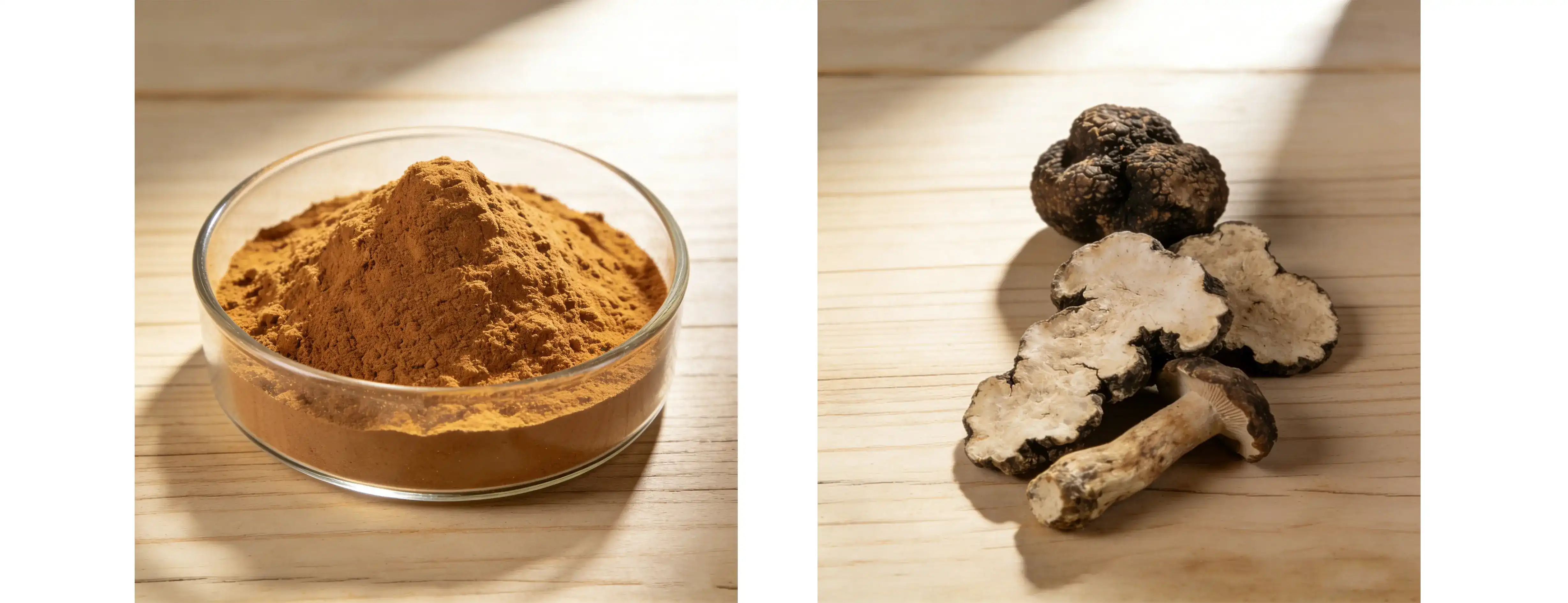
Polyporus Umbellatus Extract is a bioactive ingredient that comes from the fruiting body of Polyporus umbellatus, a therapeutic mushroom that is used in both traditional medicine and modern nutritional products. This extract has normal amounts of polysaccharides—usually 30% or more—and is made using water-based methods that keep its complex chemical profile. The brownish-yellow powder that is made can be used as a functional ingredient by supplement makers, cosmetics makers, and functional food creators who want to use clean-label botanical actives that are stable and have uniform quality from batch to batch.
Introduction
As people around the world move toward natural health ingredients, medical mushroom extracts are at the centre of new product development in many fields. Polyporus umbellatus stands out because of its unique polysaccharide makeup and long history of use that goes back hundreds of years. More and more, R&D leaders, formulation managers, and procurement teams are looking for dependable providers that can provide pharmaceutical-grade mushroom extracts that meet strict quality standards.
This piece talks about the most important technical factors that business-to-business buyers look at when they are looking for mushroom-based products. We'll look at the differences between commercial-grade products based on their chemical makeup, extraction methods, and quality standards. By understanding these basics, you can make smart decisions about what to buy, lower the risks in the supply chain, and help make unique health goods that appeal to today's health-conscious customers.
What Is Polyporus Umbellatus Extract?
Botanical Origin and Harvesting
Zhuling, or Polyporus Umbellatus Extract, grows in cold forests in East Asia and Europe. The mushroom has underground sclerotia related to oak and maple tree roots. Over the past decade, commercial cultivation has advanced. This has reduced our dependence on wild collecting and ensured supply lines. In controlled farming, fruiting bodies have more regular bioactive profiles than wild examples because growing circumstances are accurately controlled.
Our business has improved native chemical-pure plant-growing methods. As plants grow, GAP-certified planting bases monitor soil composition, moisture, and temperature using established management practices. These operations affect the quality of the finished extract; therefore, procurement specialists evaluate vendors' transparency about raw material sources.
Extraction Process and Specifications
You need fully mature fruiting bodies to make a decent mushroom extract. These are cleaned, dried, and ground before extraction. Water extraction removes fat-soluble impurities without solvents and preserves heat-sensitive polysaccharides. At a 10:1 concentration ratio, 10 kg of raw fruiting bodies yield 1 kilogram of extract powder.
Standards for commercial-grade material include:
Spectrophotometry or HPLC shows at least 30% polysaccharide. This control ensures biological activity is consistent across production batches, addressing formulation scientists' uniformity concerns.
The fine powder is brownish-yellow and mixes easily with water, making it easy to add to beverages, tablets, and functional drinks without sedimentation.
Low moisture prevents bacteria from developing during storage, and sealed food can last 24 months devoid of light or moisture.
These parameters balance functionality and cost-effectiveness depending on industry standards. Extraction without chemical solvents follows clean-label trends and is crucial for brands seeking natural product approvals.
Compositional Profile
The extract contains polysaccharides, ergosterol, beta-glucans, triterpenoids, zinc, and selenium. Most research has focused on the carbohydrate portion, which is primarily beta-1,3/1,6-glucans. Polysaccharide chains range from 10 to 1,000 kDa in a molecular weight distribution study. Each chain has specific functions.
Polyporus Umbellatus Extract has greater water-soluble carbohydrates and triterpenoid content than Reishi or Cordyceps. Triterpenoid-rich extracts function best in lipid-based delivery methods, while polysaccharide-rich compounds blend nicely into water-based combinations without emulsifiers.
Health Benefits and Scientific Studies of Polyporus Umbellatus Extract
Immune System Modulation
Expert studies demonstrate that the polysaccharide component interacts with immune cell receptors, mostly on macrophages and dendritic cells. These contacts start communication pathways that alter cytokine production. Lab experiments using isolated polysaccharides have examined cellular activity indicators. These findings must be carefully understood before being applied to humans.
Branching patterns and molecular weight affect beta-glucan binding to cellular receptors. Polysaccharides over 100 kDa bind receptors more strongly than shorter chains. Good providers supply formulators with molecular weight distribution data to match extract specs with desired biological activity.
Antioxidant Activity
Standard assays like DPPH radical scavenging and ORAC reveal that the drug neutralises free radicals well. In regulated lab settings, the extract's polyphenolic compounds and carbs decrease oxidative stress markers. These antioxidants aid cosmetic formulation. Stopping lipid peroxidation extends product shelf life and helps skin.
Cosmetic manufacturers are increasingly using mushroom extracts in anti-ageing products. Polysaccharides dissolve in water and have antioxidant and humectant effects. They are versatile substances that simplify recipes.
Safety Profile
OECD-compliant toxicological research sets very high oral drinking safety limits. The LD50 values are many orders of magnitude greater than usual. This supports its GRAS status in countries that accept it. Normal dietary vitamin doses are 200–1000 mg, considerably within safe ranges.
Good product manufacturers preserve many safety records, including tests for lead, cadmium, mercury, arsenic, E. coli, Salmonella, yeasts, mildew, and herbicide residues. These quality control procedures protect producers and consumers. QA teams also need legal compliance assistance.
Comparing Polyporus Umbellatus Extract with Other Mushroom Extracts
Compositional Differences
Due to their chemical makeup, therapeutic mushrooms fit into several ingredient markets. High triterpenoids (1–5%) and carbohydrates provide reishi (Ganoderma lucidum) a healthy lipophilic-hydrophilic profile. Cordyceps species differ biochemically from polysaccharide extracts because they contain cordycepin and adenosine.
Knowing these variances aids ingredient selection. For water-soluble delivery systems, polysaccharide-rich materials are ideal. However, triterpenoid-containing compounds may be better for lipids. Purchasing teams benefit from mushroom suppliers with a wide range. This allows formulation teams to be flexible without changing vendor ties.
Application Format Considerations
Brownish-yellow powder offers the greatest dosage possibilities. Capsule manufacturers prefer the constant flow and compatibility with standard sealing equipment. Its entire water dispersibility allows drink developers to generate clear or slightly murky drinks without sediment. In serums, creams, and masks, its natural hue matches the other ingredients.
For certain usages, liquid solutions or spray-dried grains are offered. The standard powder format dominates the market because it is easy to handle, ships quickly, and can be used in many ways. The industry-standard 25 kg drum packing minimum order quantity (MOQ) can be utilised for test production runs and large-scale manufacturing.
Certification and Organic Status
Organic approval influences natural product purchases. Certified organic products cost more but can be sold at organic stores. The approval process verifies organic plant growth, extraction, and preparation. The supply chain must be managed carefully for this complex job.
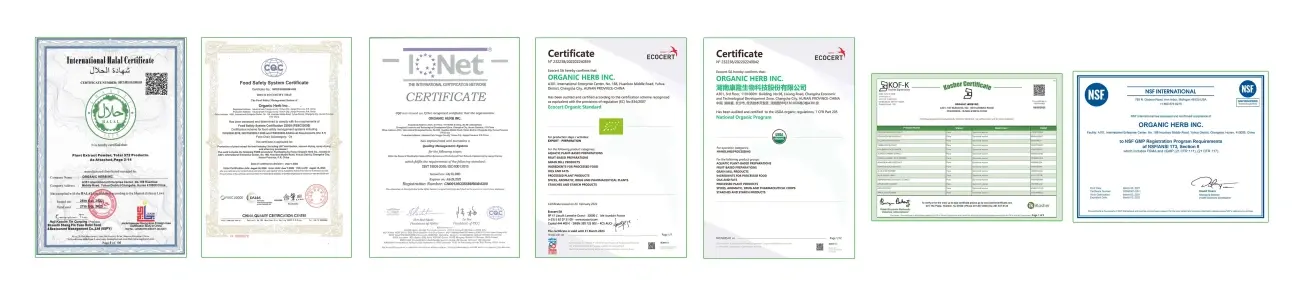
In addition to organic certification, kosher and halal certifications for Polyporus Umbellatus Extract Powder expand markets, notably for religious or Middle Eastern brands. A facility with NSF GMP accreditation meets pharmaceutical-grade production standards for this extract.
How to Choose and Procure High-Quality Polyporus Umbellatus Extract?
Quality Assessment Criteria
Successful buying starts with defined standards that match the completed product. Appropriate chemical methods can measure polysaccharides, heavy metals, microorganisms, and solvent residues. Asking for COAs for recent production batches illustrates the company's consistency and science.
Third-party lab testing adds credibility. Reliable providers are used to this type of inspection and work with approved testing labs that can identify botanicals, quantify active chemicals, and screen for contaminants. This testing approach reduces buying risk, especially with new vendors.
Plant identification has grown easier with molecular technologies like DNA barcoding. These methods identify mixed species and prove that fruiting bodies, not mycelium or fermentation products, were extracted. Since the market indicates ingredients are changing, molecular proof is best for study.
Supplier Evaluation
Manufacturing certificates demonstrate a company's maturity and quality control. FSSC22000 and ISO9001 certifications demonstrate food safety management and quality control, respectively. GMP approval, notably NSF-GMP or EU-GMP, signifies that the production method is pharmaceutical-grade.
Professional enterprises tell their suppliers where they receive their raw materials, unlike commodity merchants. Companies with GAP-certified planting bases and more than 8,000 acres of specialist farming demonstrate vertical unity, making supply tracking and safety easier. These companies retain detailed records of plant growth, harvest, and processing to help with end-product government filings.
Logistics and Procurement Efficiency
Getting ingredients from foreign nations requires dealing with customs, documentation, and delivery. These stages are easier when suppliers have warehouses where their goods go. The US has four big warehouses, so delivery within the country can take 10 days or less without the delays and hassles of international shipping.
Minimum order amounts depend on production costs and inventory management. The standard MOQ of 25 kg covers small samples for R&D to medium-scale manufacturing while lowering supply costs. Progressive vendors give free 50–100g samples to trial things before buying in bulk.
Supplier payment terms, bulk selling price models, and supply flexibility vary greatly. Long-term agreements can provide better costs, guaranteed share during supply shortages, and customised requirements. Both buyers and sellers benefit from these arrangements. Buyers acquire essential materials, and sellers know their future income.

Industry Trends and Future Outlook for Polyporus Umbellatus Extract
Market Growth Drivers
Functional mushrooms are now known to people outside of niche healing groups as well as in general health circles. According to market studies, the yearly growth rates for medicinal mushroom ingredients will be more than 10% until 2028. This increase is due to several trends coming together: the need for plant-based nutrition, an interest in traditional health methods, and a desire for natural products over man-made ones.
The clean-label trend is especially good for mushroom extracts that are made by extracting them with water. Chemical solvents and manmade processing tools are being looked at more closely by regulators, which makes solvent-free extraction methods more valuable. Claims like "water-extracted" and "no synthetic additives" are appealing to customers who want to know where their ingredients come from and how they are processed.
Technological Innovations
The technology used for extraction keeps getting better so that it can maximise yield while keeping bioactivity. New methods, like ultrasonic-assisted extraction, enzyme-assisted extraction, and membrane separation technologies, make it easier to recover polysaccharides and get a better idea of their molecular weights. These new ideas lower the cost of making things while also making them better, which has an effect on the price of buying things.
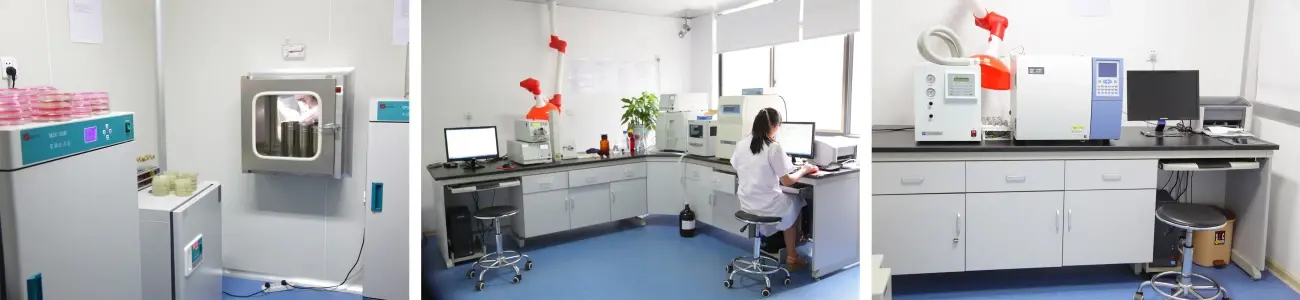
Analytical skills have improved. Advanced chromatography techniques, high-resolution mass spectrometry, and nuclear magnetic resonance spectroscopy make it possible to get a thorough picture of a substance's makeup. This helps with quality control and checking that one batch is the same as another. When suppliers engage in analysing infrastructure, customers can be more sure that the products they sell are real and meet specifications.
Regulatory Landscape
Different places have very different rules about how plant ingredients can be used, especially for products enriched in polysaccharides. Under DSHEA, the US Food and Drug Administration (FDA) oversees dietary supplements and requires companies to make sure they are safe and have correct labels before putting them on the market. European markets have tougher Novel Foods rules that require a lot of safety information for items that haven't been used in a lot of foods before 1997.
As regulations change across major markets, proactive providers keep up with the latest information on those changes. This knowledge is very helpful when growing sales abroad, since figuring out the regulatory process is a big problem for new companies trying to get into the market. Partnering with companies that offer legal support services speeds up entry to markets and lowers the risk of not following the rules.
Conclusion
Polyporus Umbellatus Extract is a flexible plant-based ingredient that can be used in a wide range of formulations for nutrition, cosmetic, and functional food uses. Because it has a normal amount of polysaccharides, dissolves in water, and has a full safety rating, it is very useful for brands that want to show they are clean-label. To do a good job of procuring things, you need to look at more than just price when you look at a supplier's certifications, analysis skills, and expert support infrastructure.
The market for medical mushroom products is still going in a very good direction. This is because people like natural ingredients that have been used for a long time. Building partnerships with fully integrated providers that offer clear information on cultivation, cutting-edge extraction technology, and legal knowledge puts brands in a good place in this growing market. Third-party testing, molecular authentication, and detailed paperwork are all examples of quality assurance that protect the integrity of a product and help it meet legal requirements in a wide range of global markets.
FAQ
Q1: What polysaccharide concentration is optimal for supplement formulations?
Standardisation at 30% carbohydrates is the standard in the business because it strikes a good balance between biological activity and cost-effectiveness. Higher amounts (50–70%) are available, but they cost more and may not improve formulation performance by the same amount. The 30% specification gives steady practical benefits while keeping prices low enough for large-scale production.
Q2: How does water extraction compare to alcohol extraction methods?
Water extraction only gets back hydrophilic polysaccharides, leaving behind lipophilic compounds and possible contaminants that dissolve in alcohol. This choice makes cleaner extracts that dissolve better in water, which are great for use in drinks and capsules. Different chemical profiles, focusing on triterpenoids, are produced by alcohol extraction, which serves different manufacturing goals.
Q3: Can this extract be used in both dietary supplements and cosmetic applications?
Of course. The same extract is used in both fields, but the legal standards for compliance are different. For cosmetics, controlling microbes and making sure the storage system works with the product are very important. On the other hand, food supplements focus on heavy metal limits and making sure that active compounds are all the same. Suppliers with a good reputation provide paperwork for both user groups.
Q4: What distinguishes fruiting body extracts from mycelium products?
When compared to mycelium grown on grain substrates, fruiting bodies have higher amounts of beta-glucans and secondary substances. Mycelium products often have a lot of starch from the growing substrates, which lowers the amounts of active compounds. Molecular analysis proves the plant identity and the source of the extraction, which eases worries about legitimacy that are common in commodity mushroom markets.
Partner with OHI for Certified Polyporus Umbellatus Extract Supply
Organic Herb Inc. (OHI) is a widely traded company (Stock Number: 872213), and it develops and makes plant extracts. Our GAP-certified cultivation grounds cover more than 8,000 acres, and our advanced extraction facilities are qualified to meet NSF-GMP, FSSC22000, ISO9001, Kosher, and Halal standards. This connection makes sure that the whole process can be tracked, from growing the plants to delivering the finished goods.
Our Polyporus Umbellatus Extract specification—30% polysaccharides extracted from fruiting bodies using only water—meets the scientific needs that procurement managers put the most weight on. The powder is brownish-yellow and comes in 25-kilogram drums. You can buy as little as 25 kg, though, and you can try free samples first. With four carefully placed US stores and our established presence through Earth Made Nutritions in Los Angeles, California, we can guarantee fast delivery, usually within 10 days.
As a leading Polyporus Umbellatus Extract supplier, we keep a lot of certification paperwork to back up government files in markets around the world. Our 42-person research and development (R&D) team, which includes top researchers with advanced degrees, helps with formulation, gives advice on stability testing, and creates unique specifications. This technical teamwork cuts down on formulation risks and speeds up the time it takes to build your product.
We invite R&D directors, formulation managers, and procurement professionals to contact our team at info@organic-herb.com. Whether you're developing immune support supplements, functional beverages, or cosmetic formulations, our technical expertise and reliable supply chain support your product innovation objectives.
References
1. Chen, Y., Liu, D., Wang, D., Lai, S., & Zhong, R. (2019). Bioactive polysaccharides from Polyporus umbellatus: Isolation, structure, and biological activities. International Journal of Biological Macromolecules, 127, 466-476.
2. Li, X., He, Y., Zeng, P., Liu, Y., Zhang, M., Hao, C., & Wang, H. (2019). Molecular characterization and antioxidant properties of polysaccharides from Polyporus umbellatus sclerotia. Carbohydrate Polymers, 213, 276-285.
3. Wang, K., Li, Y., Xu, M., Xiao, J., & Chen, J. (2020). Structural characterization and immunomodulatory activity of polysaccharides from cultivated fruiting bodies of Polyporus umbellatus. Journal of Functional Foods, 67, 103869.
4. Zhang, M., Cui, S. W., Cheung, P. C., & Wang, Q. (2007). Antioxidant activity of Polyporus umbellatus polysaccharides. International Journal of Biological Macromolecules, 41(4), 378-382.
5. Zhou, L., Zhang, Y., Gapter, L. A., Ling, H., Agarwal, R., & Ng, K. Y. (2008). Cytotoxic and anti-oxidant activities of lanostane-type triterpenes isolated from Polyporus umbellatus. Phytomedicine, 15(9), 763-771.
6. Zhao, Y. Y., Shen, X., Chao, X., Ho, C. C., Cheng, X. L., Zhang, Y., & Lin, R. C. (2011). Ergosta-4,6,8(14),22-tetraen-3-one induces G2/M cell cycle arrest and apoptosis in human hepatocellular carcinoma HepG2 cells. Biochimica et Biophysica Acta, 1810(4), 384-390.
Standard Disclaimer (DSHEA):
These statements have not been evaluated by the Food and Drug Administration.
This product is not intended to diagnose, treat, cure, or prevent any disease.

Send Inquiry
Related Industry Knowledge
- Are kidney beans good for weight loss?
- How to use rosemary oil for skin
- Where to buy strawberry extract?
- Polyporus Umbellatus Extract Explained: From Raw Material to Final Product
- What is sage used for?
- How Dose Poria Cocos Extract Improve Your Health?
- Polyporus Discover its nutrients and properties
- The Health Benefits and Uses of Polyporus Umbellatus Fries
- USA Market Insights on Sourcing High-Quality Polyporus Umbellatus Extract
- Natural Rhodiola Rosea Extract for Endurance and Metabolic Efficiency