
Surprising Benefits of Natural Celery Seed Extract
Oct 15, 2026
Natural celery seed extract — derived from the seeds of Apium graveolens — has quietly become one of the most requested botanical ingredients in the B2B ingredient market. Standardized to deliver consistent levels of bioactive phthalides such as 3-n-butylphthalide (3nB) and apigenin, this extract addresses a real gap in nutraceutical formulation: predictable potency from a natural source. For R&D directors, formulation managers, and procurement teams sourcing ingredients for supplements, functional foods, or personal care products, this guide breaks down what makes this ingredient worth serious attention.
Understanding Natural Celery Seed Extract and Its Health Benefits
What Is It, Exactly?
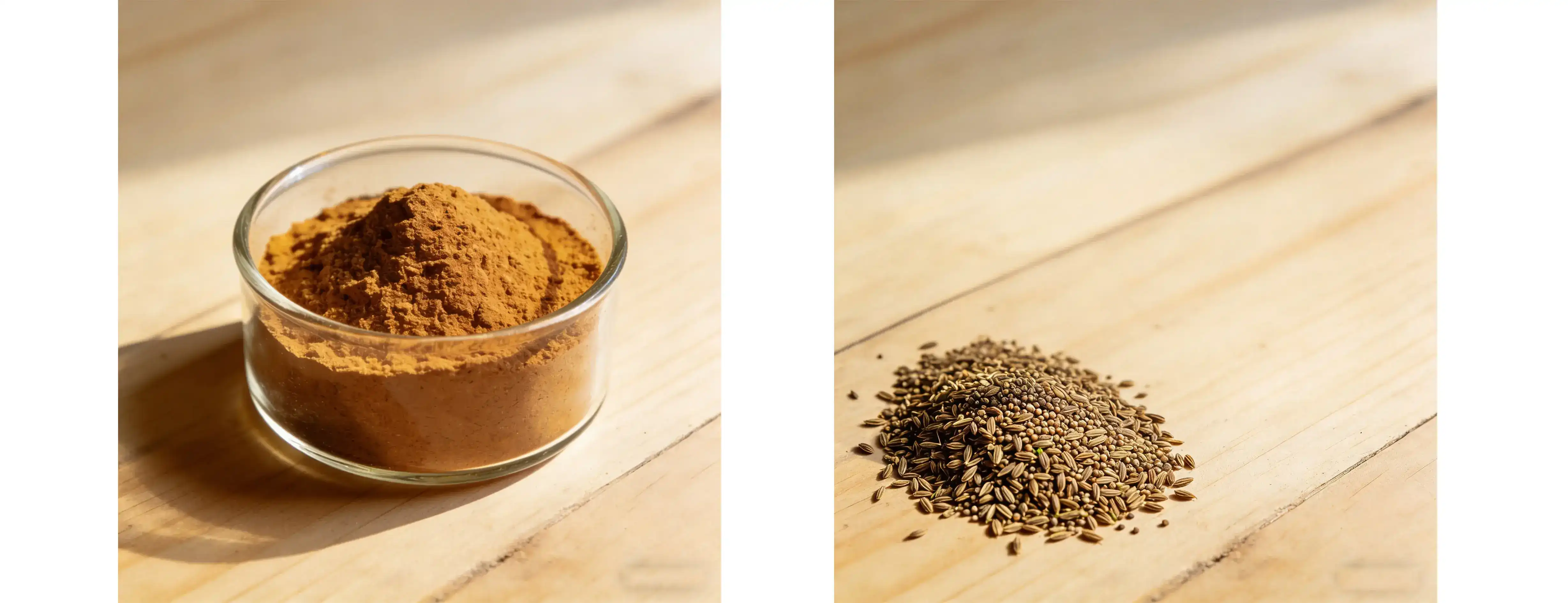
This very strong celery seed extract comes from the seeds of the Apium graveolens plant. The OHI version that is extracted with water comes in two concentrations: 4:1 and 10:1. It smells different and looks like a brownish-yellow powder. This standardized extract is not the same as celery stalk powder or cold-pressed seed oil because it is made to have the same amount of bioactive compounds in every batch.
Key Bioactive Compounds
The most important active markers are phthalides, especially 3nB, and apigenin, a flavonoid that has been researched for its health benefits. Phthalides give celery its unique smell, and some people think they are good for you. The strength of a 10:1 extract is about 10 times that of raw seed powder. For finished goods, this means they will work better per gram.
Why the Market Is Paying Attention
These days, people want pure products and clean labels a lot more. The Natural Marketing Institute says that more than 65% of people in the U.S. who buy supplements make sure that the ingredients are natural. Apium graveolens seed extract meets this need and also has bioactivity that can be measured. This makes it easier for brands to say that their products are good for your heart, joints, and vitamins.
Practical Uses, Dosage, and Safety of Celery Seed Extract
Application Scenarios That Matter to B2B Buyers
This part of the code can be used in three different ways. These things should help procurement teams decide if someone is a good fit:
Capsules and tablets for health supplements: For uric acid support and joint relief, most people take 75 to 150 mg of a 10:1 extract that is standardized to about 2.2% 3nB every day. You can mix the form that is extracted with water well with vitamin C and tart cherry extract in pills without breaking down the volatile chemicals.- Food and Drink That Work: The water-soluble extract grade from OHI works well with fortified foods and is safe to use in food. Before they can be used in drinks, standard lipophilic grades need to be microencapsulated so that they don't settle.
Nitrates from celery seeds are used as natural preservatives in the food business. They are used to process meat with a clean label. There are no fake chemicals in the natural celery seed extract, which is a natural source of nitrate that helps keep the color steady and stops pathogens from growing. This is something that is becoming more and more important in premium processed meat categories.
- Dietary Supplement Capsules & Tablets: A 10:1 extract standardized to approximately 2.2% 3nB is typically used at 75–150 mg daily in uric acid support and joint comfort formulas. The water-extracted form integrates cleanly into capsule blends alongside ingredients like tart cherry extract and Vitamin C without degradation of volatile compounds.
- Functional Food & Beverage: For food-grade applications, OHI's water-soluble extract grade supports compatibility in fortified foods. Standard lipophilic grades require micro-encapsulation for use in beverages to prevent sedimentation.
- Clean-Label Meat Processing: In the food industry, celery seed–derived nitrates serve as natural curing agents. The extract acts as a natural nitrate source to support color stability and inhibit pathogen growth without synthetic additives — a growing requirement in premium processed meat categories.
When using the clean extraction method (only water as a solvent), there will be very little solvent left over, and the ingredients will be safe for food and easy to read on the label.
Formulation Considerations
The extract from celery seeds can hold some water. This means that the oil needs to be kept in sealed fiber drums inside double-lined plastic bags so that the volatile oil parts don't stick together and go bad. That's why OHI sends in boxes that are 25 kg/drum and meet this standard. The shelf life stays the same as long as it is kept below 25°C and dry.
Comparing Celery Seed Extract with Alternatives
Extract vs. Raw Powder
Most of the time, raw celery seed powder only has about 0.05% 3nB. A product from OHI that is 10 times stronger can have up to 20 times that mass. If the formulation team wants to back up what's written on the label, the raw powder can't consistently give therapeutic-range amounts from batch to batch.
Water Extraction vs. Solvent Extraction
The hexane-based extraction method makes more oil, but it leaves behind solvents that aren't good for a clean label policy. Ethanol/water or pure water extraction is how OHI does it. This method saves both polar compounds (apigenin) and non-polar compounds (3nB) without the risk of loss. Our QA teams need to know this because they are in charge of making sure that FDA and EU standards are met.
Natural vs. Synthetic Routes
Someone or some business sells manufactured phthalide isolates. These are good for giving the right dose, but they make it hard for companies to sell natural supplements. Made-in-China actives can't meet the needs of customers and stores that want proof that the product comes from a plant. Synthetic alternatives cannot support claims of organic certification and tracking like natural celery seed extract from confirmed agricultural sources can.
When people decide what to buy and how to place a company over the long term, these differences matter. In the long run, it saves a lot of money to choose the right form from the start.
Procurement Insights: How to Source Quality Celery Seed Extract
Certifications That Protect Your Supply Chain
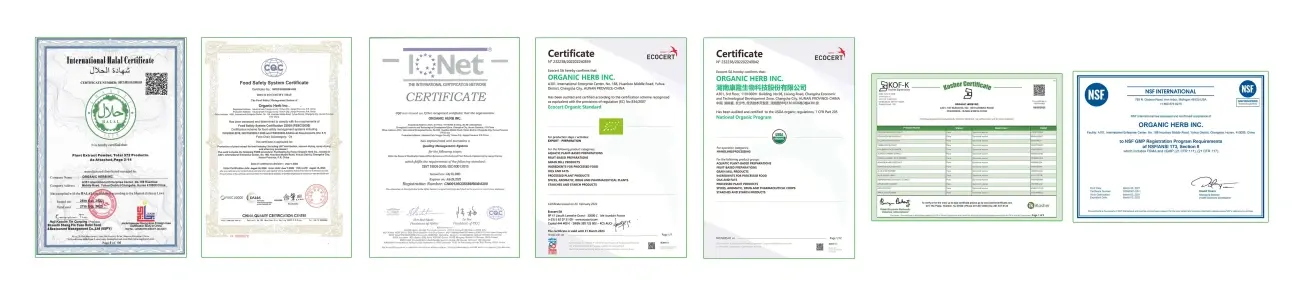
If you want to buy natural celery seed extract from a company, make sure they have certifications. The company OHI has certifications for being Kosher, Halal, Organic, NSF GMP, and ISO9001. The goods are safe and meet the rules set by the US FDA and C-GMP. International buyers will find it much easier to follow the rules when they bring goods into the country and register them with this set of paperwork.
Quality Testing Standards to Request
People who want to buy something should ask all sellers for the following papers:
- HPLC assay confirming 3nB and apigenin concentrations to verify label claim accuracy
- TLC or HPTLC authentication to rule out adulteration with celery leaf or stalk — cheaper substitutes that lack equivalent bioactivity
- Pesticide residue screening in compliance with USP \<561\> or EU Regulation 396/2005
- Heavy metal testing and PAH screening, with Benzo(a)pyrene limits below 10 ppb
- Allergen ELISA testing, given that celery is a recognized allergen in EU regulations
Celery leaf or stalk, which are cheaper options but don't have the same bioactivity, should be checked with TLC or HPTLC to make sure it hasn't been messed with.
Logistics and Lead Time
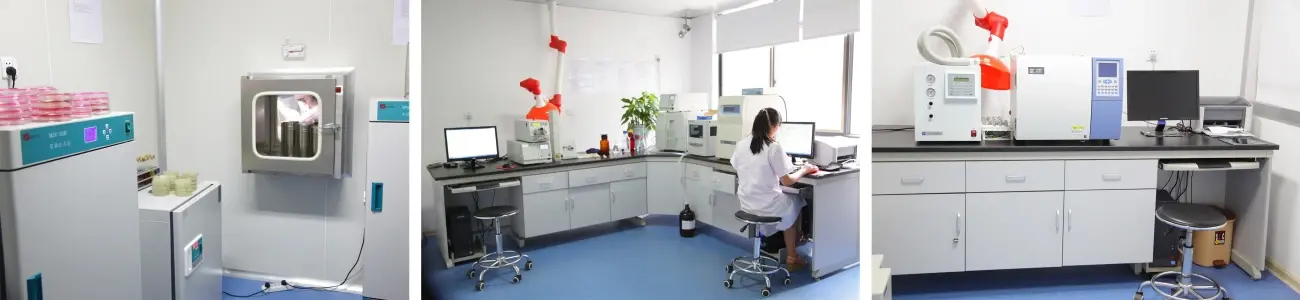
They have an atomic absorption spectrophotometer, HPLC, GC-MS, and an HPTLC in their quality control lab at OHI. This lets them check each package at the batch level.
Integrating Celery Seed Extract Into Your Product Line
Nutraceutical and Supplement Applications
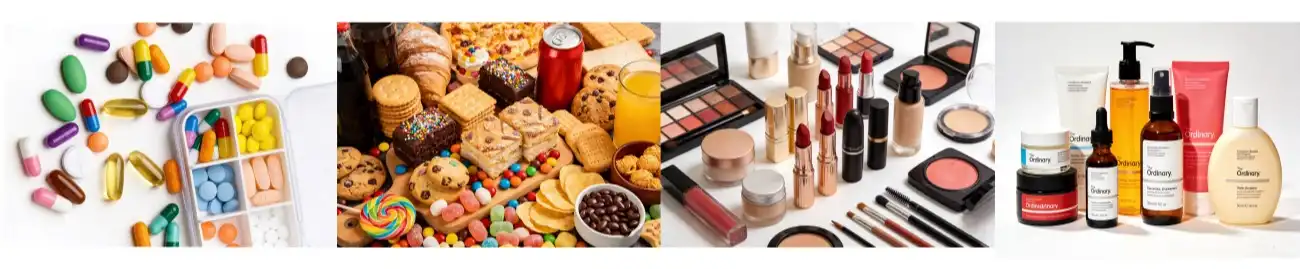
If a supplement company wants to make high-potency capsules for heart health and joint health, the 10:1 ratio extract works best. Since the ingredient is extracted with water, it is completely in line with claims of being natural or clean. For OEM and ODM users, OHI also helps with private label paperwork and making sure that the concentration specs are right.
Functional Food and Beverage Opportunities
The OHI water-soluble extract grade works perfectly with the normal steps used to make food. This means that food scientists can use it to make snacks that are healthier, functional teas, or drink mixes with plants. The yellow-brown powder mixes well and passes through an 80-mesh sieve to make the mixing even.
Cosmetic and Personal Care Integration
Apigenin is liked by people who work on personal care goods because it is an antioxidant. Formulations that focus on natural antioxidant protection can benefit from celery seed extract. This is especially true for serums and toners, where botanical ingredients help build brand recognition.
Conclusion
Apium graveolens plant seeds can be used to make a safe and useful ingredient for many types of products. With phthalides and apigenin in its bioactive profile, natural celery seed extract has a level of functionality that raw powder forms just can't match. It is safe and easy for buying teams to get the ingredients they need from OHI's water-extracted, approved extract because the company is based in the US and has all the necessary paperwork and quality infrastructure. You can use this ingredient to help make new supplements, foods, and personal care products because it meets high quality standards, has an approved open supply chain, and has low MOQ terms.
Frequently Asked Questions
1. What is the difference between 4:1 and 10:1 celery seed extract?
The ratio refers to concentration: a 10:1 extract requires 10 kg of raw seed to produce 1 kg of extract, making it roughly 2.5 times more concentrated than the 4:1 version. For high-potency supplement formulas, the 10:1 is preferred; for functional food applications where lower active doses suffice, 4:1 is more cost-effective.
2. Is water extraction better than ethanol extraction for this ingredient?
Water extraction produces a clean-label product with no solvent residue concerns and is compatible with organic certification. It preserves both polar and non-polar compounds effectively. For brands prioritizing label transparency and regulatory simplicity, water-extracted grades are the preferred choice.
3. What certifications should I require from a celery seed extract supplier?
At minimum, look for GMP certification, ISO9001, and food safety credentials such as FSSC22000. Kosher and Halal certifications are important for global distribution. OHI holds all of these, along with Organic certification.
4. Can this extract be used in beverages?
Standard grades may cause sedimentation in liquid applications. Micro-encapsulated or nano-emulsified formats are recommended for optical clarity. Consult OHI's technical team for beverage-specific grade recommendations.
Source High-Purity Celery Seed Extract From OHI — Certified Natural Celery Seed Extract Supplier
The OHI apium graveolens seed extract is non-GMO, organic, kosher, halal, and approved by NSF GMP for natural celery seed extract. It is safe to use in food and medicine. They make it easy to buy from them by having four stores in the US, free trials, and a lead time of seven days. No matter if you're making a new functional food or adding to your line of supplements, our technical team is here to help you from the drawing board to the delivery truck. Send us an email at info@organic-herb.com right now to get a sample.
References
1. Powanda, M. C., Whitehouse, M. W., & Rainsford, K. D. (2015). Celery Seed and Related Extracts with Antiarthritic, Antiulcer, and Antimicrobial Activities. Progress in Drug Research, 70, 133–153.
2. Dianat, M., Veisi, A., Ahangarpour, A., & Fathi Moghaddam, H. (2014). The Effect of Hydro-Alcoholic Celery (Apium graveolens) Leaf Extract on Cardiovascular Parameters in Animal Models. Avicenna Journal of Phytomedicine, 4(3), 171–176.
3. Baananou, S., Bouftira, I., Mahmoud, A., Boukef, K., Marongiu, B., & Boughattas, N. A. (2013). Antiulcerogenic and Antibacterial Properties of Apium graveolens Essential Oil and Extract. Natural Product Research, 27(12), 1075–1083.
4. Mencherini, T., Cau, A., Bianco, G., Della Loggia, R., Aquino, R. P., & Autore, G. (2007). An Extract of Apium graveolens var. dulce Leaves: Structure of the Active Principle and its Activity on Inflammation. Journal of Pharmacy and Pharmacology, 59(6), 891–897.
5. Natural Marketing Institute. (2022). Health & Wellness Trends Database: U.S. Supplement Consumer Survey. Natural Marketing Institute.
6. European Food Safety Authority (EFSA). (2012). Scientific Opinion on the Safety and Efficacy of Celery (Apium graveolens) Seed Extract. EFSA Journal, 10(10), 2918.
Standard Disclaimer (DSHEA):
These statements have not been evaluated by the Food and Drug Administration.
This product is not intended to diagnose, treat, cure, or prevent any disease.

Send Inquiry
You may like