
Natural Spirulina Powder Nutrition: The Complete Guide to This Superfood Powerhouse
Sep 28, 2026
Natural spirulina powder (Spirulina platensis) is one of the most nutrient-dense substances available to formulation specialists today. From blue-green algae grown in controlled alkaline water systems, this fine green powder is a concentrated matrix of complete protein, phycocyanin antioxidants, B-complex vitamins, iron, and important fatty acids like GLA. To construct a competitive, science-backed product, you must first grasp the complete spectrum of its nutrition, whether it’s a functional supplement, a clean-label beverage, or a natural cosmetic formulation.
What Is Natural Spirulina Powder and Why Does Its Composition Matter?
Origin and Classification
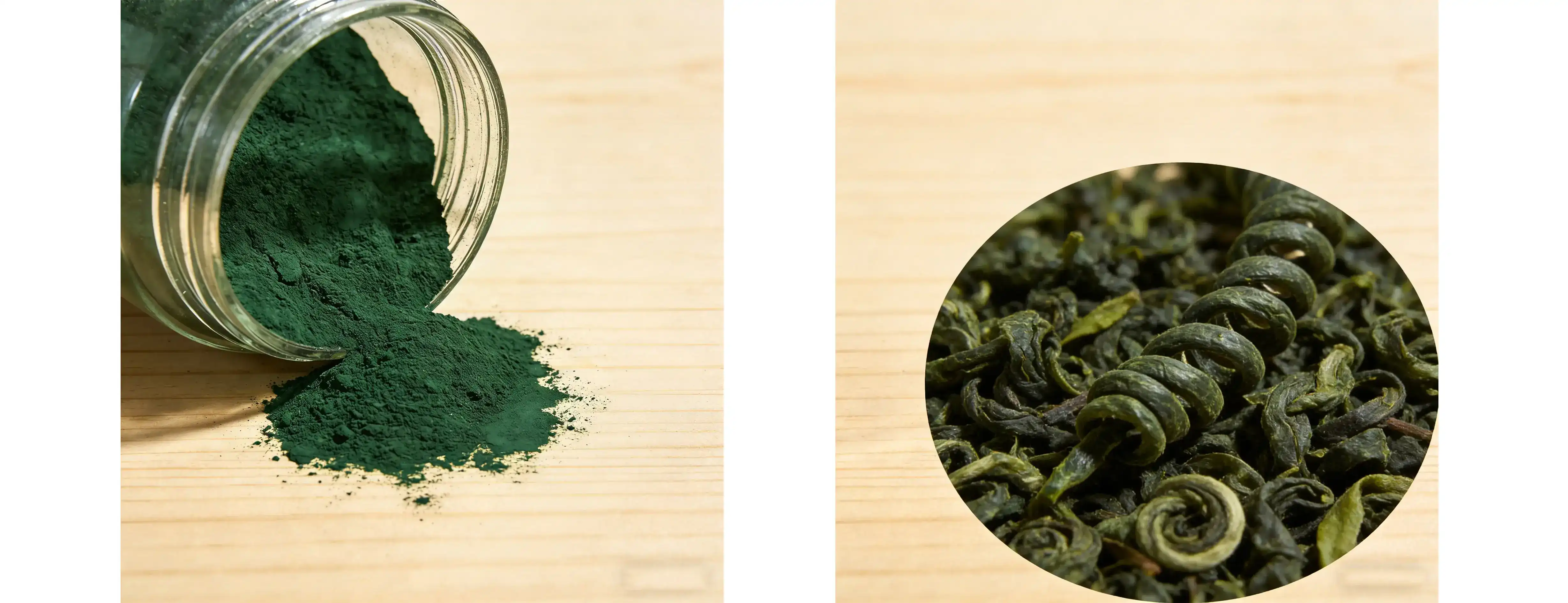
Spirulina platensis, commonly known as Arthrospira platensis, is a very small cyanobacterium that creates food by photosynthesis. Cyanobacteria, like bacteria, can change their metabolism and create food as plants do. As a crop for commercial purposes, it is cultivated in alkaline ponds that are enclosed or semi-enclosed, with tight regulations on pollution. It is selected and then spray-dried at controlled temperatures and then pulverised into a fine green powder that is 80 to 120 mesh. These techniques preserve heat-sensitive bioactives and remove the oxidised "fishy" smell that results from utilising substandard items.
Nutritional Profile at a Glance
I can't believe how healthy Spirulina platensis powder is. It is more digestible than most plant-based protein sources and has at least 60% protein by dry weight. It also has all nine necessary amino acids. There are many things in the powder, such as phycocyanin (10–19%), chlorophyll a, zeaxanthin, beta-carotene, B-complex vitamins, vitamin K, iron, and calcium. Omega-3 fatty acid (GLA) levels are much higher in this powder than in chlorella and other microalgae powders.
Natural spirulina powder has a higher soluble protein structure and more phycocyanin antioxidant potential than chlorella. That being said, chlorella has the most chlorophyll and a harder cell wall that needs to be broken up by hand in order to be eaten. Which one is better is up to the goal application and end-consumer benefit claim.
Evidence-Based Benefits and Practical Formulation Uses
Functional Benefits Driving Industry Demand
Spirulina has been shown in reputable journals to boost the immune system, fight free radicals, keep energy levels in check, and assist with weight loss. A blue-green color comes from phycocyanin, which is also very good at getting rid of free radicals. The powder is an even better antioxidant because it works as a superoxide dismutase (SOD). This is very helpful for vitamin and sports nutrition items that are meant to keep cells healthy.
Here are the primary application formats used across B2B industries:
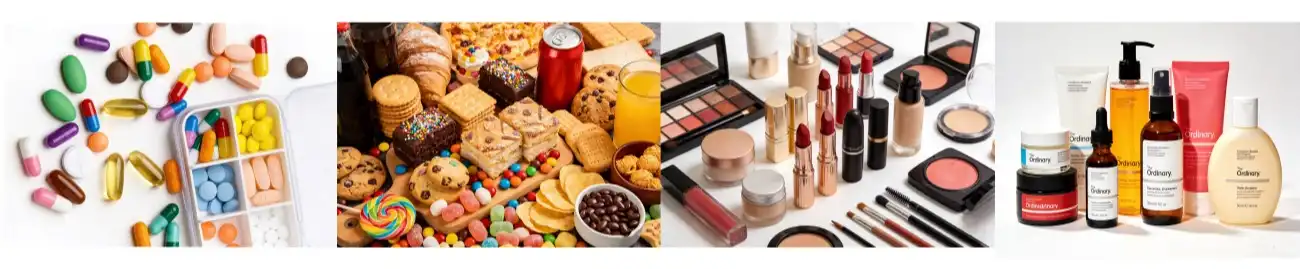
- Nutraceutical tabletting and encapsulation: Spirulina powder can be properly crushed without affecting the structure of heat-sensitive enzymes too much. This makes it a reliable active ingredient for supplements for energy and immune support.
- Functional food and beverage colourant: Gives a brilliant blue-green colour when used as the starting material for phycocyanin extraction. Formulators should be aware that it’s pH-sensitive (pigment precipitation occurs below pH 4.5), thus it’s ideal with acidic materials such as sweets or citrus drinks.
- Cosmetic actives: Algae extracts rich in antioxidants are easy to put into anti-aging serums, face masks, and repair solutions as a cosmetic active element. That’s because they can be marketed as “natural.”
- High-value aquaculture feed: Carotene pigments like zeaxanthin and beta-carotene, also referred to as “high-value aquaculture feed,” improve skin appearance and increase larval survival in koi and ornamental shrimp farms.
Natural spirulina powder is more of a multi-sector raw material than a single-channel ingredient because it can be used in so many different ways. Procurement teams that know about this flexibility are very helpful when making a wide range of products.
Comparing Grades and Formats: Making the Right Choice for Your Business
Organic spirulina is grown without the use of herbicides or pesticides. Rather, nitrogen supplies from plants are used. That is evident from C14 testing and USDA/EU organic clearance. In conventional grades, non-irradiated inorganic fertilisers that are still permitted in most regions across the world are utilised. This level is more expensive, yet it fits better in the natural, clean label and high-end supplement markets.
It is always ideal to store spirulina as a bulk powder since it is cheaper per gramme, offers more cooking alternatives, and has a longer shelf life when stored in controlled settings. Customers appreciate capsules because they are easy to use, but this makes it tougher for the formulator to combine spirulina with other active ingredients in the proper proportions.
Four quality vectors are non-negotiable in responsible procurement when evaluating suppliers
- Microcystin analysis: To distinguish safe spirulina generated in the laboratory from unsafe algal blooms in nature, microcystin level was determined to be less than 1 µg/g. This was done by ELISA or HPLC .
- Heavy Metals: ICP-MS test indicated lead level below 3.0 ppm, arsenic level below 1 ppm, cadmium level below 1 ppm, and mercury level below 0.1 ppm.
- Microbiology: Microbiology testing showed a total plate count of <100,000 cfu/g and negative results for Salmonella, E. coli, and Staphylococcus aureus.
- Pheophorbide levels: This is what happens when chlorophyll breaks down, and it is kept around 60-80 mg/100g so customers don’t have to worry about photosensitivity.
These elements are the technical beginning point for any credible quality assurance chat you might have with a probable natural spirulina powder source.
Sourcing Natural Spirulina Powder: A B2B Buyer's Guide
You can't just choose a supplier based on price. Your relationship with a seller may either help or hurt your production plan. It depends on the amount of certification, the paperwork needed to make sure that each batch is the same, and the transportation system in place. If teams are looking for places to get natural spirulina powder, they should ask for third-party COAs, data that compares different amounts, and papers that show how the powder was grown, gathered, and dried.
Organic Herb Inc. (OHI), a publicly listed company (Stock No. 872213), supplies Spirulina platensis straight powder with the following confirmed specifications:
- Latin name: Spirulina platensis
- Specification: Straight Powder
- Appearance: Green Powder (80–120 mesh)
- Plant part used: Algae
- Protein: ≥60%
- Phycocyanin: 10–19%
- Moisture: <7%
- Packaging: 25 kgs/drum
- MOQ: 25 kgs
- Lead time: 10 days
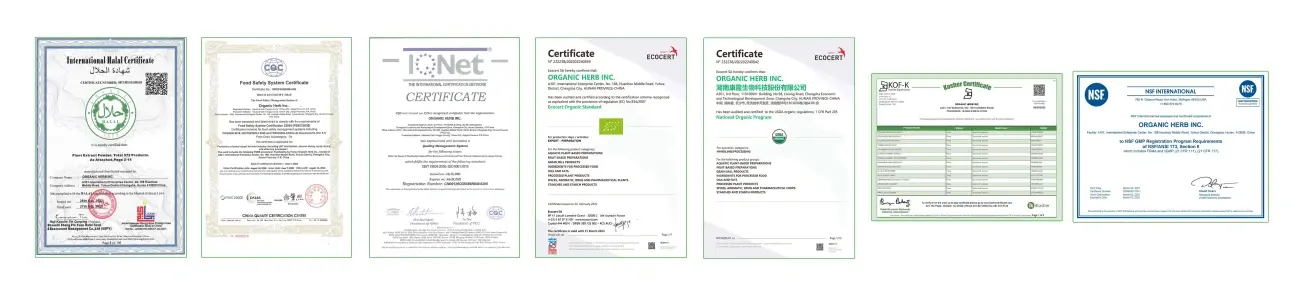
- Certificates: NSF GMP, Kosher, Halal, ISO, FSSC22000, Organic
- Free samples: Available on request
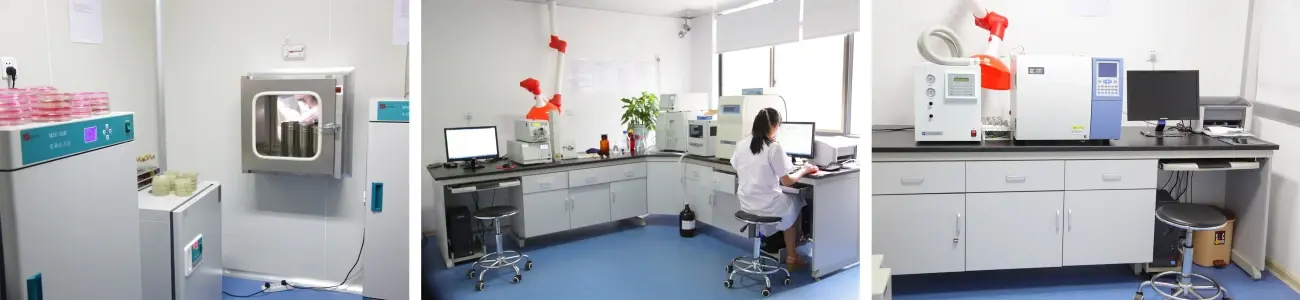
OHI operates four strategically positioned warehouses across the United States, enabling prompt domestic delivery. All products comply with US FDA and C-GMP standards, backed by a 42-member R&D and QC team equipped with HPLC, GC-MS, HPTLC, and ICP-MS instrumentation.
Maximizing ROI: Market Trends and Strategic Positioning
Aquaculture, functional foods, cosmetics, and nutraceuticals are all growing markets for natural spirulina powder around the world. And this is because more and more people want natural colorants and proteins that come from plants instead of man-made dyes like Blue No. 1 and Green No. 3. In the vitamin and functional food markets, which are getting more and more crowded, brands that sell spirulina as a clean-label, non-GMO, and traceable ingredient gain measurable differentiation in increasingly crowded supplement and functional food markets.
OHI cares about sustainable shopping and taking care of the environment as real-world ideas, not just marketing buzzwords. Dynamic low-temperature extraction, nano-membrane separation, and freeze-drying are some of the most cutting-edge techniques that are used in its plant in Yichun, Jiangxi Province, to make sure that every batch keeps its biological integrity. When purchasing teams build long-term partnerships with skilled sellers like OHI, they lower the chance of variation and make sure that the quality of the products stays the same over time.
Conclusion
Natural spirulina powder is different from most useful ingredients because it can be used in aquaculture, nutraceuticals, food and drinks, skin care, and more. It is one of the best raw materials for preparation experts because it has a lot of phycocyanin antioxidants, high protein absorption, and can meet a lot of different certification standards. Brands that want to follow the clean-label trend can use spirulina because it works well and has clear sourcing information that customers and regulators today expect.
FAQ
Q1: Is spirulina powder safe for use in food-grade manufacturing?
Yes. Natural spirulina powder is GRAS, which means it can be used all over the world in food-grade ways. For compliance, the standards for heavy metals, bacteria, and microcystin must be met. Tests by a third party are needed to prove these limits.
Q2: What dosage range is standard in supplement formulations?
A useful amount for most nutraceutical goods is between 1 and 3 grams per serving. More is used in sports nutrition items that focus on protein.
Q3: How do I verify the purity of a spirulina powder sample before bulk purchase?
Ask a third-party lab that has been approved to give you a full COA that shows how much protein, phycocyanin, moisture, total ash, heavy metals, and microbiology data there is.
Q4: Does spray-drying affect the nutritional quality of spirulina?
Spray drying at a steady temperature protects the shape of proteins and the SOD enzymes' ability to work. The smell of rust from batches that weren't dried properly is also gone, so the powder can be used in food.
Partner with OHI for Premium-Grade Spirulina Powder Supply
It is safe to trust OHI to make natural spirulina powder for brands all over the US that make cosmetics, supplements, and useful foods. Within 10 days, our straight Spirulina platensis powder will ship from US stores, and you can try it for free. The minimum amount that can be ordered is 25 kgs. Email our team at info@organic-herb.com for more information, a COA, or a bulk price quote right now.
References
1. Karkos, P. D., et al. "Spirulina in Clinical Practice: Evidence-Based Human Applications." Evidence-Based Complementary and Alternative Medicine, 2011.
2. Deng, R., & Chow, T. J. "Hypolipidemic, Antioxidant, and Antiinflammatory Activities of Microalgae Spirulina." Cardiovascular Therapeutics, 2010.
3. Kulshreshtha, A., et al. "Spirulina in Health Care Management." Current Pharmaceutical Biotechnology, 2008.
4. Belay, A. "The Potential Application of Spirulina (Arthrospira) as a Nutritional and Therapeutic Supplement in Health Management." Journal of the American Nutraceutical Association, 2002.
5. Wu, Q., et al. "The Antioxidant, Immunostimulatory, and Anti-Inflammatory Activities of Spirulina: An Overview." Archives of Toxicology, 2016.
6. Finamore, A., et al. "Antioxidant and Anti-Inflammatory Effect of Spirulina on Immune Function." Nutrients, 2017.
Standard Disclaimer (DSHEA):
These statements have not been evaluated by the Food and Drug Administration.
This product is not intended to diagnose, treat, cure, or prevent any disease.

Send Inquiry
You may like