
Natural Peppermint Leaf Extract Health Benefits: The Coolest Herb in Town
Sep 1, 2026
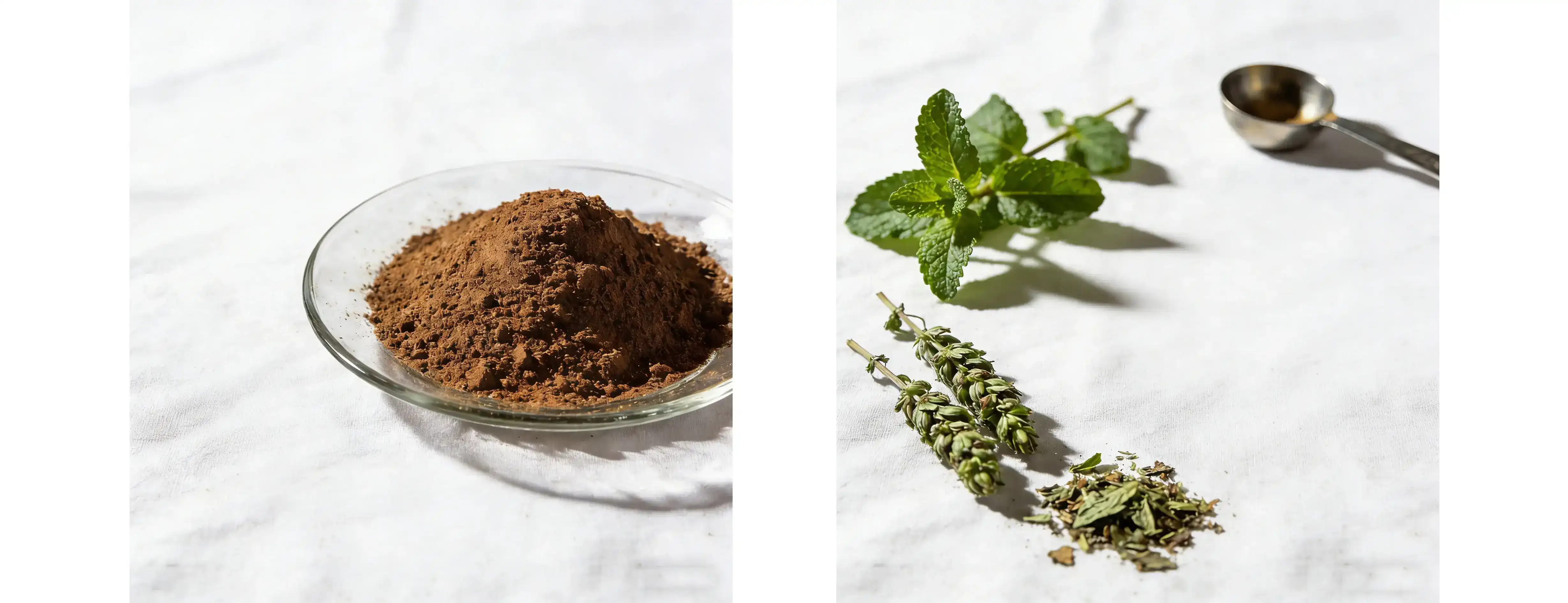
When formulation managers search for high-purity botanical ingredients that deliver consistent quality and proven efficacy, Natural Peppermint Leaf Extract stands out as a versatile, scientifically backed choice. Derived from Mentha piperita L., this brown-yellow powder concentrate offers nutraceutical, cosmetic, and food manufacturers a clean-label solution rich in menthol, flavonoids, and rosmarinic acid. Water-extracted at standardized ratios (4:1, 10:1), it meets the rigorous demands of global compliance while supporting product differentiation in crowded markets.
Understanding Natural Peppermint Leaf Extract: A Global B2B Perspective
Botanical Origin and Water Extraction Process
It has been grown for hundreds of years in Europe, North America, and Asia. Peppermint, or Mentha piperita L., does best in warm weather. The leaves have a lot of good chemicals in them, like menthol (the main monoterpene that makes you feel cool), menthone, limonene, and polyphenolic antioxidants like eriocitrin and rosmarinic acid. Distillation of essential oils removes volatile smell compounds. Providers you can trust use water extraction to get a wider range of phytochemicals that dissolve in water, like flavonoids, tannins, and phenolic acids. This keeps the profile clean and free of solvents. More and more people and government agencies want natural processing, and this method fits with that.
For the purification process at OHI, we only use water. This makes sure that the brown-yellow powder doesn't have any ethanol or chemical liquids in it. Compounds that are sensitive to heat are protected by the controlled temperature during dynamic low-temperature extraction. This makes a concentrate that works better than concentrates made with high heat. The extract is even better with nano-membrane isolation and freeze-drying technologies, which make a standard powder that doesn't change from batch to batch. This is important for R&D leaders and buying teams.
Market Forms: Powder vs. Oil vs. Crude Extract
People who work in purchasing might not be able to tell the difference between pure extract powder, leaf powder, and peppermint oil. 30–50% of peppermint essential oil is menthol, which makes it taste good, smell good, and cool the skin. But it doesn't have the polyphenols that dissolve in water that are needed for antioxidant mixtures. There is still fiber and chlorophyll in raw leaf powder, which can make it harder to mix and get the right amount in drinks or pills. When mixed at 4:1 or 10:1, concentrated leaf extract powder is a good middle ground because it concentrates active markers and makes the powder easier to flow, compress for tablets, and spread out in liquid mixtures. Supplement brands that want to use exact amounts in size 0 pills and functional drink brands that need to be able to dissolve in cold water without getting cloudy or settling to the bottom, like this shape, work well.
Purity Standards and Certification Benchmarks
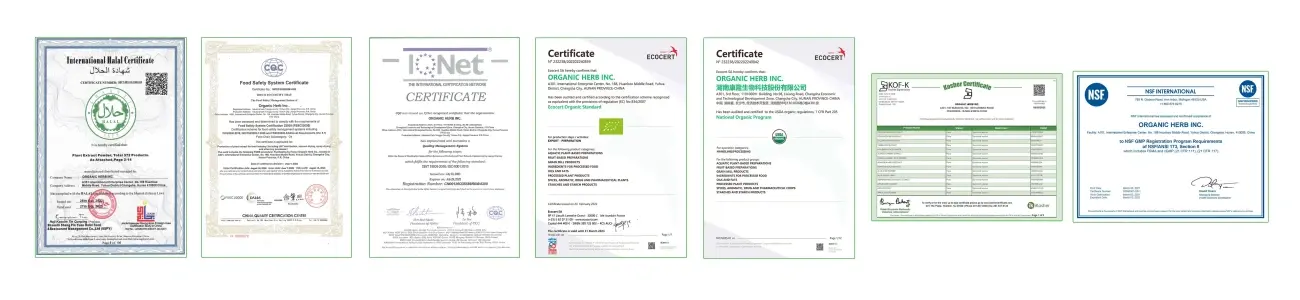
Testing methods that are clear are important for making sure that the plants that are bought are of good quality. High-Performance Liquid Chromatography (HPLC) checks the extract against marker chemicals like rosmarinic acid to make sure it is what it says on the bottle. Heavy metal tests with ICP-MS, such as those for lead (<3.0 ppm), arsenic (<1.0 ppm), and mercury (<0.1 ppm), make sure that FDA and EU rules are followed. Microbiological control, like having a total plate count of less than 1,000 cfu/g and no bacteria like Salmonella and E. coli, and it meets USP standards, which are very important for companies that make healthy food supplements. Certifications like Kosher and Halal, as well as USDA NOP and EU Organic, help you reach specific groups of people. We follow these strict rules because OHI is certified by NSF GMP, FSSC22000, ISO9001, and organically. They show buyers that goods can be tracked from our 8,000-acre GAP-standard growing bases to the point where they are packed.
Current Trends: Organic Sourcing and Sustainability
Eco-friendliness used to be a business problem, but now you have to buy things that are eco-friendly. Brands want to know more and more about how crops are grown, their carbon footprints, and their fair-trade relationships. There are real benefits to buying certified organic peppermint extract over regular peppermint extract. For example, there is less chance of pesticide residue, it fits with the trend toward clean labels, and the brand has a better reputation. Expert help for local farmers, a steady supply of seeds, and harvest tracking are all part of our GAP-standard bases in Jiangxi and Hunan provinces. This is done to protect the environment and make sure that phytochemical profiles are always the same. Vertically merged models like this one make the supply chain and quality differences less of a problem. These are issues that foreign buyers and dealers often worry about.
Applications and Uses of Natural Peppermint Leaf Extract
Digestive Comfort and Gastrointestinal Support
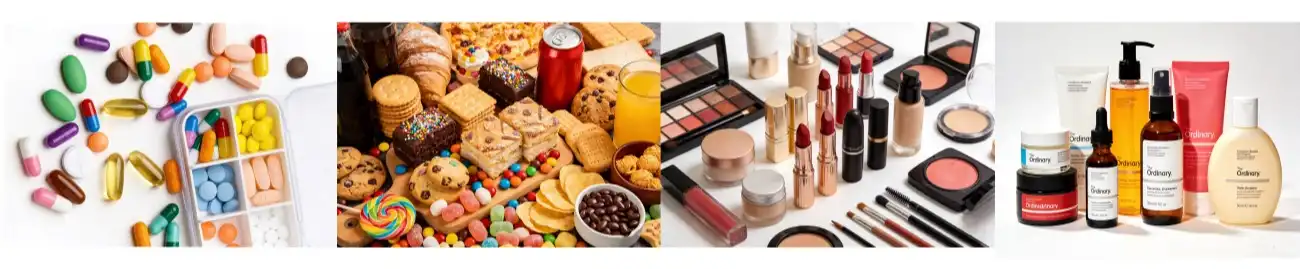
Peppermint contains menthol, which contributes to its characteristic cooling sensation and distinctive sensory profile. Standardized Natural Peppermint Leaf Extract products are commonly used in formulations where these botanical characteristics are desired. They can be usefully added to functional food and beverage items because of this. Formulation managers in the nutrition business like that the water-extracted leaf powder has menthol in it, as well as flavonoids and tannins that contribute to its overall phytochemical profile. For capsules, the usual dose range is 300 mg to 600 mg per serving. However, this can change based on how strong the extract is and how the other ingredients work together. The whole-leaf extract has a healthy mix of phytochemicals that make it easier for people to use and fits with the idea of a natural product. This is different from choices with only menthol or fake ingredients.
Phytochemical Profile and Cosmetic Applications
Peppermint leaves have a lot of rosmarinic acid, which is a type of fruit acid. Peppermint leaves contain rosmarinic acid and other polyphenolic compounds that contribute to their overall phytochemical profile. These compounds are of interest in cosmetic and personal care formulations. Peppermint extract is useful for cosmetic makers who want to incorporate botanical ingredients into skin care formulations with a distinctive phytochemical profile. Laboratory studies have examined the properties of rosmarinic acid and its potential role in cosmetic ingredient research. This means it can be put in serums for the skin as part of formulations designed around botanical and plant-derived ingredients. It is also used by sports nutrition brands in products that feature plant-derived ingredients as natural alternatives to synthetic ingredients. When looking at natural and man-made antioxidants, natural peppermint extract has a few benefits. For example, people like goods that come from plants; the chemicals that are extracted together work better, and it can be used with "clean label" language.
Respiratory Wellness and Cognitive Clarity
Peppermint contains menthol, which provides a characteristic cooling sensation and is widely used in seasonal food, beverage, and personal care formulations. People who make functional foods add peppermint extract to lozenges, herbal teas, and stick packs that feature its characteristic flavor and aroma. It's not a replacement for medical care, though. Because of its distinctive sensory characteristics, menthol is often added to drinks and supplements designed for consumers who prefer refreshing flavors and aromas. People who make products often mix peppermint oil with things that work well together, like green tea or ginseng. Most of the time, 200 mg to 500 mg per serving can be considered as a formulation reference, but this can change based on the strength of the extract and the intended application.
Application Dosages and Safety Parameters
How much of the extract is given, how it is given, and who it is meant for all affect the right dose. There are more active markers per gram in standardized extracts with a 10:1 concentration than in those with a 4:1 concentration. This means that the extract can be put into smaller capsules or added to drinks in smaller amounts. Product specifications and supplier documentation can help formulation teams determine appropriate inclusion levels for peppermint leaf extract. Product developers should consider formulation compatibility and adjust inclusion levels as needed. Good sellers give thorough technical data sheets with recommended use levels, the substance's taste and smell, and how stable it is in different store circumstances. This lets R&D teams optimize product formulations while maintaining consistent quality and specification requirements.
Comparison and Decision Guide for Natural Peppermint Leaf Extract Procurement
Natural vs. Synthetic: Efficacy and Market Perception
Makers who want to save money like synthetic menthol crystals because they are less expensive and always have the same amount of strength. Natural peppermint leaf extract, on the other hand, has a wider range of phytochemicals, such as flavonoids, tannins, and volatile, pleasant-smelling substances that contribute to the product's sensory profile and appeal to customers. People often associate plant-based extracts with natural positioning and broader botanical profiles, according to market studies. Brands that stress green ingredients can now charge more because of this. Green people also know that petrochemicals, which are not the same thing as green farms, are used to make fake menthol. The people in charge of buying things should think about how the brand will be seen in the future, the rules that apply (in some places, "natural" labels can only be used on goods that come from plants), and how much people are willing to pay for realness.
Peppermint Leaf Extract vs. Peppermint Oil
The job at hand will tell you which leaf extract or essential oil to use. Peppermint oil is great for aromatherapy, making cooling gels for the skin, and adding flavor or fragrance to things that need a lot of menthol (30–50%). But it's hard to use in water-based drinks, pills, and makeup bases because it doesn't mix well with water. Leaf extract powder is better for skin care products, functional foods, and dietary supplements that require a broader botanical profile beyond menthol's cooling effect. It is easier to mix and has a more balanced phytochemical make-up. When you look at the price difference per end unit, the price difference between concentrated extract powder and essential oil may not seem that big per kilogram. However, the price difference is smaller when you consider how much of each is used in formulas.
Organic Certification: Cost, Supply Chain, and Quality Benchmarks
When you buy something, organic acceptance makes you think about more things. To be certified organic, peppermint extract must come from farms that don't use synthetic pesticides and fertilizers and that are audited by a third party. The farms must also have buffer zones to keep contamination from spreading. Because these standards make it more expensive to make things, prices go up by 15 to 25 percent. Lower food yields from organic farming and tighter rules on how to handle crops after they are picked can also make the supply chain less reliable. But getting organic approval lets you sell in high-end shops, supports claims of purity in marketing, and fits with regulatory trends in North America and Europe that favor goods without pesticides. To be sure the food is real, buyers should look at the supplier's audit records and ask for batch-specific organic certificates from groups like USDA NOP or EU Organic.
Lab Testing and Supplier Transparency
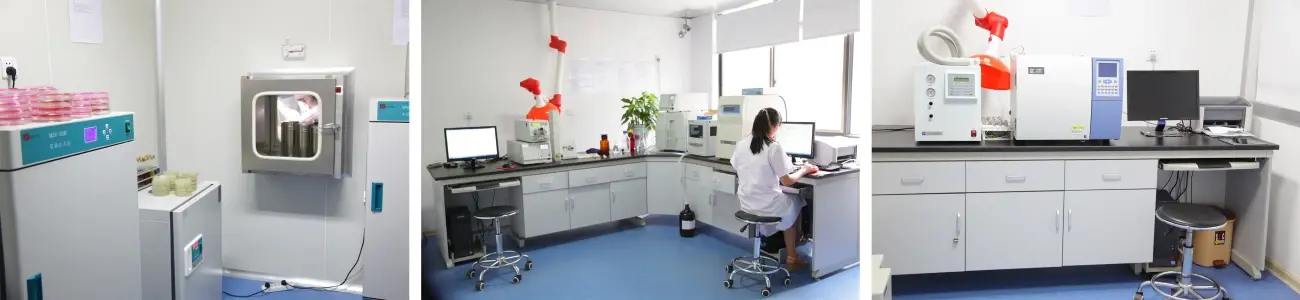
Tough quality control can tell the difference between honest sellers and dishonest ones. For every batch, you should ask for a Certificate of Analysis (CoA). This should include HPLC tests for active markers, ICP-MS heavy metal screens, GC-MS/LC-MS herbicide residue tests, and results for microbial infections (Total Plate Count, Yeast & Mold, and pathogen screening). Physical analysis includes measuring mass density, particle size distribution through screening, and moisture content. These all have an effect on how well the capsule filling machine works and how stable it is while it's being stored. They have HPLC-ELSD, GC-MS, and atomic absorption spectrophotometers in their modern analytical lab at OHI. These machines make sure that every package has all of its paperwork. With our clear quality standards, buyers can follow each batch from our GAP-certified fields to the time it is extracted, tested, and packed. Imports can be managed more consistently this way, while documentation supports regulatory review.
Conclusion
For businesses that care about quality, the environment, and customers who want natural solutions, natural peppermint leaf extract is a wise chemical choice. Researchers have examined this ingredient, and its botanical profile continues to attract market interest. It can be found in functional drinks, dietary supplements, botanical skin care products, and formulations featuring its characteristic flavor, aroma, and phytochemical profile. To achieve consistent product quality and brand positioning, buyers should think about extract content ratios, the advantages of organic certification, the openness of suppliers, and following the rules. Businesses that buy from vertically integrated companies like OHI can get supply lines that can be watched, help with advanced research and development, and variable delivery models that can meet the needs of many businesses while still meeting high-quality standards.
FAQ
1. Is Natural Peppermint Leaf Extract Safe for All Consumer Groups?
A lot of different types of formulations can incorporate natural peppermint leaf extract when used at the recommended inclusion levels. Technical specifications and supplier documentation support the consistent use of standardized extracts in commercial formulations, while applicable market requirements should be reviewed for each product category. This gives formulation managers clearer information for ingredient selection and product development.
2. What Dosage Should Supplement Manufacturers Target?
How strong the extract is and what it will be used for will determine the right dose. Most tablets with standardized 4:1 extracts have 400 mg to 800 mg of phytochemicals. Tablets with 10:1 concentrates, on the other hand, can have lower inclusion rates (200 mg to 500 mg) that still give the same amount of phytochemicals. Functional drinks often have 150 to 300 mg per dose to get the job done and taste good at the same time. Formulators can use technical data sheets from reliable sources to find out about the stability and organoleptic levels of a substance in a variety of pH levels. In this way, they can make the best products while still following safety rules.
3. How Does Leaf Extract Differ from Peppermint Oil in Formulations?
A volatile chemical substance called menthol makes up about 30% to 50% of peppermint oil. It's great for cooling the skin and adding flavor, but it doesn't mix well with water. Flavonoids, tannins, and phenolic acids are some of the phytochemicals that are found in leaf extract powder. It also mixes better in water. Because of this, it can be used in food supplements, functional drinks, and skin care items that feature a broader botanical and phytochemical profile. When it comes to a chemical's profile, the way it is extracted (distillation vs. water extraction) makes a big difference. The desired formulation characteristics and compatibility should guide the choice of extraction method.
Partner with OHI: Your Trusted Natural Peppermint Leaf Extract Supplier
Mentha piperita L. is available from OHI and can be used in a wide range of food, beverage, supplement, and cosmetic formulations. Due to clean label rules, leaf extract powder is made from water extraction only and comes in normal 4:1 and 10:1 ratios. Our yellow-brown powder is shipped from four shops in the U.S. in 10 days or less. It comes in fiber drums that hold 25 kg and it meets the standards of NSF, GMP, FSSC 22000, ISO 9001, Kosher, Halal, and Organic. We make Natural Peppermint Leaf Extract and sell it on the stock market. To make sure that every batch is the same and that we follow all the rules, we farm on 8,000 acres that are GAP-certified and use advanced nano-membrane isolation technology and a 42-person research and development team. As a sign that we care about quality, we offer free samples. If you email info@organic-herb.com, you can get technical specs, CoA paperwork, and help with making your own formulas.
References
1. McKay, D.L., & Blumberg, J.B. (2006). A review of the bioactivity and potential health benefits of peppermint tea (Mentha piperita L.). Phytotherapy Research, 20(8), 619-633.
2. Nair, B. (2001). Final report on the safety assessment of Mentha piperita (peppermint) oil, Mentha piperita (Mentha piperita) leaf extract, Mentha piperita (Mentha piperita) leaf, and Mentha piperita (Mentha piperita) leaf water. International Journal of Toxicology, 20(Suppl. 3), 61-73.
3. Schuhmacher, A., Reichling, J., & Schnitzler, P. (2003). Virucidal effect of peppermint oil on the enveloped viruses herpes simplex virus type 1 and type 2 in vitro. Phytomedicine, 10(6-7), 504-510.
4. Alam, M.S., Roy, P.K., Miah, A.R., Mollick, S.H., Khan, M.R., Mahmud, M.C., & Zu, S. (2018). Efficacy of peppermint oil in diarrhea-predominant IBS—a double-blind randomized placebo-controlled study. Mymensingh Medical Journal, 27(3), 569-573.
5. Inoue, T., Sugimoto, Y., Masuda, H., & Kamei, C. (2002). Antiallergic effect of flavonoid glycosides obtained from Mentha piperita L. Biological and Pharmaceutical Bulletin, 25(2), 256-259.
6. Meamarbashi, A., & Rajabi, A. (2013). The effects of peppermint on exercise performance. Journal of the International Society of Sports Nutrition, 10(1), 15.
Standard Disclaimer (DSHEA):
These statements have not been evaluated by the Food and Drug Administration.
This product is not intended to diagnose, treat, cure, or prevent any disease.

Send Inquiry
You may like