
Guide to Pineapple Extract Benefits, Skincare Uses, & Safety
Oct 30, 2026
Ananas comosus is the source of pineapple extract, which is a concentrated substance. The value of pineapple extract is contingent on the plant portion, the extraction technique, and the specifications. It is used by purchasers in the fields of dietary supplements, functional foods, and cosmetics, where enzymes, polyphenols, and vitamin C are of particular relevance. When it comes to surface-care formulations, skincare teams are considering using it, but safety is dependent on testing, certifications, and labelling that is compliant. The following topics are discussed in this guide: composition, benefits, cosmetic usage, quality standards, forms, and the selection of suppliers. In addition, we provide an explanation of the pineapple extract that is extracted using water and that OHI distributes to manufacturers all around the United States. To provide the R&D, formulation, and procurement teams with information that they can verify is our primary objective.
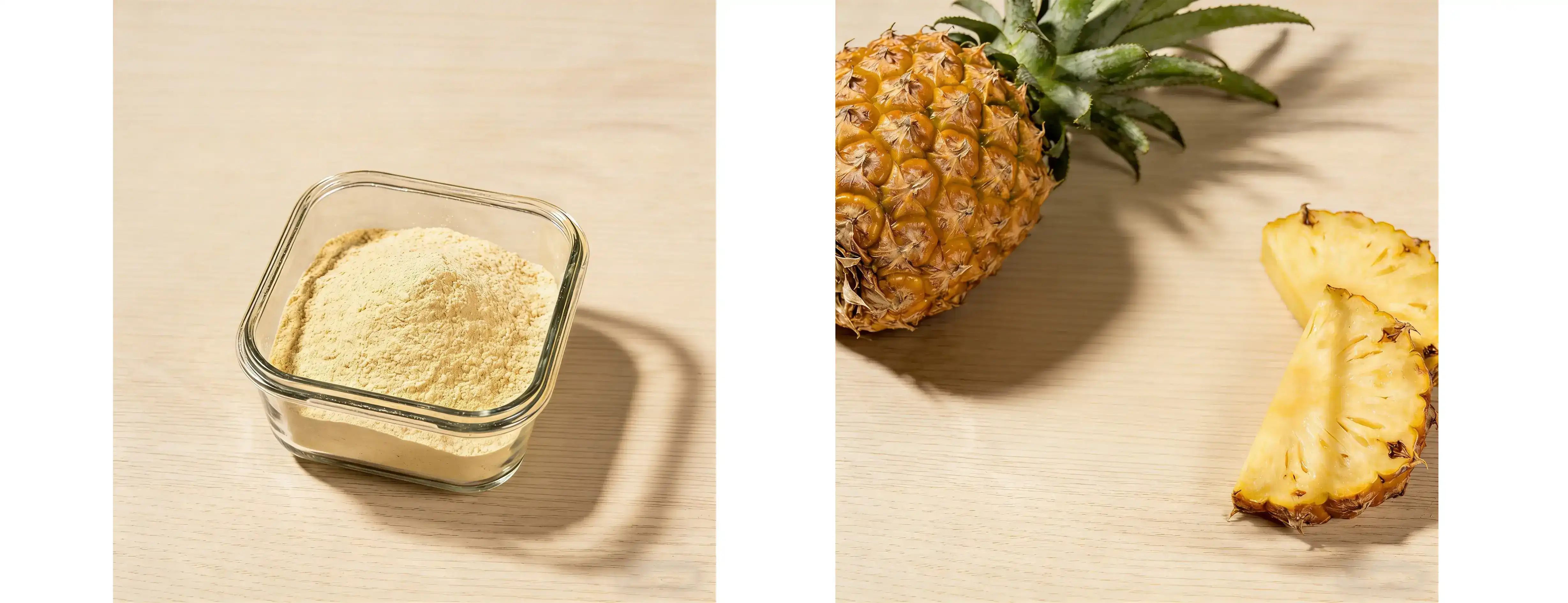
Pineapple Extract Nutrition Facts and Active Compounds
What Is Pineapple Extract?
It comes from the Bromeliaceae plant Ananas comosus. Pineapple extract is a concentrate that is made from this plant. The mix is different from one source to the next. They can start with the seed, the fruit, the juice, or the plant. In terms of enzyme activity, this part is not the same as pineapple juice, natural flavoring, or isolated bromelain. This is how most sellers measure their products. A lot of products can be bought by the amount. A 10:1 extract means that one part of the finished extract was made from ten parts of the raw material. The real output and makeup, on the other hand, may be very different. There are industrial types that come in powders, liquids, pills, tablets, and makeup bases. To compare things that are not the same, buyers should look at scientific data instead of names.
Active Compounds in Pineapple-Derived Ingredients
Products made from pineapple may have bromelain, tannins, antioxidants, organic acids, and vitamin C. There are enzymes in pineapple that break down proteins. It was found for the first time in the late 1800s. Cellular and Molecular Life Sciences and Biotechnology Research International both say that the stem has been the main source of market for a long time. What chemicals are in an extract depends on what part of the plant it comes from, how hot or cold it was, and how it was dried. Since enzymes don't like being heated, it's important to be careful when working with them. This is why you shouldn't just guess that a compound is there; you should read the certificate of analysis. If someone wants to buy a certain pen, they should check with us first.
Nutrition Facts: Fresh Pineapple vs. Extract
The USDA's FoodData Central says that 100 grams of raw pineapple has 50 calories, 48 mg of vitamin C, and almost 1 mg of manganese. That number is for the fruit itself, not a product. By filtering, concentrating, drying, heating, and adding carrier materials, you can change enzyme activity, flavor, color, and the amount of nutrients that stay in the food. This is why a 4:1 or 10:1 extract needs its own set of scientific evidence. Formulators shouldn't copy fresh-fruit values onto labels. They should instead use test results from the real batch and write claims that are true based on what was in the final product. With this habit, you can be sure that food labels and ads are correct.
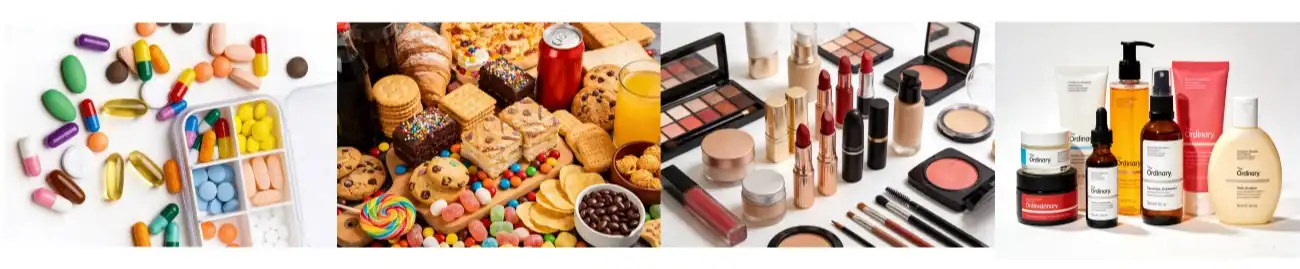
Potential Pineapple Extract Benefits for Digestive and Joint Wellness
Digestive Wellness Positioning
As a protease, bromelain can break down proteins in the lab. Parts of pineapples are used in gut health mixes and enzyme formulas because of this. There is a study of the biochemistry by Maurer in Cellular and Molecular Life Sciences in 2001 that goes into a lot of depth. But just because a trait was found in a lab doesn't mean that all customers will have the same experience. How well it works depends on the full formula, the dose, the time, and how active the enzymes are. The ingredient should be listed as part of a gut health product, not as something that treats or cures something. Before you decide to try it, our team can talk about how a pineapple extract made with water can work in a certain dish.
Joint and Recovery Formulas
In brands for sports nutrition and an active lifestyle, turmeric, collagen, and vitamin C are often found together. The aim is to discover a mix that lets you heal and move around every day. First, the formulators look at the amount, the container, the flow of powder, and how tightly the tablet is packed. As the ratio goes up, say 10:1, there is more raw material per gram. It's possible that smaller amounts will work, and there's room in the capsule for other things. It's possible for a 4:1 extract to work in mixes where flow and bulk are important. Stability tests and small batches of the choice show which one works best. We tell teams to do these checks early because they affect how much the label costs and how big the box is.
Weight Management Claims and Substantiation
Some people who buy things want to know if pineapple extract really does burn fat. Companies should be very careful about making claims like this right now because there isn't enough proof to back it up as a weight-loss answer on its own. According to the Dietary Supplement Health and Education Act of 1994, a business needs to notify the FDA within 30 days of making a claim about a structure or function. It must also have the required disclaimer and proof that the claim is true. When you write a review of a product, you should look at how many calories, sugar, other chemicals, and studies have been done on it. Launch dates stay stable with a careful claim strategy that protects both the customer and the brand.
Pineapple Extract Skincare Uses and Cosmetic Formulation
Where Pineapple Extract Appears in Skincare
Some hair products, body care products, masks, scrubbing products, whitening solutions, and cleansers all have ingredients that come from pineapple. Extracts with enzymes are often sold as a gentle way to change the feel of your skin or get rid of dead skin cells. As an alternative to acid-based scrubs, some brands even market them. These are ways to use cosmetics. They're not treatments for health or skin care. Natural skin care brands can also benefit from stories about plants. People know the fruit pineapple and think of it when they think of natural skin care. Different types of extracts work in different ways in a formula, so chemists still need to know more about the exact extract.
Formulation Factors for Cosmetic Chemists
When a cosmetic chemist looks at a substance, they should check its pH, how well it dissolves, how it looks and smells, how it reacts with preservatives, and how well it works with surfactants and emulsions. If the extract you pick has active enzymes, how sensitive it is to heat is important. It stops working when it gets too hot, usually above 60°C (140°F), so teams generally add it when it's time to cool down. That's still true even if an extract is valued for the plants it contains instead of the enzymes it works on. The color and smell of clear gels and light creams can change. Before going big, tiny tests should be done on a bench at the right pH. View our light yellow extract to see how it changes the look of the final item.
Testing and Documentation Before Scale-Up
Before going on sale, teams should test skin care goods for stability, microbes, shelf life, and the right way to package them. The proper INCI name for the plant part used should be written down on the paperwork. It should also say if it is organic and how long it will last, just in case. In the US, the Modernization of Cosmetics Regulation Act of 2022 added facility registration, product listing, and proof of safety to the FDA's watch list. What you need from the ingredient source is clear paperwork that makes those things easy to do. OHI gives out badges and records that can be tracked, and our R&D team in Changsha can talk to your formulators about analytical issues. Reviewing documents early cuts down on wait times during regulatory checks and hiring for the store.
Pineapple Extract Safety, Quality Control, and Regulatory Considerations
Quality Testing Programs
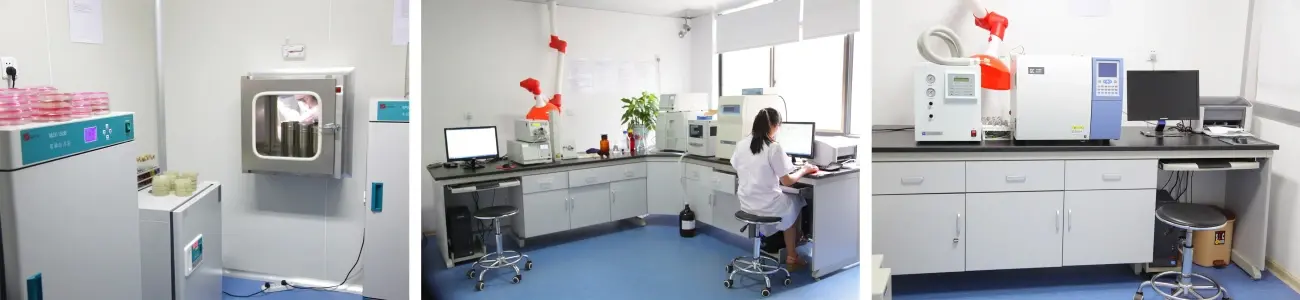
A good program checks for things like identity, bacteria, heavy metals, pesticide residues, moisture, particle size, solubility, and quick stability. This needs to be written on each lot's certificate of analysis. Every so often, OHI picks random goods to test to make sure that all of the batches are the same. We have HPLC, HPTLC, atomic absorption spectrophotometry, and other tools in our lab. The people who work in our R&D and QC department are 42. Different sellers have their own rules and methods, so buyers should use the same standards to compare certificates from different sellers. A low price doesn't seem as good when one seller doesn't make the item heavy metal-free while another does.
United States Regulatory Basics
When rules are made, they depend on what is made. Some dietary supplements don't follow the rules in 21 CFR Part 111 for good manufacturing practice. This is against the law. When it comes to cosmetics, the Federal Food, Drug, and Cosmetic Act has been changed by MoCRA. For normal foods and drinks, 21 CFR Part 117 is what you need to follow. Labels should state the ingredients, the serving size, the batch number, the date the food goes bad, how to store it, and the only claims that are allowed. Also, importers should keep copies of paperwork from suppliers in case they are checked out. Rules can change, so brands should talk to a lawyer before they start to make sure they follow the law. We give you the proof that those reports are true.
Certificates and Traceability
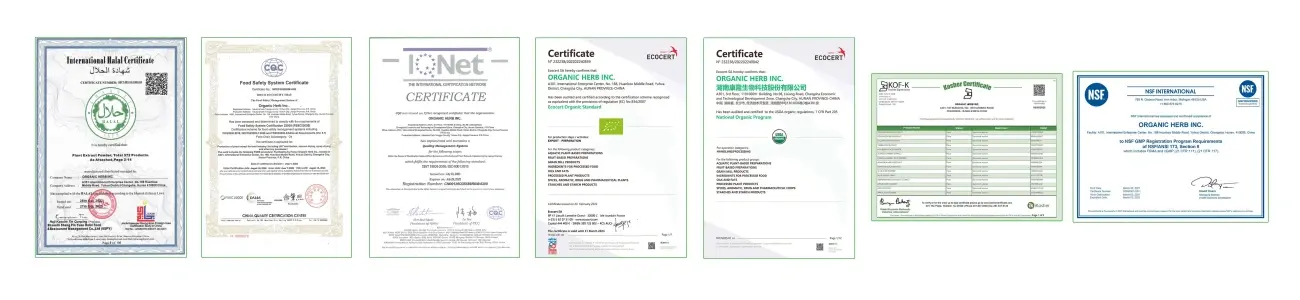
It's possible for buyers to start looking at suppliers after getting a certificate. Our pineapple extract has been certified as “Organic,” “Kosher,” “Halal,” “NSF GMP," and more. Also, our goods follow strict rules, such as those set by the US FDA and cGMP. The stock number for OHI is 872213. It is a public company. We keep records of every step of the making process on paper so that lots can always be found. We tell people who want to buy that they should get up-to-date copies of the certificates and check that they are valid for the items they want to buy. After that, auditors and quality teams can check the claims themselves.
Pineapple Extract Formats, Applications, and Supplier Selection
Powder, Liquid, and Juice Concentrate Compared
Powdered pineapple extract is easy to transport and store, and it may be used in a variety of forms, including sachets, capsules, and tablets. Dissolving a powder requires more effort; however, liquid extracts may be used in beverages, syrups, and sauces because of their versatility. An extract that has been well managed is not the same as juice concentrate. The total amount of water and simple sugar in a juice concentrate is much higher than that of a regulated extract. Taking into consideration how it dissolves, how it tastes, the instruments that you will want, and how consistent it is from one lot to the next are all important considerations. For the best results, it is essential to store dried forms of plant extracts in dry locations and to cover them. This is due to the fact that a significant number of them take in water from the air. You won't have to find the time to modify the style in the future if it is appropriate for the target audience and the goal of the writing.
Commercial Applications
It is possible to improve the quality of functional beverages, protein bars, sauces, sweets, dietary supplements, and skin care products by including pineapple extract in the formulation. In the process of manufacturing supplements, factors such as standardisation, carriers, hygroscopicity, and compression are taken into consideration. Trial testing should be conducted by those who are responsible for the production of beverages and meals in order to determine how the flavours function, how well they dissolve, how much sugar they contribute, and how much heat they can withstand. Cosmetic companies should maintain low temperatures while enzymes are being employed in their products. When the process is transparent, there is a lower probability that private-label and OEM initiatives will fail. The application is reviewed, samples are obtained, the product is manufactured, it is tested to see whether or not it is stable, it is packaged, pilot production is carried out, and commercial production is carried out. The fact that each step provides the subsequent step with the information it needs means that missing a step might result in delays.
How to Choose a Pineapple Extract Supplier, and What OHI Offers
Before you deal with anybody else, you should choose a vendor that is familiar with your format, application, certification requirements, quantity, and end market. It is recommended that you request a standard sheet in addition to requests for information on GMP, tracking records, and statistics on dependability. To begin comparing costs per kilogram, you should first consider the testing and wait time, the minimum order quantity, and the professional help. Only then should you proceed with the comparison.
OHI is a retailer that sells pineapple extract. It is produced by combining the seed with water in order to create it. Both 4:1 and 10:1 are the two distinct proportions that are available for this pale yellow extract. It is sold in barrels that have a capacity of 25 kilograms, and you are required to purchase at least 25 kilograms of it. A lead time of ten days is required. You may be able to acquire them for free. The stability of our stock is maintained by Earth Made Nutritions, which is a wholly owned company located in Los Angeles. Together, these four large warehouses in the United States help ensure that deliveries are made on time. Our research and development staff, together with our cutting-edge extraction technologies, are able to assist you with any technical queries you may have. Within the framework of our sustainability strategy, social responsibility and the preservation of the planet are both included.
Conclusion
Pineapple extract is different based on the part of the plant used, the solvent, the quantity, and how it is processed. Buyers should look at the data for each lot instead of the name of the ingredient. Fruit extracts don't have the same nutritional value as fresh fruit. Different products have different uses for the skin, joints, and digestion. These uses must be in line with US law, like DSHEA and MoCRA. A lot of research needs to be done on the stain, pH, heat exposure, and color before going big. To make sure quality and safety, you need tests, certificates, and paperwork that you can keep track of. The best form, whether it's a powder, liquid, or concentrate, depends on what it will be used for. There is less risk in development when the supplier has clear instructions, a steady supply, and technical support.
FAQ About Pineapple Extract
1. Is pineapple extract the same as bromelain?
Not at all. There are a normal number of enzymes that make up bromelain, depending on how well they work. Pineapple extract is made up of many different parts: the liquid, the parts of the plant that are used, and the way it is made. To find the right pen, always look at the specs sheet.
2. Which ratios and solvent does OHI use?
OHI has 4:1 and 10:1 amounts of pineapple extract. The extract looks like light yellow paint, and the solvent is only water. Each drum holds 25 kg.
3. What are the MOQ and lead time?
You have to buy at least 25 kg, and you have to wait 10 days. We have four stores in the US that help us get goods to customers on time.
Request Pineapple Extract Samples and Commercial Support from OHI
Want to find a US-based business that makes pineapple extract? OHI has four stores in the US, offers free samples, and requires you to weigh 25 kg. There is a 10-day wait time. Our pineapple extract has awards from NSF GMP, Kosher, Halal, ISO, FSSC22000, and Organic. Send an email to info@organic-herb.com with your application, ratio (4:1 or 10:1), and annual volume to get more information.
References
1. Biotechnology Research International, 2012. "Properties and Therapeutic Application of Bromelain: A Review."
2. Cellular and Molecular Life Sciences, 2001. "Bromelain: Biochemistry, Pharmacology and Medical Use."
3. Food and Bioproducts Processing, 2012. "Pineapple Wastes: A Potential Source for Bromelain Extraction."
4. USDA FoodData Central, 2019. "Pineapple, Raw, All Varieties."
5. U.S. Food and Drug Administration, 2007. "Current Good Manufacturing Practice in Manufacturing, Packaging, Labeling, or Holding Operations for Dietary Supplements (21 CFR Part 111)."
6. U.S. Food and Drug Administration, 2022. "Modernization of Cosmetics Regulation Act of 2022 (MoCRA)."
Standard Disclaimer (DSHEA):
These statements have not been evaluated by the Food and Drug Administration.
This product is not intended to diagnose, treat, cure, or prevent any disease.

Send Inquiry
You may like